
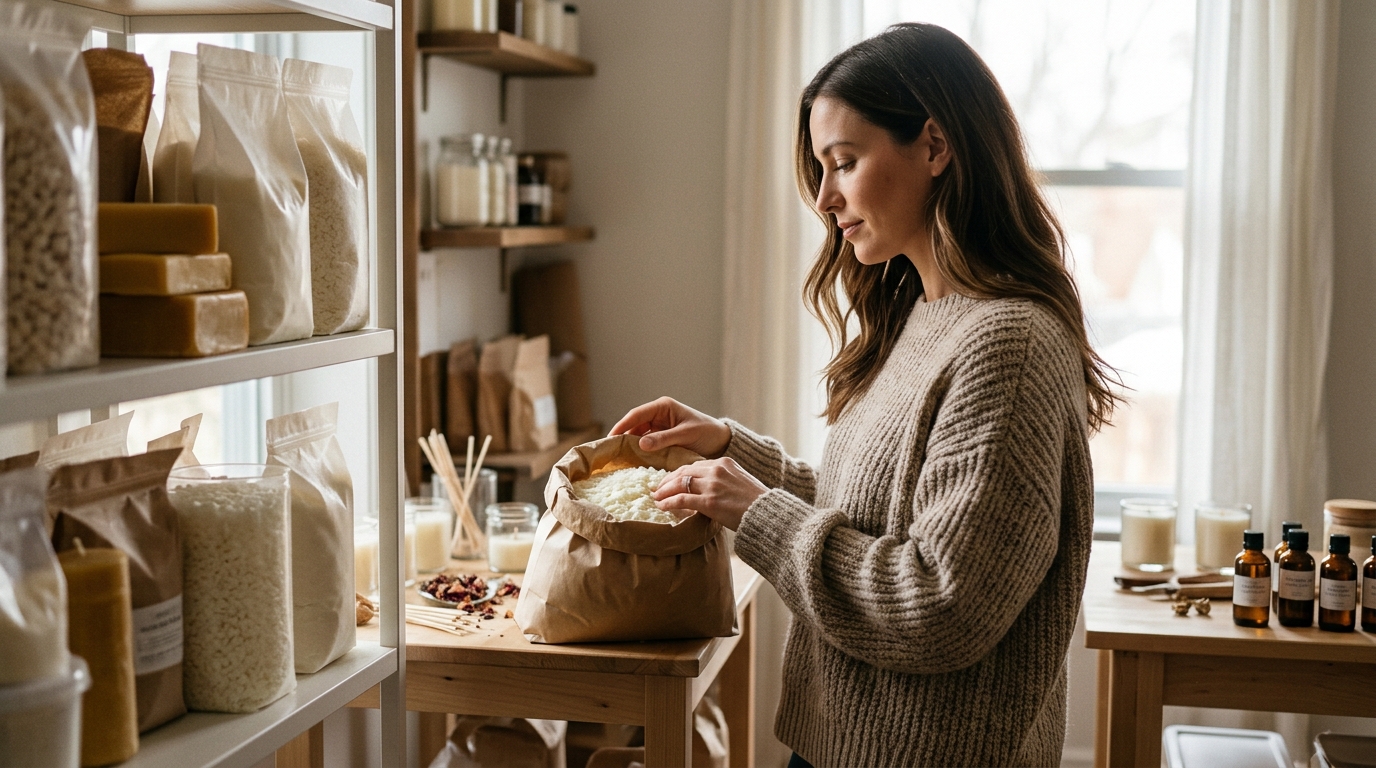
Picking the perfect candle wax can feel overwhelming when you are staring at a shelf full of options. Soy, coconut, beeswax, paraffin, and specialty blends each bring different burn characteristics, scent performance, and aesthetics to the table. The wax you choose affects everything from how long your candle burns to how strongly it fills a room with fragrance. This guide breaks down every major wax type, compares their strengths side by side, and gives you a clear framework so you can match the right wax to your specific project with confidence.
Why Your Wax Choice Matters
Candle wax is the fuel that feeds the flame, controls the melt pool, and carries fragrance into the air. Choosing the wrong wax for your vessel or candle style leads to tunneling, poor scent throw, or uneven burns. Two key performance metrics to understand are hot throw (the fragrance released while burning) and cold throw (the fragrance released at room temperature without a flame).
Your project type also matters. Container candles, pillar candles, tarts, and wax melts each demand different melting points and hardness levels. A wax that works beautifully in a glass jar may crumble as a free-standing pillar.
Soy Wax: The Eco-Friendly Staple
Soy wax is a vegetable wax made from hydrogenated soybean oil. It is a renewable, biodegradable resource that produces less soot and offers a longer burn time than paraffin wax. These qualities make it a favorite among environmentally conscious makers.
Best Uses for Soy Wax
Soy wax is ideal for container candles, but its lower melting point may not be suitable for pillar candles. If you want a 100% natural, plant-based option, supernatural soy flakes are made from pure soy, are microwavable, and melt quickly for easy pouring.

Scent Performance
Soy wax candles tend to have a softer scent throw compared to paraffin candles. Blending soy with coconut or a small amount of food-grade paraffin can boost fragrance performance significantly.
Coconut Wax and Coconut Blends
Coconut wax is a wax made from hydrogenated coconut oil. It is a newer, eco-friendly addition to candle making that is often blended with other natural waxes for improved performance. Coconut wax candles have a creamy, luxurious appearance and excellent scent throw.
Virgin Coconut Soy Wax
Makesy's virgin coconut soy wax is their number-one best-selling wax blend. It is a vegan blend of natural soy and coconut with exceptional adhesion and excellent hot and cold fragrance throw, rated 4.9 out of 5.0 stars across nearly 700 reviews.
Coco Apricot Creme Wax
Coco apricot creme wax is a vegan blend of natural apricot, coconut, soy, and a small amount of food-grade paraffin. It delivers outstanding adhesion, even burns with smooth creamy tops, and excellent fragrance throw in both container candles and tarts.
Beeswax: The Natural Classic
Beeswax is a natural wax produced by honeybees and has been used for candle making since ancient times. It is a sustainable and non-toxic choice with a natural honey scent and a beautiful golden color. Beeswax candles burn slowly, produce minimal soot, and have a bright, warm flame.
The trade-off is cost and fragrance. Beeswax is more expensive than other waxes and may not hold added fragrance as well. Makesy's beeswax coco creme blend solves this by combining beeswax with coconut, soy, and palm waxes for improved scent throw while remaining 100% natural and skin-safe for massage candles.
Paraffin and Palm Wax
Paraffin wax is a byproduct of petroleum and remains the most common and widely used wax for candle making. It is affordable, easy to work with, and has excellent fragrance retention. Paraffin wax candles provide a clean, bright burn and are suitable for both container and pillar candles.
Palm wax, derived from palm oil, is eco-friendly, renewable, and biodegradable. It is known for its unique crystalline appearance and excellent fragrance retention. Makesy's pure palm paraffin wax blends ethically sourced RSPO palm oil with paraffin for a smooth, creamy wax that works across container, pillar, and votive styles.
Candle Wax Comparison Table
| Wax Type | Source | Best For | Scent Throw | Burn Time | Eco-Friendly |
|---|---|---|---|---|---|
| Soy Wax | Soybean oil | Containers, tarts | Moderate | Long | Yes |
| Coconut Soy Blend | Coconut + soy oil | Containers, tarts | Excellent | Long | Yes |
| Coco Apricot Creme | Apricot + coconut oil | Containers, tarts | Excellent | Long | Yes |
| Beeswax | Honeybees | Containers, pillars | Mild (natural honey) | Very long | Yes |
| Paraffin | Petroleum | Containers, pillars, votives | Strong | Moderate | No |
| Palm Paraffin Blend | Palm oil + petroleum | Containers, pillars, votives | Strong | Moderate | Partial (RSPO) |
For a more detailed breakdown, visit the makesy wax comparison chart.
How to Decide: Matching Wax to Project Type
Container Candles
Container candles are the most popular format for beginners and small businesses alike. Nearly every wax type works in containers, but coconut blends and soy waxes deliver the best adhesion and smooth tops. Look for waxes with strong adhesion ratings to avoid "wet spots" along the glass.
Pillar Candles and Votives
Pillar candles need a harder wax with a higher melting point. Paraffin, palm paraffin blends, and parasoy pillar wax are your best options here. Pure soy and coconut waxes are generally too soft to hold a free-standing shape.
Prioritizing Scent Throw
If maximum fragrance is your goal, coconut blends such as virgin coconut soy or coco apricot creme consistently outperform pure soy. According to the National Candle Association, all major wax types burn cleanly when properly wicked, so the scent decision can focus purely on throw strength.
Key Takeaways
- Soy wax is renewable and budget-friendly but has a softer scent throw than coconut or paraffin blends.
- Coconut wax blends offer a luxurious appearance and excellent hot and cold throw, making them top sellers for a reason.
- Beeswax burns the longest and produces minimal soot, but it is the most expensive option and holds fragrance less effectively on its own.
- Paraffin wax provides the strongest fragrance retention and works for containers, pillars, and votives.
- Always match your wax to your candle format: soft waxes for containers, hard waxes for pillars.
- Blended waxes (coconut soy, coco apricot creme, palm paraffin) combine the best traits of multiple wax types.
- All makesy waxes are FDA approved, toxin free, paraben free, and phthalate free.
Frequently Asked Questions
What is the best wax for beginners?
Soy wax flakes and deluxe satin soy blends are the most beginner-friendly options. They melt easily, pour smoothly, and are single-pour waxes that do not require a second pour to fix surface imperfections.
Can I mix different wax types together?
Yes. Many popular candle waxes are already blends. Coconut soy and coco apricot creme combine multiple wax sources for improved performance. Experimenting with small test batches is the safest way to find your ideal blend.
What wax has the strongest scent throw?
Coconut wax blends and paraffin wax generally deliver the strongest hot throw. Coco apricot creme and virgin coconut soy from makesy are specifically formulated for excellent fragrance performance.
Is paraffin wax safe to use in candles?
Studies referenced by the National Candle Association show that paraffin wax burns just as cleanly as soy, beeswax, or palm when properly wicked. Makesy uses only highly refined, food-grade paraffin in their blends.
What wax should I use for pillar candles?
Pillar candles require a harder wax with a higher melting point. Pure palm paraffin wax and parasoy pillar wax are ideal choices. Soy and coconut container waxes are too soft for free-standing formats.
How much fragrance oil should I add to my wax?
Most makesy waxes support a 9 to 12 percent fragrance load. Virgin coconut soy wax handles up to 12 percent. Always weigh your fragrance oil on a scale for accuracy rather than measuring by volume.
Are coconut wax candles eco-friendly?
Yes. Coconut wax comes from a renewable resource and is biodegradable. Makesy's coconut blends are also gluten free, toxin free, paraben free, and phthalate free, using only FDA-approved waxes.
Where can I compare all wax types side by side?
Makesy offers a detailed wax comparison chart that shows the properties, recommended wicks, and best uses for every wax in their lineup.
Start Your Candle Project Today
Ready to pick your wax and start pouring? Browse the full candle wax collection at makesy to find the perfect match for your project. Whether you are making your first candle or scaling a small business, the right wax is the foundation of every great candle.