
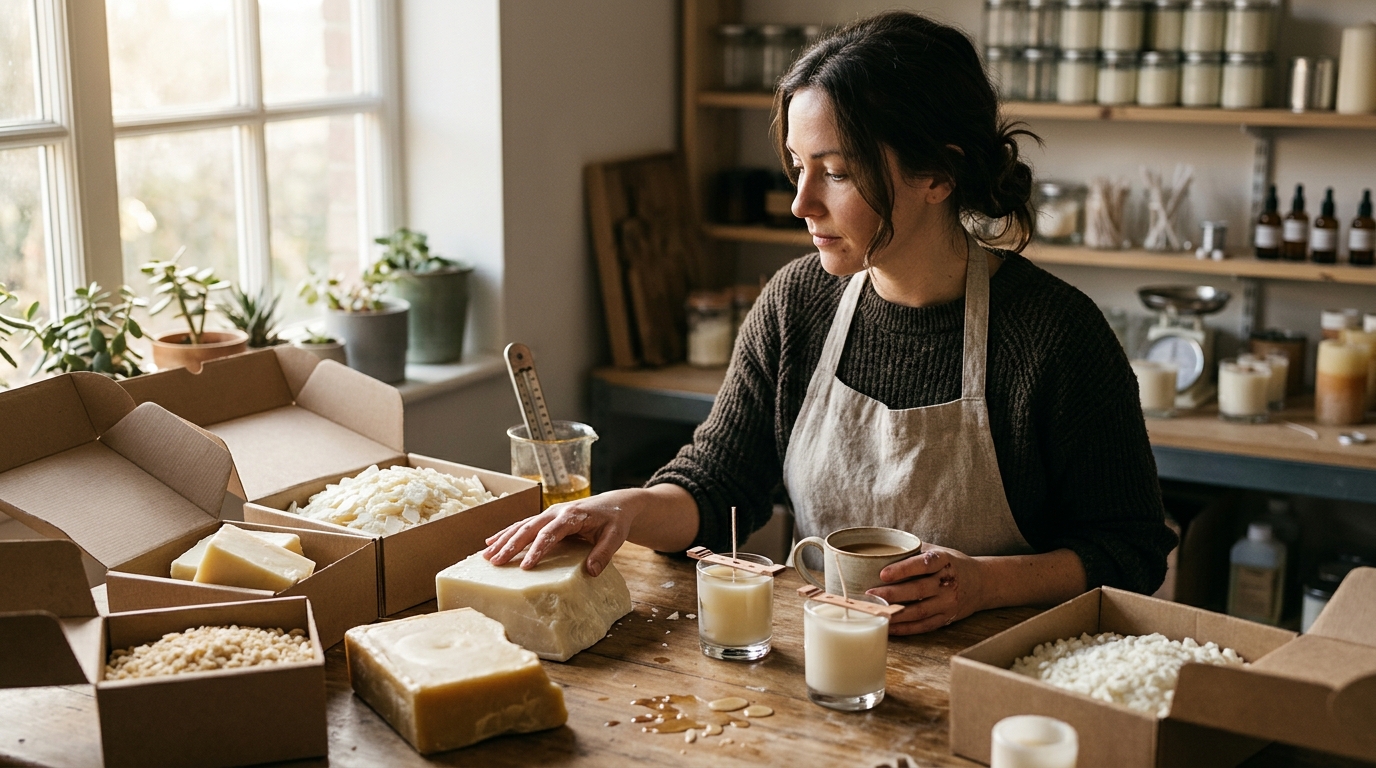
Choosing the right candle wax is the single most important decision you will make before you strike a match. The wax you select determines burn time, scent throw, appearance, and even your candle's eco-footprint. With options ranging from classic soy to luxurious coconut blends and traditional paraffin, beginners and seasoned makers alike can feel overwhelmed. This guide breaks down every major wax type, compares key performance traits side by side, and helps you match the perfect wax to your specific project, whether you are pouring container candles, pillars, or wax melts.
What Is Candle Wax and Why Does It Matter?
Candle wax is the fuel source that feeds the flame and carries fragrance into your space. It is a solid or semi-solid substance, typically derived from plant oils, petroleum, or animal sources, that melts at a controlled temperature to release scent and light. Different waxes have distinct melting points, fragrance load capacities, and burn characteristics, so understanding the basics saves you hours of trial and error.
According to the National Candle Association, wax is the most critical raw material in candle manufacturing, directly influencing burn quality and safety. The type you choose sets the stage for every other decision, from wick selection to fragrance percentage.
Soy Wax: The Eco-Friendly Staple
Soy wax is a vegetable wax made from hydrogenated soybean oil. It is renewable, biodegradable, and burns cleaner than many alternatives. Soy wax is ideal for container candles, but its lower melting point may not be suitable for pillar candles. It also tends to deliver a softer scent throw compared to paraffin-based options.
Makesy Soy Options
Makesy's soy candle wax collection includes two standout blends. Cocoglo Soy Candle Wax is a proprietary coconut-soy blend in pastille form that burns evenly with excellent hot and cold throw. Meanwhile, the Deluxe Satin Soy Wax is Makesy's most affordable blend, beginner-friendly, clean-burning, and biodegradable with a bright white color.
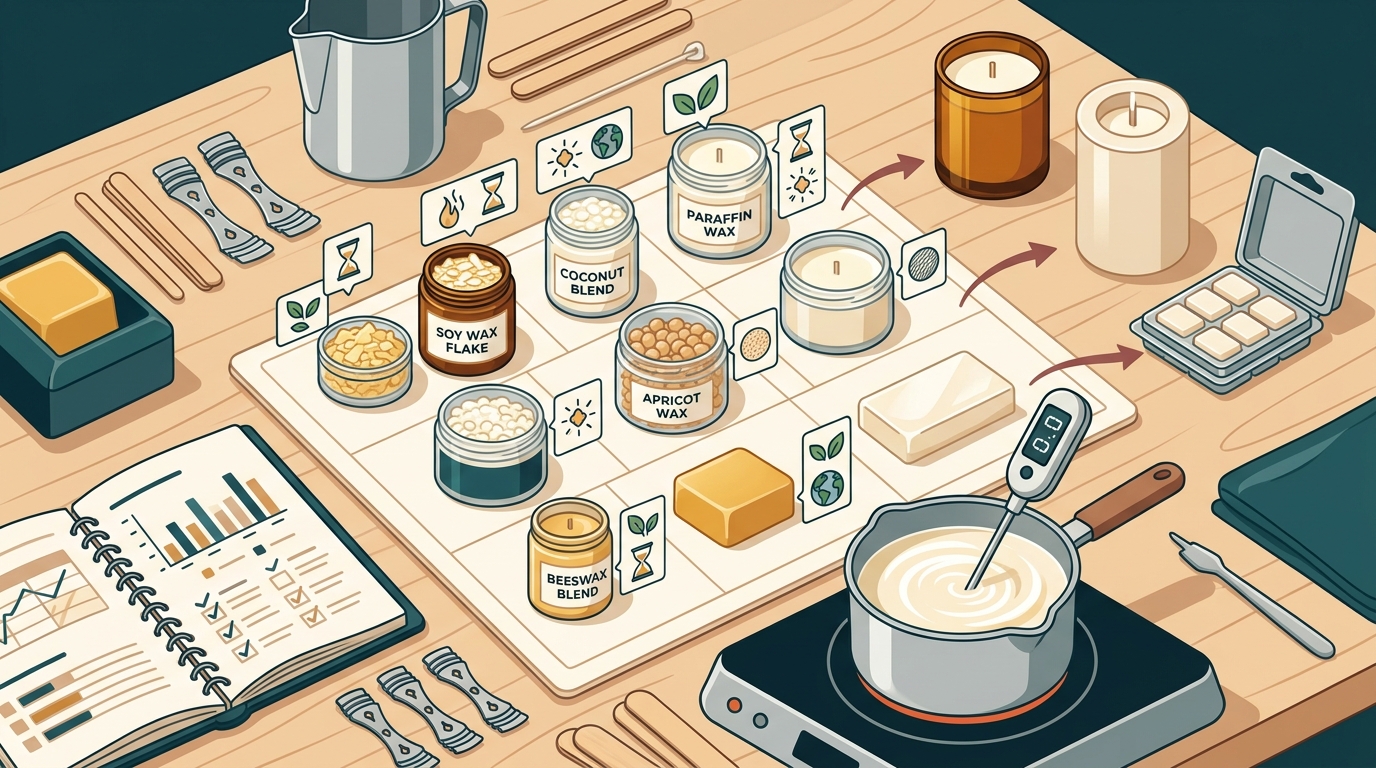
Coconut Wax Blends: Luxury Performance
Coconut wax is a newer wax made from hydrogenated coconut oil. It is often blended with apricot, soy, or a minuscule amount of food-grade paraffin to improve performance. Coconut wax candles have a creamy, luxurious appearance and excellent scent throw, making them popular among premium candle brands.
Virgin Coconut Soy Wax
Makesy's Virgin Coconut Soy Wax is their number-one best-selling wax blend. It is creamy and white with exceptional adhesion and scent throw, ideal for container candles and tarts. This blend supports up to a 12% fragrance load and is gluten-free, toxin-free, paraben-free, and phthalate-free.
Coco Apricot Creme Wax
The Coco Apricot Creme Wax is a vegan blend of natural apricot, coconut, soy, and a minuscule amount of highly refined food-grade paraffin. It delivers smooth, creamy tops burn after burn with a melt point of 129°F (54°C) and an optimal pour temperature of 180 to 190°F.
Beeswax: The Natural Classic
Beeswax is a natural wax produced by honeybees and has been used for candle making since ancient times. It is a sustainable, non-toxic choice with a natural honey scent and beautiful golden color. Beeswax candles burn slowly, produce minimal soot, and have a bright, warm flame. However, beeswax is more expensive and may not hold added fragrance as well as other waxes.
Makesy's Beeswax Coco Creme solves this by blending ethically sourced beeswax with renewable coconut, soy, and palm waxes, making it one of the easiest and creamiest beeswax blends available for container candles, wax melts, and molds.
Paraffin and Palm Wax: Versatile Workhorses
Paraffin wax is a byproduct of petroleum refining and is the most common and widely used wax for candle making. It is affordable, easy to work with, and has excellent fragrance retention. Paraffin wax candles provide a clean, bright burn and work well for both container and pillar candles.
Palm wax is derived from palm oil and is eco-friendly, renewable, and biodegradable. It is known for its unique crystalline appearance and excellent fragrance retention. Sourcing ethically produced palm wax is crucial to avoid contributing to deforestation. Makesy's Pure Palm Paraffin Wax combines both ingredients into a creamy, smooth blend suitable for containers, pillars, and votives.
Wax Comparison Table
| Wax Type | Best For | Scent Throw | Burn Speed | Eco-Friendly | Fragrance Load |
|---|---|---|---|---|---|
| Soy (Deluxe Satin Soy) | Containers, melts | Good | Slow, even | Yes | 8-10% |
| Virgin Coconut Soy | Containers, tarts | Excellent | Slow, even | Yes | Up to 12% |
| Coco Apricot Creme | Containers, massage candles | Excellent | Slow, even | Yes | 9-10% |
| Beeswax Coco Creme | Containers, melts, molds | Moderate | Very slow | Yes | 8-9% |
| Pure Palm Paraffin | Containers, pillars, votives | Excellent | Moderate | Partially | 9-10% |
| Hemp Coco Soy | Containers, melts, molds | Excellent | Slow, even | Yes | 9-10% |
For a full interactive breakdown, visit the Makesy Wax Comparison Chart.
How to Choose the Best Wax for Your Project
Step 1: Define Your Candle Type
Container candles work with nearly every wax. Pillar candles need a harder wax like palm paraffin. Wax melts and tarts perform well with coconut-soy blends that maximize scent throw without requiring a wick.
Step 2: Prioritize Scent or Aesthetics
If maximum fragrance throw is your goal, coconut blends and paraffin lead the pack. If you want a clean, natural look with a subtle scent, pure soy or beeswax blends may be the better fit.
Step 3: Match Your Wick
Every wax performs differently with different wicks. Makesy's wick-to-wax buying guide provides specific recommendations for pairing the right wick width and material with each wax blend. Always test your wick in the specific wax and vessel combination you plan to use.
Key Takeaways
- Your wax choice determines burn time, scent throw, appearance, and sustainability.
- Soy wax is affordable and eco-friendly but best suited for container candles with a softer scent throw.
- Coconut wax blends like Virgin Coconut Soy offer premium performance with up to 12% fragrance load.
- Beeswax burns the longest but holds added fragrance less effectively than blends.
- Paraffin and palm wax deliver the strongest scent throw and work for both containers and pillars.
- Always match your wick to your wax using a tested pairing guide before scaling production.
- Testing small batches first is essential; wax type affects final color, adhesion, and cure time.
Frequently Asked Questions
What is the best wax for beginners?
Deluxe Satin Soy Wax is beginner-friendly, clean-burning, and the most affordable blend. It is a single-pour wax with a bright white color and great adhesion, making first candles easy and forgiving.
Can I mix different types of candle wax?
Yes, many popular candle waxes are already blends. Coconut-soy, hemp-soy, and beeswax-coconut combinations are common. Always test mixed batches in small quantities before scaling up.
What wax has the best scent throw?
Coconut wax blends and paraffin-based waxes consistently deliver the strongest hot and cold throw. Makesy's Virgin Coconut Soy Wax supports up to a 12% fragrance load for maximum scent.
Is soy wax better than paraffin wax?
Neither is universally better. Soy wax is renewable and burns cleaner, while paraffin is more affordable and has superior fragrance retention. Some studies show both burn equally cleanly when properly wicked.
What wax should I use for pillar candles?
Pillar candles require a harder wax with a higher melting point. Pure Palm Paraffin Wax is ideal for container, pillar, and votive styles with excellent hot and cold throw.
How much fragrance oil should I add to my candle wax?
A typical fragrance load falls between 8% and 10%, though some waxes can handle up to 12%. Always check the maximum fragrance load for your specific wax and test before full production.
What is the difference between hot throw and cold throw?
Hot throw is the scent a candle releases while burning. Cold throw is the fragrance you smell when the candle is unlit. Both are influenced by wax type, fragrance percentage, and cure time.
Where can I compare all Makesy wax types at once?
The Makesy Wax Comparison Chart provides a side-by-side breakdown of soy wax, beeswax, coco apricot creme, hemp soy, and pure palm paraffin.
Start Making Today
Ready to find your perfect wax? Browse the complete candle wax collection at Makesy and use the wax comparison chart to narrow down your options. Grab a small batch, pair it with the right wick, and pour your first test candle this weekend.