
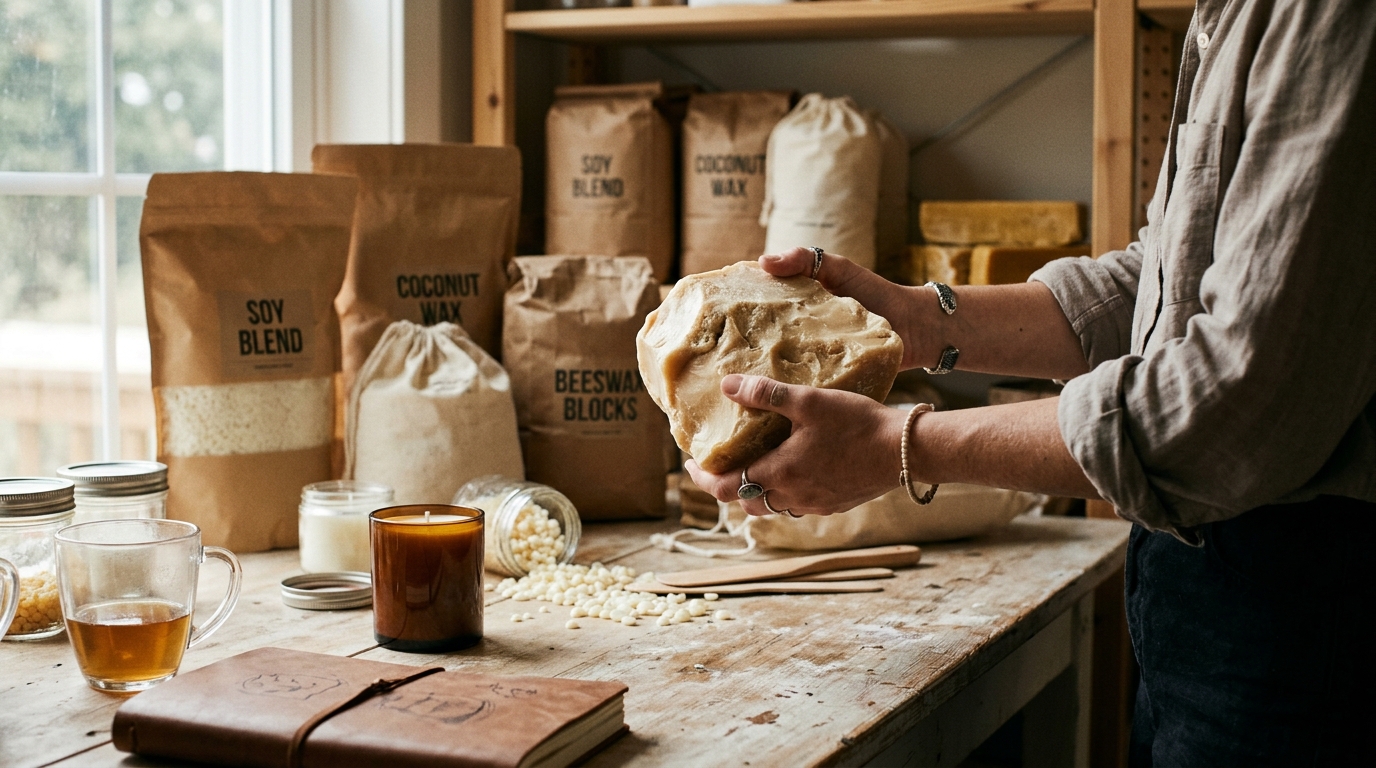
Picking the right candle wax is one of the most important decisions you will make as a maker. The wax you choose affects everything from scent throw and burn time to the overall look of your finished candle. With options ranging from soy and coconut blends to beeswax and paraffin, the choices can feel overwhelming. This guide breaks down the most popular candle wax types, compares their key properties side by side, and helps you match the perfect wax to your specific project, whether you are a first-time hobbyist or a growing candle business owner.
Understanding Candle Wax Types
Candle wax is the fuel source that feeds your wick's flame and carries fragrance into the air. Different waxes come from different raw materials, and each brings unique characteristics to your candle. The main categories include plant-based waxes (soy, coconut, palm), animal-derived waxes (beeswax), petroleum-derived waxes (paraffin), and proprietary blends that combine two or more bases for optimized performance.
Your choice of wax directly influences melting point, scent throw, burn rate, and surface appearance. Understanding these properties upfront saves you hours of frustrating trial and error.
Soy Wax: The Beginner-Friendly Classic
Soy wax is a vegetable wax made from hydrogenated soybean oil. It is one of the most popular choices for environmentally conscious candle makers because it is renewable, biodegradable, and burns cleanly. Soy wax is ideal for container candles, though its lower melting point may not be suitable for pillar candles.
Scent Performance
Soy wax candles tend to have a softer scent throw compared to paraffin-based options. Many makers boost performance by choosing a soy blend. For example, Makesy's Deluxe Satin Soy Wax is a beginner-friendly, single-pour blend of natural soy and food-grade paraffin that delivers great hot and cold throw while remaining clean burning and biodegradable.
Best Use Cases
Pure soy works well for container candles, wax melts, and tarts. If you are just getting started, explore the full soy candle wax collection to find options ranging from 100% soy flakes to enhanced soy blends.
Coconut Wax Blends: Luxury and Performance
Coconut wax is a newer addition to candle making, made from hydrogenated coconut oil. It is an eco-friendly and sustainable option that produces candles with a creamy, luxurious appearance and excellent scent throw. Because pure coconut wax is very soft, it is almost always blended with soy, apricot, or a small amount of food-grade paraffin for structural stability.
Popular Coconut Blends
Virgin Coconut Soy Wax is Makesy's number-one best-selling wax blend. It is creamy and white with exceptional adhesion and can handle up to a 12% fragrance load. Another standout is Coco Apricot Creme Wax, a vegan blend of natural apricot, coconut, soy, and a minuscule amount of highly refined food-grade paraffin that is even suitable for massage candles.
Both blends have an optimal mix and pour temperature of 180 to 190 degrees Fahrenheit and produce smooth, creamy tops burn after burn.
Beeswax: The All-Natural Heritage Choice
Beeswax is a natural wax produced by honeybees and has been used for candle making since ancient times. It is a sustainable, non-toxic choice with a natural honey scent and a beautiful golden color. Beeswax candles burn slowly, produce minimal soot, and emit a bright, warm flame.
The trade-off is cost. Beeswax is more expensive than other waxes and may not hold added fragrance as well. Makesy's Beeswax Coco Creme solves this by blending ethically sourced beeswax with coconut, soy, and palm waxes for 100% natural performance with excellent fragrance throw.
Paraffin and Palm Wax: Versatile Workhorses
Paraffin wax is a byproduct of petroleum refining and is the most common and widely used wax for candle making. It is affordable, easy to work with, and has excellent fragrance retention. Paraffin candles provide a clean, bright burn and work for both container and pillar styles.
Palm wax is derived from palm oil and is known for its unique crystalline appearance. Palm wax candles have excellent fragrance retention and burn slowly with minimal soot. Research from the National Candle Association confirms that all major candle wax types, when properly wicked, burn cleanly and safely. Makesy's Pure Palm Paraffin Wax blends both materials for a creamy, smooth option ideal for containers, pillars, and votives.
Wax Comparison Table
| Wax Type | Source | Best For | Scent Throw | Burn Speed | Eco-Friendly |
|---|---|---|---|---|---|
| Soy Wax | Soybean oil | Containers, melts | Moderate | Slow | Yes |
| Coconut Soy Blend | Coconut + soy oils | Containers, melts | Excellent | Slow-medium | Yes |
| Coco Apricot Creme | Apricot, coconut, soy | Containers, massage candles | Excellent | Slow | Yes |
| Beeswax Blend | Honeybees + coconut/soy | Containers, melts | Good | Very slow | Yes |
| Paraffin | Petroleum | Containers, pillars, votives | Excellent | Medium | No |
| Palm Paraffin | Palm oil + paraffin | Containers, pillars | Excellent | Slow | Partial |
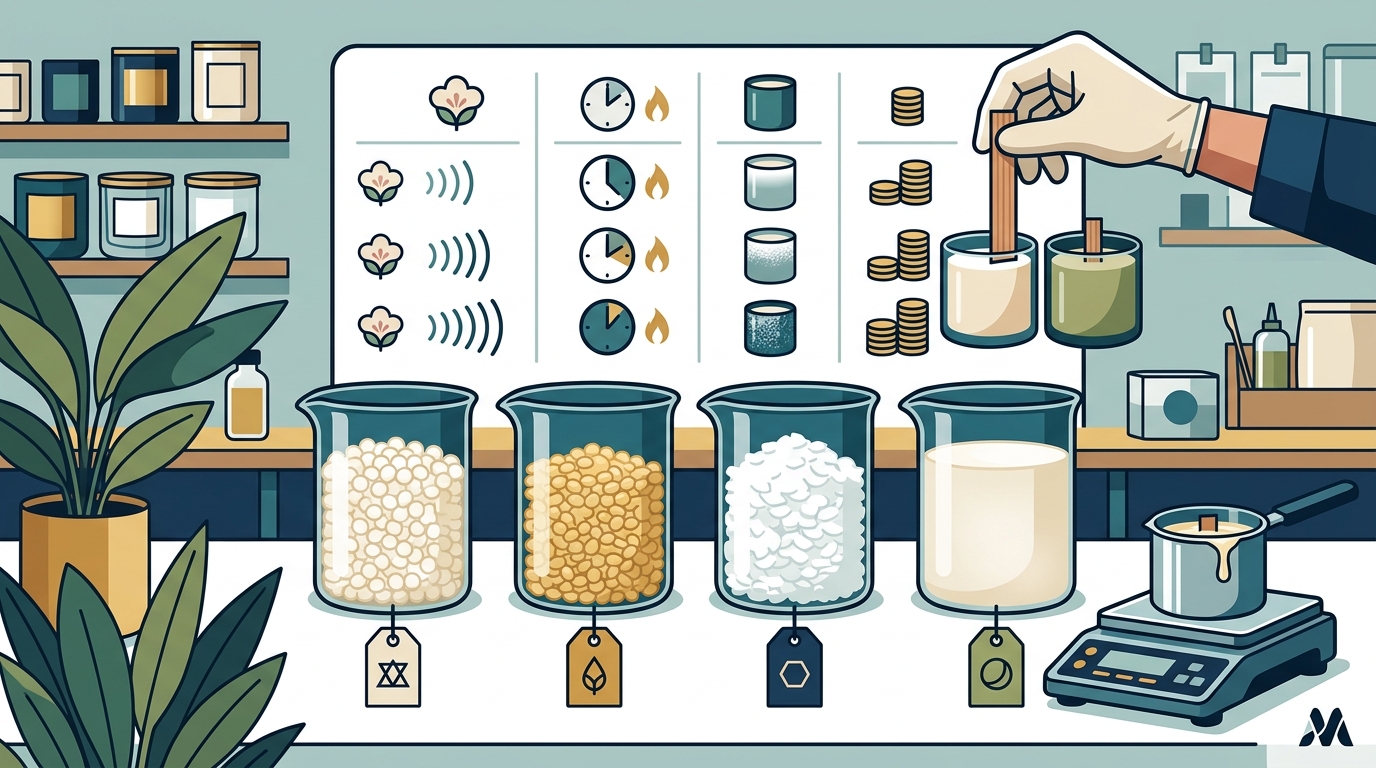
For a more detailed breakdown, check out the Makesy Wax Comparison Chart for a side-by-side view of every blend.
How to Choose the Right Wax for Your Project
Consider Your Candle Style
Container candles work with nearly every wax type. Pillar candles need a harder wax with a higher melting point, like paraffin or palm. Wax melts and tarts perform best with waxes that have strong cold throw, such as coconut soy blends.
Consider Your Budget and Scale
If cost is a priority, soy-paraffin blends like Deluxe Satin Soy offer the lowest per-pound price point. For premium or luxury product lines, coconut blends like Virgin Coconut Soy or Coco Apricot Creme justify a higher retail price. All Makesy waxes are available in bulk with volume discounts.
Consider Your Brand Values
If eco-conscious sourcing matters to your brand, plant-based and natural blends align with consumer demand for clean ingredients. Makesy's coconut and soy waxes are gluten free, toxin free, paraben free, phthalate free, and come from renewable sources.
Key Takeaways
- Soy wax is renewable, affordable, and ideal for beginners making container candles.
- Coconut wax blends offer the strongest scent throw and a luxurious, creamy finish.
- Beeswax is all-natural but costs more and holds fragrance less effectively on its own.
- Paraffin wax provides excellent versatility for both container and pillar candles at a lower cost.
- Wax blends (soy-paraffin, coconut-apricot) combine the best properties of multiple wax types.
- Always match your wick type and size to your chosen wax using a wick-to-wax buying guide.
- Testing small batches before scaling production is essential for achieving a clean, even burn.
Frequently Asked Questions
What is the best wax for beginners?
Soy-based blends are typically the easiest to work with. Makesy's Deluxe Satin Soy Wax is a single-pour, beginner-friendly option that delivers excellent adhesion and scent throw without requiring advanced techniques.
What wax gives the strongest scent throw?
Coconut wax blends and paraffin wax tend to deliver the strongest hot throw. Virgin Coconut Soy Wax supports up to a 12% fragrance load, making it a top choice for highly scented candles.
Can I use soy wax for pillar candles?
Pure soy wax has a low melting point and is generally too soft for freestanding pillars. For pillar candles, choose a harder wax like paraffin, palm, or a specialized pillar blend from the pillar candle wax collection.
Is paraffin wax safe for candles?
Yes. When properly wicked, paraffin candles burn cleanly. Studies have shown paraffin wax burns just as cleanly as soy, beeswax, or palm when used correctly.
What is coconut wax?
Coconut wax is a wax made from hydrogenated coconut oil. It is eco-friendly and sustainable, and is usually blended with other waxes for improved structure and performance.
How do I know which wick to pair with my wax?
Wick selection depends on wax type, vessel diameter, and fragrance load. Makesy offers a detailed wick-to-wax buying guide with specific recommendations for every wax blend they carry.
What is the difference between hot throw and cold throw?
Hot throw is the scent a candle releases while burning. Cold throw is the scent it releases at room temperature without being lit. Both matter for customer satisfaction, but hot throw is typically the more important performance metric.
Can I mix different wax types together?
Yes, many commercial candle waxes are already blends. You can experiment with custom ratios, but pre-formulated blends from suppliers like Makesy are optimized for adhesion, throw, and burn consistency out of the box.
Start Your Candle Making Journey
Ready to find the perfect wax for your next project? Browse the full candle wax collection at Makesy and take advantage of bulk pricing and free shipping on qualifying orders. Whether you are pouring your first candle or scaling a business, the right wax makes all the difference.