

Choosing the right candle wax is one of the most important decisions you will make as a maker. The wax you select affects everything from scent throw and burn time to the final look of your finished candle. With options ranging from classic soy to luxurious coconut blends, the choices can feel overwhelming. This guide breaks down the most popular candle wax types, compares their key properties side by side, and helps you match the perfect wax to your specific project, whether you are pouring your first container candle or scaling a small business.
What Is Candle Wax and Why Does It Matter?
Candle wax is the solid fuel that surrounds the wick and melts to release fragrance and produce light. It is the single largest component in any candle, so its properties directly determine burn quality, scent performance, and visual appearance.
Different waxes have different melting points, hardness levels, and fragrance-holding capacities. Understanding these characteristics before you buy saves you time, money, and frustration during testing. Makesy offers a helpful wax comparison chart that lays out these differences at a glance.
Popular Types of Candle Wax Explained
Soy Wax
Soy wax is a plant-based wax made from hydrogenated soybean oil. It is a renewable, biodegradable resource that produces less soot and offers a longer burn time than paraffin. Soy wax works best for container candles, though its lower melting point makes it less suitable for pillars. Explore Makesy's full soy candle wax collection to find blends like Virgin Coconut Soy and Supernatural Soy Flakes.
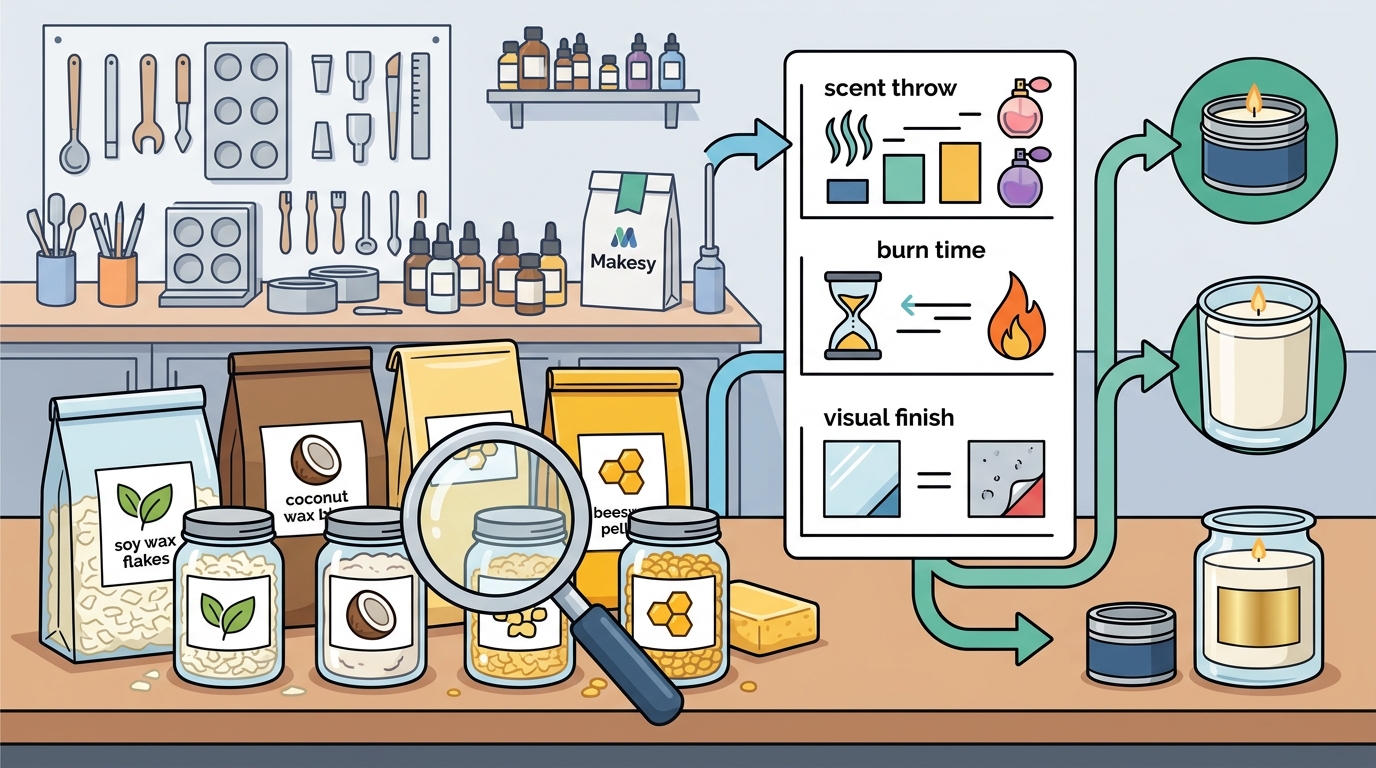
Coconut Wax Blends
Coconut wax is a newer wax made from hydrogenated coconut oil. It is often blended with apricot, soy, or a small amount of food-grade paraffin for improved structure. Coconut wax candles have a creamy, luxurious appearance and deliver excellent scent throw. Makesy's popular Coco Apricot Creme wax is a standout option in this category.
Paraffin and Palm Wax
Paraffin wax is a petroleum byproduct and the most widely used candle wax in the world. It is affordable, easy to work with, and has excellent fragrance retention. Paraffin candles provide a clean, bright burn and work well for both containers and pillars. Palm wax is a plant-derived alternative known for its unique crystalline finish, excellent fragrance retention, and slow burn with minimal soot.
Beeswax
Beeswax is a natural wax produced by honeybees. It is a sustainable, non-toxic choice with a natural honey scent and a warm golden color. Beeswax burns slowly and purifies the air, making it a favorite for unscented or lightly scented candles.
Candle Wax Comparison Table
| Wax Type | Source | Best For | Scent Throw | Burn Time | Eco-Friendly |
|---|---|---|---|---|---|
| Soy Wax | Soybean oil | Container candles | Moderate | Long | Yes |
| Coconut Blend | Coconut oil + blends | Container candles, melts | Excellent | Long | Yes |
| Paraffin | Petroleum | Containers and pillars | Excellent | Moderate | No |
| Palm Wax | Palm oil | Pillars, tarts | Excellent | Long | Yes (if responsibly sourced) |
| Beeswax | Honeybees | Pillars, tapers | Mild (natural honey) | Very long | Yes |
How to Match Wax to Your Candle Type
The candle format you plan to make should guide your wax choice. Container candles pair best with softer waxes like soy or coconut blends because they adhere well to glass. Pillar candles need harder waxes, such as paraffin, palm, or beeswax, that hold their shape without a vessel. For detailed pillar instructions, see Makesy's ultimate guide to making pillar candles.
Wax melts and tarts work with nearly any wax, but coconut and soy blends are popular for their strong cold throw. If you are just starting out, a candle making kit bundles the right wax, wicks, and fragrance so you can skip the guesswork.
Scent Throw: Which Wax Carries Fragrance Best?
Scent throw is the term candle makers use for how well a candle disperses fragrance. Hot throw refers to scent released while the candle burns; cold throw is the scent you notice when it is unlit.
Coconut wax blends and paraffin generally deliver the strongest hot throw. Soy wax tends to produce a softer scent, which some makers prefer for subtle, ambient fragrance. According to the National Candle Association, fragrance load, wick size, and vessel diameter all interact with wax type to influence scent performance.
When testing, always pair your wax with the correct wick. Makesy's ultimate candle making guide walks through wick selection, fragrance calculators, and testing protocols.
Eco-Friendly and Sustainable Wax Options
Consumer demand for clean, sustainable candles continues to grow. A 2023 report from Grand View Research valued the global candle market at over $13 billion, with natural wax segments gaining market share each year.
Soy, coconut, and responsibly sourced palm waxes are all renewable and biodegradable. Beeswax adds another natural option for makers who want zero synthetic ingredients. Makesy's made better standard ensures that every wax blend meets strict eco-conscious benchmarks, giving makers and their customers peace of mind.
Key Takeaways
- Soy wax is ideal for container candles and offers a clean, long burn with moderate scent throw.
- Coconut wax blends deliver a creamy finish and excellent scent throw, perfect for premium candle lines.
- Paraffin wax is the most versatile and affordable option, suitable for both containers and pillars.
- Beeswax is a natural, non-toxic wax best for pillars, tapers, and unscented candles.
- Palm wax provides a unique crystalline look and burns slowly with minimal soot.
- Always match your wax to your candle format: soft waxes for containers, hard waxes for pillars.
- Test every wax, wick, and fragrance combination before committing to production batches.
Frequently Asked Questions
What is the best wax for beginners?
Soy wax and coconut soy blends are the most beginner-friendly options. They melt at lower temperatures, clean up with soap and water, and are forgiving during the pouring process.
Can I mix different types of candle wax together?
Yes, many popular waxes are already blends. Mixing soy with coconut or adding a small percentage of paraffin can improve scent throw and surface finish. Always test small batches first.
Which wax has the strongest scent throw?
Coconut wax blends and paraffin wax typically deliver the strongest hot throw. Fragrance load percentage and wick size also play a major role in overall scent performance.
Is soy wax better than paraffin wax?
It depends on your priorities. Soy wax is renewable and produces less soot, while paraffin offers stronger scent throw and greater versatility for different candle types. Neither is universally "better."
What wax should I use for pillar candles?
Pillar candles require a harder wax that holds its shape. Paraffin, palm, and beeswax are the most common choices. Makesy's pillar candle wax collection includes blends formulated specifically for freestanding candles.
How much wax do I need per candle?
A simple rule is that the ounce capacity of your vessel equals the ounces of wax needed. For example, an 8 oz jar requires roughly 8 oz of wax. Makesy's blog on measuring candle wax covers this in detail.
Does the type of wick matter when choosing wax?
Absolutely. The wick must complement your wax type to create a proper melt pool and avoid tunneling. Cotton wicks and wooden wicks each perform differently across wax types, so always consult a wick guide.
Where can I buy high-quality candle wax online?
Makesy offers over 1,000 eco-conscious candle making supplies, including a wide range of premium candle waxes with free shipping on orders over $149.
Get Started With Makesy Wax
Ready to find your perfect wax? Browse the full candle wax collection at Makesy and use the wax comparison chart to narrow your choice. Whether you are a hobbyist or building a candle brand, the right wax is the foundation of every great candle.