

Starting a home-based candle company requires more than just a passion for scent. It demands a reliable supply chain for high-quality wax, wicks, and fragrance oils. According to recent industry data, the global candle market is projected to grow significantly, with consumers increasingly seeking artisanal and small-batch products. This growth creates a massive opportunity for entrepreneurs who can source premium materials efficiently. However, finding the right wholesale supplier is the first critical step in building a profitable brand.
Understanding the Candle Supply Chain
Before you pour your first candle, you must understand the components that make up a successful product. The supply chain for candle making is specialized. It involves raw material extraction, chemical processing for fragrances, and manufacturing for vessels and wicks. For a home-based business, your primary goal is to find a single source that can provide all these elements with consistency.
Reliability is key. If your supplier runs out of a specific wax type or fragrance oil, your production halts. This is why established platforms like Makesy have become popular among makers. They aggregate a wide range of supplies, from soy wax to custom fragrance blends, under one digital roof. This consolidation reduces the logistical burden on small business owners who cannot manage dozens of vendor relationships.
Another critical factor is shipping costs. Candle supplies are heavy. Wax, in particular, is dense and expensive to transport. Suppliers that offer free domestic shipping on orders over a certain threshold, such as $199, can significantly improve your profit margins. Understanding these logistics early on helps you price your final products correctly.
Essential Materials for Candle Making
To produce professional-grade candles, you need to master the core components. Each material plays a specific role in the burn quality, scent throw, and safety of the final product.
Wax Types and Properties
Wax is the fuel of the candle. The three most common types for home businesses are soy, paraffin, and coconut blends. Soy wax is derived from soybean oil and is known for its clean burn and eco-friendly profile. It is highly popular in the current market because consumers prefer natural products. Paraffin wax, a byproduct of petroleum, offers a stronger scent throw but is less favored by eco-conscious buyers. Coconut wax is a premium option that provides excellent fragrance retention and a smooth finish, though it is more expensive.
Understanding the melting points and cold throw of different waxes is essential. Shipping policies also vary by wax type due to weight restrictions, so always check the carrier guidelines before ordering bulk quantities.
Fragrance Oils and Essential Oils
Fragrance is the selling point of your candle. You can choose between synthetic fragrance oils and natural essential oils. Fragrance oils are engineered to provide a wide variety of scents, from complex perfumes to fresh linen. They generally offer a stronger hot throw, meaning the scent is more potent when the candle is burning. Essential oils are derived from plants and appeal to the natural wellness market. However, they can be more volatile and expensive.
When selecting fragrances, consider the flash point. This is the temperature at which the oil can ignite. Adding fragrance to wax that is too hot can cause the scent to evaporate before the candle even cools. Conversely, adding it when the wax is too cool can prevent proper binding. Most suppliers provide detailed technical data sheets for each oil to help you determine the optimal addition rate.
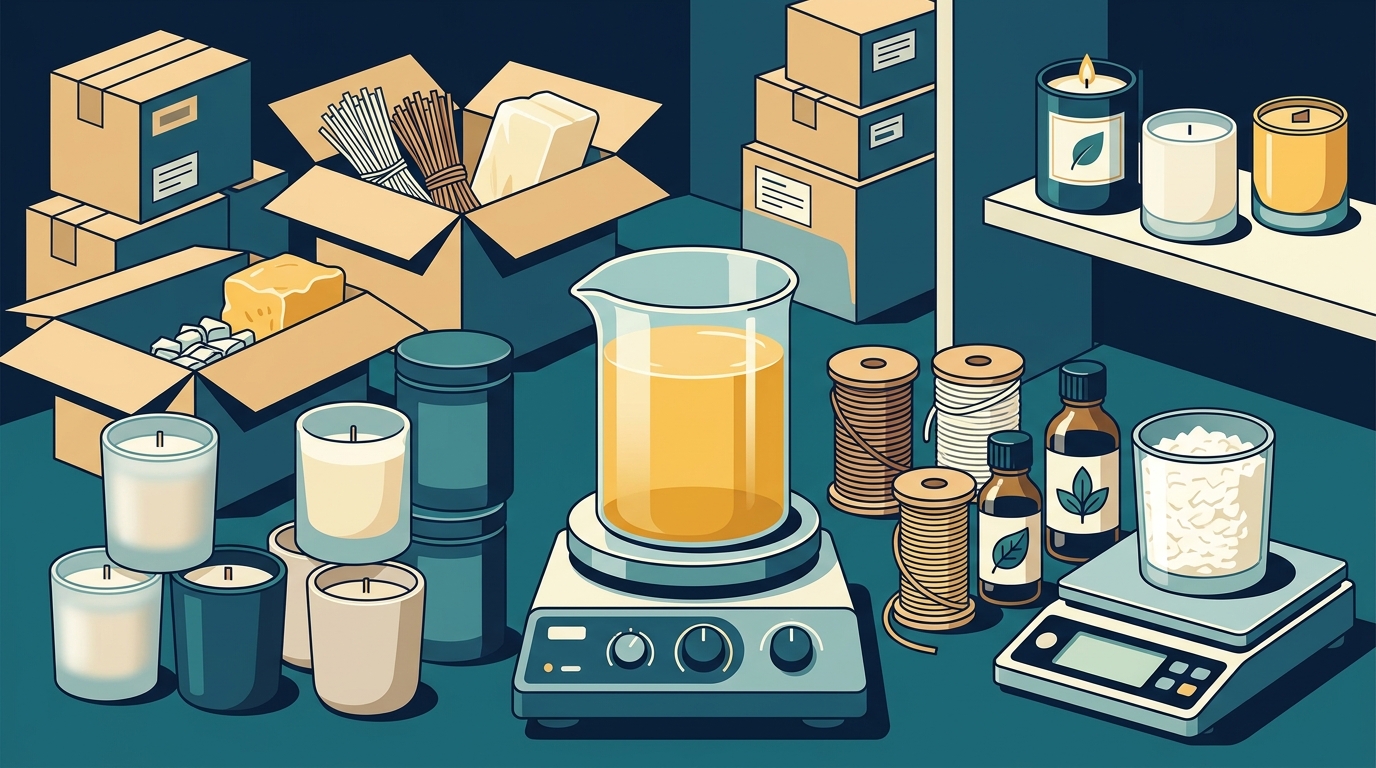
Wicks and Vessels
The wick is the engine of the candle. It must be matched to the wax type and the diameter of the vessel. A wick that is too small will cause tunneling, where the wax burns down the center and leaves the sides untouched. A wick that is too large can cause a dangerous flame or soot buildup. Testing different wick sizes is a crucial part of the development process.
Vessels can be glass jars, tins, or ceramic containers. The material affects how heat is distributed. Glass jars are the industry standard for home businesses because they are lightweight for shipping and visually appealing. Ceramic vessels offer a premium look but are heavier and more fragile during transit.
Choosing the Right Supplier
Not all suppliers are created equal. When evaluating potential partners for your home-based candle company, consider the following criteria.
Product Range and Customization
A supplier that offers a wide range of products allows you to experiment and expand your product line without switching vendors. Look for companies that offer custom fragrance services. This allows you to create a unique scent profile that distinguishes your brand from competitors. Makesy Best Selling DIY & Craft Supplies provide a comprehensive catalog that supports both experimentation and bulk production.
Pricing and Minimum Order Quantities
For a startup, cash flow is vital. Suppliers with low minimum order quantities (MOQs) allow you to test the market without a large upfront investment. However, as your business grows, you will need to negotiate better pricing for bulk orders. Some suppliers offer tiered pricing or subscription models that reduce costs over time.
Shipping and Logistics
Shipping costs can eat into your profits. Look for suppliers that offer free shipping thresholds or discounted rates for members. Checkout processes should be streamlined to ensure you can reorder essential items quickly. Additionally, check if the supplier offers expedited shipping options for urgent restocks.
Customer Support and Education
As a new maker, you will have questions. A supplier with a robust help center and responsive customer support is invaluable. Makesy Help Center resources can guide you through troubleshooting common issues, from wick selection to fragrance compatibility.
Supplier Comparison Overview
The table below summarizes key factors to consider when choosing a candle supply supplier.
| Feature | Major Online Retailers | Specialized Candle Suppliers | Direct Wholesale |
|---|---|---|---|
| Product Variety | High | Very High | Medium |
| MOQ Requirements | Low | Low to Medium | High |
| Shipping Costs | Variable | Often Free Thresholds | Negotiable |
| Custom Services | Rare | Available | Available |
| Support Resources | Standard | Comprehensive | Direct Access |
Key Takeaways
- Start with a reliable supplier: Platforms like Makesy offer a wide range of supplies, including wax, wicks, and fragrance oils, making them an ideal starting point for new candle makers.
- Understand wax properties: Soy wax is popular for its clean burn, while coconut wax offers premium fragrance retention. Choose based on your brand identity.
- Optimize shipping costs: Candle supplies are heavy. Look for suppliers with free shipping thresholds, such as orders over $199, to protect your margins.
- Test wicks carefully: The wick size must match the wax type and vessel diameter to prevent tunneling or soot buildup.
- Leverage educational resources: Use help centers and knowledge bases to troubleshoot issues and improve your candle-making skills.
- Consider custom fragrances: Developing a unique scent profile can differentiate your brand in a crowded market.
- Monitor market trends: The demand for artisanal and eco-friendly candles continues to grow, offering opportunities for small businesses.
Frequently Asked Questions
What is the best wax for beginners?
Soy wax is often recommended for beginners because it is easy to work with, has a lower melting point, and burns cleanly. It is also widely available from most suppliers.
How do I choose the right wick?
Wick selection depends on the wax type, fragrance load, and vessel diameter. Most suppliers provide wick charts and testing kits to help you find the perfect match.
Can I make candles at home legally?
Yes, you can make candles at home. However, if you plan to sell them, you must comply with local regulations, including fire safety standards and labeling requirements.
What is the flash point of fragrance oil?
The flash point is the temperature at which the oil can ignite. It is crucial to add fragrance to wax that is below this temperature to ensure safety and scent retention.
How much does it cost to start a candle business?
Startup costs vary, but you can begin with a few hundred dollars for supplies. Costs include wax, fragrance, wicks, vessels, and packaging. Bulk purchasing can reduce per-unit costs.
Do I need special equipment?
Yes, you will need a double boiler or melting pitcher, a thermometer, a stirring utensil, and a scale for precise measurements. Safety gear like gloves and goggles is also recommended.
Where can I find wholesale candle supplies?
Online retailers like Makesy offer wholesale pricing and a wide range of supplies. You can also contact local distributors or attend trade shows to find suppliers.
Start Making Today
Launching a home-based candle company is a rewarding venture that combines creativity with entrepreneurship. By sourcing high-quality supplies from a trusted provider like Makesy, you can focus on crafting exceptional products that resonate with your customers. Explore their collections to find the perfect materials for your brand. Visit the help center for additional tips and support. Ready to begin? Start your order today and take the first step toward your candle-making journey.