

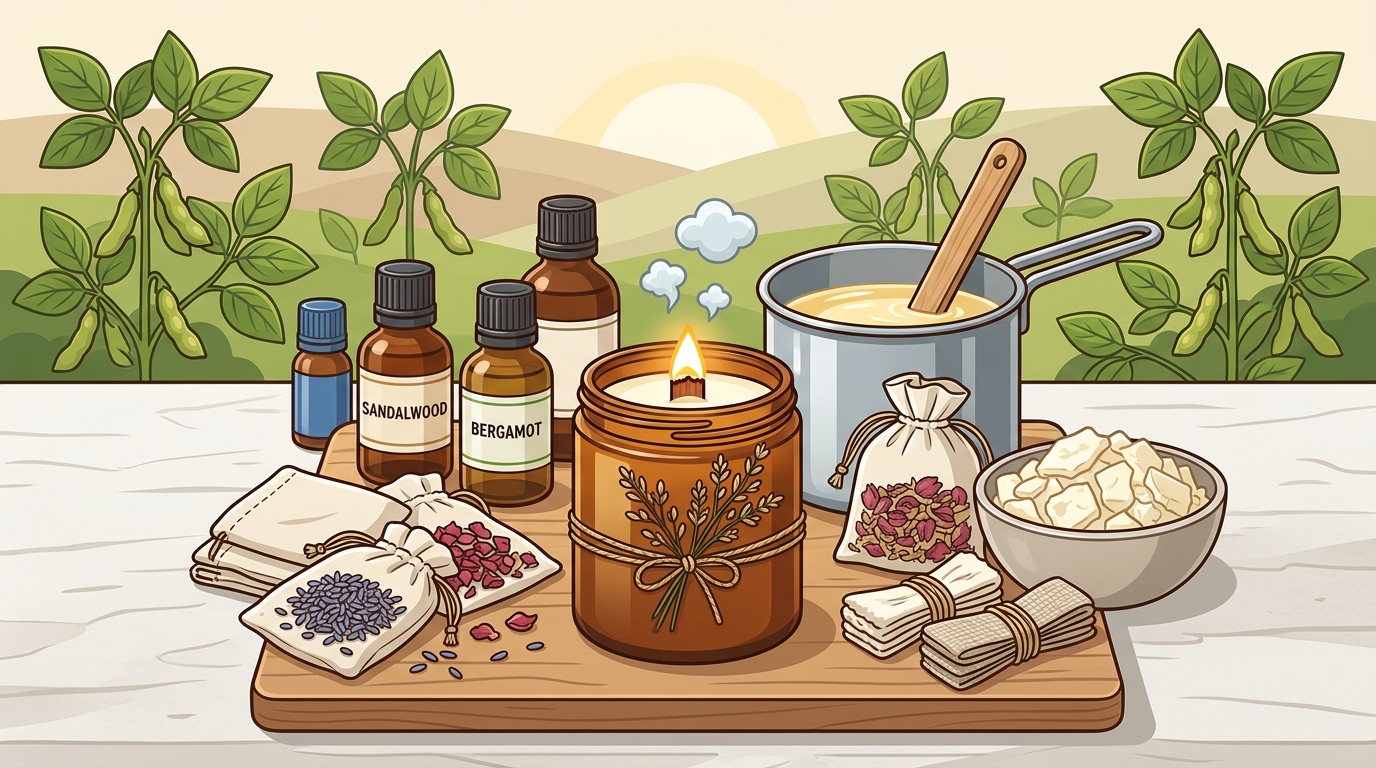
Yes, you can absolutely make eco-friendly candles with soy wax. Soy wax is derived from the oil of soybeans, making it a 100% natural, biodegradable, and renewable resource. Unlike paraffin wax, which is a petroleum byproduct, soy wax burns cleaner, produces less soot, and holds fragrance beautifully. This guide will walk you through the essential steps to create sustainable candles at home using high-quality supplies from Makesy. (aura candle vessels lids)
Why Soy Wax is the Eco-Friendly Choice
When considering sustainable candle making, the wax base is the most critical decision. Soy wax is a vegetable wax made from hydrogenated soybean oil. This process transforms the liquid oil into a solid wax that is easy to work with. The primary benefit of soy wax is its renewable nature. Soybeans are a widely available crop that can be harvested annually, unlike petroleum-based paraffin. (Cart)
Soy wax is also biodegradable. If you spill soy wax, it can be cleaned up with soap and water, whereas paraffin requires harsh chemicals. According to industry standards, soy candles burn approximately 30 to 50 percent longer than paraffin candles of the same size. This longevity reduces waste and provides better value for the maker and the consumer. Soy wax also has a lower melting point, which means it releases fragrance at a slower, more consistent rate. This results in a stronger scent throw without the need for excessive chemical additives.
Another significant advantage is the cleanliness of the burn. Paraffin wax can release toxic compounds such as toluene and benzene when burned. Soy wax does not produce these harmful emissions. This makes it a safer option for indoor air quality and for households with pets or children. The clean burn also means less soot on the container walls, which keeps your candles looking pristine throughout their life.
Essential Supplies for Sustainable Candles
To create high-quality eco-friendly candles, you need the right materials. The quality of your supplies directly impacts the burn performance and aesthetic of the final product. At Makesy, we provide a comprehensive range of candle making supplies designed for both beginners and professional makers.
1. Soy Wax
Soy wax comes in various forms, including pellet, block, and powder. Pellets are often preferred for beginners because they melt quickly and evenly. Block wax requires chopping but offers a smooth finish. Powder wax is excellent for creating textured, artisanal looks. Choose a wax that is specifically formulated for candle making to ensure proper fragrance load and burn characteristics.
2. Candle Wicks
Wicks are the engine of your candle. They must be matched to the wax type and container diameter. For soy wax, cotton or paper-core wicks are standard. Makesy offers a wide selection of wicks, including the Ultimate Wick system, which simplifies the process of finding the correct size. Using the wrong wick can lead to tunneling or a flame that is too large.
3. Fragrance Oils
Fragrance oils add scent to your candles. For an eco-friendly approach, look for phthalate-free options. Makesy offers a variety of functional fragrances and essential oils. Essential oils are natural extracts from plants, while fragrance oils are synthetic blends designed to mimic natural scents. Both can be used in soy wax, but it is important to check the flash point to ensure safety.
4. Containers
Reusable containers are a key part of the eco-friendly equation. Glass jars, tins, and ceramic vessels are popular choices. Makesy provides a range of Aura Candle Vessels and other packaging options that are durable and aesthetically pleasing. Ensure your containers are heat-resistant to prevent cracking during the pouring process.
Step-by-Step Soy Candle Making Guide
Creating your own soy candles is a rewarding process. Follow these steps to ensure a successful batch.
Step 1: Prepare Your Workspace
Set up a clean, flat surface. Protect your workspace with newspaper or a silicone mat. Gather all your supplies, including a double boiler or melting pitcher, a thermometer, and a stirring utensil. Secure your wick to the bottom of your container using a wick sticker or hot glue. Use a wick holder or pencil to keep the wick centered while the wax cools.
Step 2: Melt the Wax
Place your soy wax in a melting pitcher. Use a double boiler method to melt the wax gently. Do not overheat the wax, as this can damage its properties. Heat the wax to the recommended pouring temperature, which is typically between 170 and 185 degrees Fahrenheit for soy wax. Stir occasionally to ensure even melting.
Step 3: Add Fragrance
Once the wax reaches the target temperature, remove it from the heat. Add your fragrance oil at the appropriate rate, usually 6 to 10 percent of the wax weight. Stir slowly and thoroughly for at least two minutes to ensure the fragrance is fully incorporated. This process is called binding. Proper binding prevents the fragrance from evaporating during the cooling phase.
Step 4: Pour the Candle
Allow the wax to cool slightly to the pouring temperature, which is often around 135 to 145 degrees Fahrenheit for soy wax. Pour the wax slowly into your prepared container. Avoid pouring too quickly, as this can create air bubbles or disturb the wick. Leave a small amount of headspace at the top of the container.
Step 5: Cool and Cure
Let the candle cool at room temperature for 24 to 48 hours. Do not move the candle while it is cooling, as this can cause uneven surfaces or cracking. Once cooled, trim the wick to about 1/4 inch above the wax surface. Allow the candle to cure for at least one week before burning. Curing allows the fragrance to bind fully with the wax, resulting in a stronger scent throw.
Choosing Eco-Friendly Fragrances
The scent of your candle is a major factor in its appeal. When aiming for an eco-friendly product, consider the source of your fragrance. Makesy offers a diverse catalog of fragrances, including natural essential oils and synthetic fragrance oils.
Essential oils are derived from plants through distillation or pressing. They are natural and often preferred by those seeking a purely organic product. However, essential oils can be more expensive and may not hold up as well in soy wax as synthetic fragrances. Some essential oils, like citrus, are volatile and may evaporate quickly.
Synthetic fragrance oils are created in laboratories to mimic natural scents or create unique aromas. They are generally more cost-effective and offer a wider variety of scent profiles. Makesy ensures that their fragrance oils are safe for candle making and comply with industry standards. Look for fragrances that are labeled as phthalate-free for a healthier option.
Safety and Best Practices
Safety is paramount when working with hot wax. Always use a thermometer to monitor the temperature of your wax. Never leave melting wax unattended. Keep a fire extinguisher nearby in case of emergencies. Use heat-resistant gloves when handling hot containers.
Proper ventilation is also important. Work in a well-ventilated area to avoid inhaling fumes from melting wax or fragrance oils. Clean up any spills immediately. Soy wax spills can be cleaned with soap and warm water, while paraffin spills may require specialized cleaners.
Another best practice is to test your candles. Make a small batch first to ensure the wick size is correct and the fragrance load is appropriate. This saves time and materials in the long run. Makesy provides detailed support articles and wick charts to help you select the right components for your specific wax and container combination.
Key Takeaways
- Soy wax is a renewable, biodegradable, and clean-burning alternative to paraffin.
- Soy candles burn 30 to 50 percent longer than paraffin candles, reducing waste.
- Proper wick selection is critical for a safe and even burn.
- Fragrance should be added at the correct temperature to ensure proper binding.
- Curing time of one week or more enhances the scent throw of soy candles.
- Makesy offers a comprehensive range of eco-friendly candle making supplies.
- Safety gear, including thermometers and heat-resistant gloves, is essential.
Frequently Asked Questions
Is soy wax better for the environment than paraffin?
Yes, soy wax is derived from soybeans, a renewable resource, whereas paraffin is a petroleum byproduct. Soy wax is also biodegradable and burns cleaner, producing less soot and fewer toxins.
How long do soy candles last compared to paraffin?
Soy candles typically burn 30 to 50 percent longer than paraffin candles of the same size due to a lower melting point and slower burn rate.
Can I use essential oils in soy wax candles?
Yes, you can use essential oils in soy wax. However, they may have a weaker scent throw than synthetic fragrance oils. It is important to choose essential oils with a high flash point for safety.
What is the best wick for soy wax?
The best wick depends on the container diameter and wax type. Cotton or paper-core wicks are standard for soy wax. Makesy offers wick charts and the Ultimate Wick system to help you find the perfect match.
Do I need to cure soy candles?
Yes, curing is important. Allowing the candle to sit for at least one week helps the fragrance bind with the wax, resulting in a stronger and more consistent scent when burned.
How do I clean up soy wax spills?
Soy wax is biodegradable and can be cleaned up with soap and warm water. It does not require harsh chemicals like paraffin spills might.
Where can I buy eco-friendly candle making supplies?
Makesy offers a wide range of high-quality, eco-friendly candle making supplies, including soy wax, wicks, fragrances, and containers. Visit our collections page to explore our products.
Start Making Your Eco-Friendly Candles
Creating eco-friendly candles with soy wax is a fulfilling and sustainable hobby. By choosing natural materials and following best practices, you can produce high-quality candles that are safe for you and the environment. Makesy is your trusted partner for all your candle making needs. Explore our full range of supplies and start crafting your own sustainable candles today. Visit our help center for additional tips and guidance.