
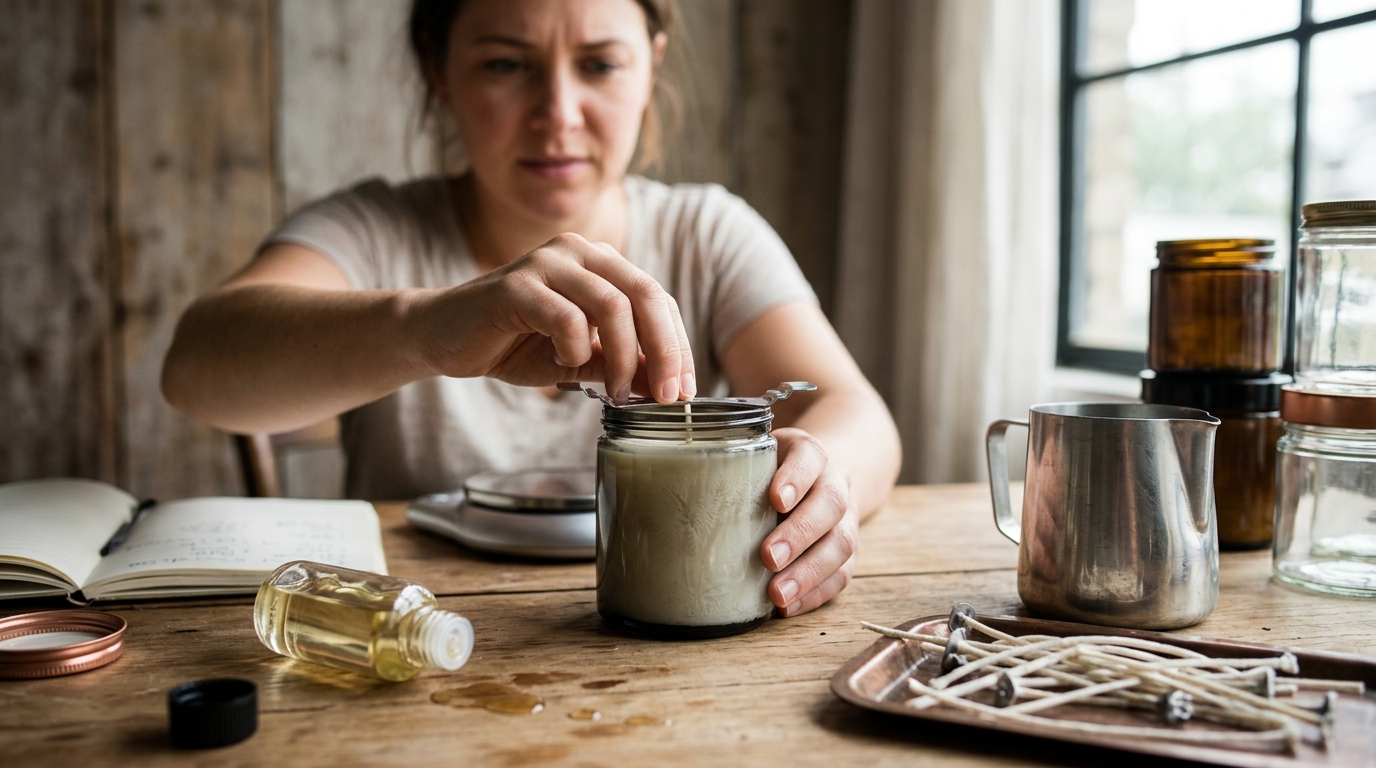
Candle making is a rewarding craft that blends chemistry with creativity, yet even experienced makers often stumble over seemingly minor supply choices. According to industry data, nearly 60% of beginner candle failures stem from incorrect wax-to-fragrance ratios or improper wick selection. These errors can lead to poor throw, sooting, or uneven burning, turning a creative project into a frustrating experiment. By understanding the core components of your supply chain, you can elevate your results from amateur to artisanal. This guide breaks down the most frequent pitfalls and provides the exact solutions you need to succeed.
Choosing the Right Wax for Your Vessel
The foundation of any successful candle is the wax itself. A common mistake is using a wax that does not adhere to the vessel material. For example, soy wax is a natural, biodegradable wax derived from soybean oil that offers a clean burn and excellent scent throw. However, soy wax requires specific curing times to perform optimally. If you use a paraffin-based wax in a porous vessel without proper sealing, you risk leakage and poor adhesion.
Another frequent error is ignoring the melting point. If the wax melts at too low a temperature for your intended use, the candle may soften or collapse in warm environments. Always check the flash point and melt point specifications provided by your supplier. At Makesy, we provide detailed technical sheets for every wax type to help you make informed decisions.
Wax Types and Best Uses
Paraffin wax is a petroleum-derived wax known for its strong scent throw and smooth finish. It is ideal for container candles where a glossy appearance is desired. On the other hand, beeswax is a natural wax produced by honeybees that burns longer and cleaner than most other waxes. It is perfect for eco-conscious makers but can be more expensive and harder to work with due to its high melting point.
Fragrance Oil Loading Errors
Fragrance oil loading refers to the percentage of fragrance oil added to the wax. A critical mistake is exceeding the recommended load rate, which is typically between 6% and 10% for most waxes. Overloading can cause the wax to sweat, leak, or fail to hold the scent, resulting in a weak throw. Conversely, underloading leads to a candle that smells faint or not at all.
It is also essential to add fragrance at the correct temperature. Adding oil too early can cause it to evaporate before it binds with the wax. Adding it too late can prevent proper mixing, leading to uneven scent distribution. The general rule is to add fragrance when the wax reaches a specific temperature range, usually between 185°F and 200°F, depending on the wax type.
Calculating Fragrance Load
To calculate the correct amount of fragrance oil, use the following formula: (Weight of Wax) x (Desired Load Percentage) = Weight of Fragrance Oil. For example, if you are using 16 ounces of wax and want a 9% load, you would add 1.44 ounces of fragrance oil. Precision in weighing is non-negotiable for consistent results.
Wick Sizing and Core Missteps
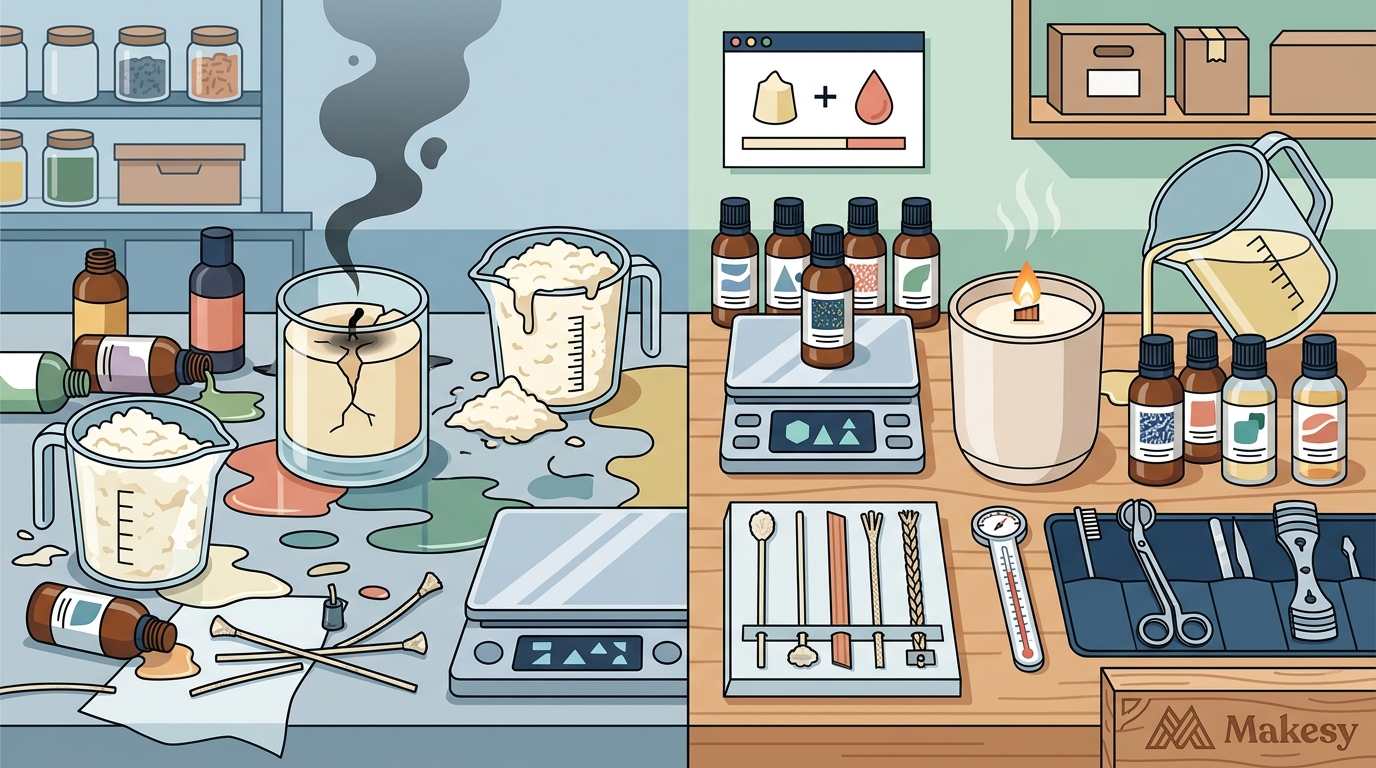
The wick is the heart of the candle, and selecting the wrong size is the most common cause of burning issues. A wick that is too small will tunnel down the center, leaving wax around the edges. A wick that is too large will create a tall flame, soot, and potentially overheat the vessel. Wick sizing depends on the wax type, fragrance load, and vessel diameter.
Another mistake is ignoring the wick core. The core material, often cotton or paper, affects how the wick burns. Cotton cores are standard and provide a steady flame. Paper cores can offer a more rigid structure for larger candles. Always test wicks in small batches before committing to a full production run.
Wick Testing Protocol
Conduct a burn test for every new wax-fragrance-wick combination. Observe the melt pool, flame height, and soot production. Adjust the wick size up or down by one or two sizes based on your observations. This iterative process ensures a safe and efficient burn.
Temperature Control During Pouring
Pouring temperature is critical for both the appearance and performance of your candle. Pouring wax that is too hot can cause shrinkage, sinkholes, and poor adhesion to the vessel. Pouring wax that is too cool can result in a rough surface, frosting, or air bubbles. Each wax type has an optimal pouring temperature range.
For soy wax, pouring between 135°F and 145°F is often recommended to minimize frosting and ensure a smooth finish. For paraffin, higher temperatures may be required to maintain fluidity. Use a reliable thermometer to monitor the wax temperature closely. Never guess the temperature, as even a few degrees can make a significant difference.
Avoiding Frosting in Soy Wax
Frosting is a natural occurrence in soy wax where white crystals form on the surface. While it does not affect performance, many makers find it aesthetically unpleasing. To reduce frosting, pour the candle at a lower temperature and cool it slowly in a draft-free environment. Preheating the vessel can also help reduce thermal shock and improve adhesion.
Misusing Additives and Dyes
Additives like UV inhibitors or stearic acid are sometimes used to improve candle performance. A common mistake is adding too much, which can alter the burn characteristics or cause cloudiness. UV inhibitors help prevent color fading in candles exposed to sunlight. Stearic acid can harden the wax and improve opacity, but it can also make the wax brittle if overused.
Dye selection is equally important. Candle dyes are formulated to bind with wax and provide vibrant colors. Using regular art supplies or food coloring can lead to poor color distribution, clogged wicks, or even fire hazards. Always use dyes specifically designed for candle making. At Makesy, we offer a wide range of eco-friendly dyes that are safe and effective.
Color Consistency Tips
To achieve consistent color, mix your dye thoroughly before adding it to the wax. Use a dedicated mixer to ensure even distribution. Test the color in a small sample before dyeing the entire batch. Remember that colors often appear darker when the wax is hot and lighten as it cools.
Supply Comparison Matrix
Understanding the differences between key supplies helps you avoid costly mistakes. The table below summarizes the pros and cons of common candle making materials.
| Supply Type | Best For | Common Mistake | Solution |
|---|---|---|---|
| Soy Wax | Eco-friendly, clean burn | Frosting and sinkholes | Pour at lower temps, cool slowly |
| Paraffin Wax | Strong scent throw, glossy finish | Black soot production | Trim wick to 1/4 inch |
| Cotton Wicks | Standard container candles | Incorrect sizing | Conduct burn tests |
| Fragrance Oils | Custom scents | Overloading (>10%) | Weigh precisely, follow load rates |
| Candle Dyes | Color customization | Using non-candle dyes | Use wax-specific dyes |
Key Takeaways
- Wax Adhesion: Ensure your wax type is compatible with your vessel material to prevent leakage.
- Fragrance Load: Never exceed the recommended fragrance load percentage, typically 6-10%, to avoid sweating.
- Wick Testing: Always perform burn tests for new wax-fragrance-wick combinations to ensure safety and performance.
- Temperature Control: Monitor pouring temperatures closely to prevent frosting, sinkholes, and poor adhesion.
- Proper Additives: Use only candle-specific dyes and additives to maintain burn quality and safety.
- Precision Weighing: Use a digital scale for all ingredients to ensure consistency in every batch.
- Slow Cooling: Cool candles slowly in a draft-free environment to minimize surface imperfections.
Frequently Asked Questions
Why does my soy candle frost?
Frosting is a natural crystallization process in soy wax. It can be minimized by pouring at a lower temperature and cooling the candle slowly in a draft-free area.
How do I choose the right wick size?
Wick size depends on the wax type, fragrance load, and vessel diameter. Conduct burn tests to find the wick that creates a full melt pool without sooting.
Can I use essential oils instead of fragrance oils?
Essential oils can be used, but they often have a weaker scent throw and may not bind well with all waxes. They also have lower flash points, requiring careful temperature management.
What is the ideal pouring temperature for paraffin wax?
Paraffin wax is typically poured between 160°F and 185°F, depending on the specific type and desired finish. Always refer to the manufacturer's guidelines.
How do I prevent tunneling in my candles?
Tunneling occurs when the wick is too small. Ensure your wick is sized correctly for the vessel diameter and conduct burn tests to verify the melt pool reaches the edges.
Why is my candle leaking?
Leaking can be caused by overloading fragrance oil, pouring at too high a temperature, or using a wax that does not adhere to the vessel. Check your load rates and pouring temperatures.
What is the difference between candle wax and paraffin?
Candle wax is a general term for materials used to make candles, including soy, beeswax, and paraffin. Paraffin is a specific type of petroleum-derived wax known for its strong scent throw.
Start Your Candle Journey
Avoiding common supply mistakes is the key to creating professional-quality candles. By selecting the right wax, fragrance, and wick, and by controlling your pouring temperature, you can ensure every candle burns beautifully. Visit Makesy today to explore our comprehensive range of candle making supplies, from premium waxes and fragrances to essential tools and vessels. Join our community of makers and elevate your craft with trusted resources and expert support.