

How to Create Soap Recipes That Actually Work and Sell
Understanding Saponification and Safety
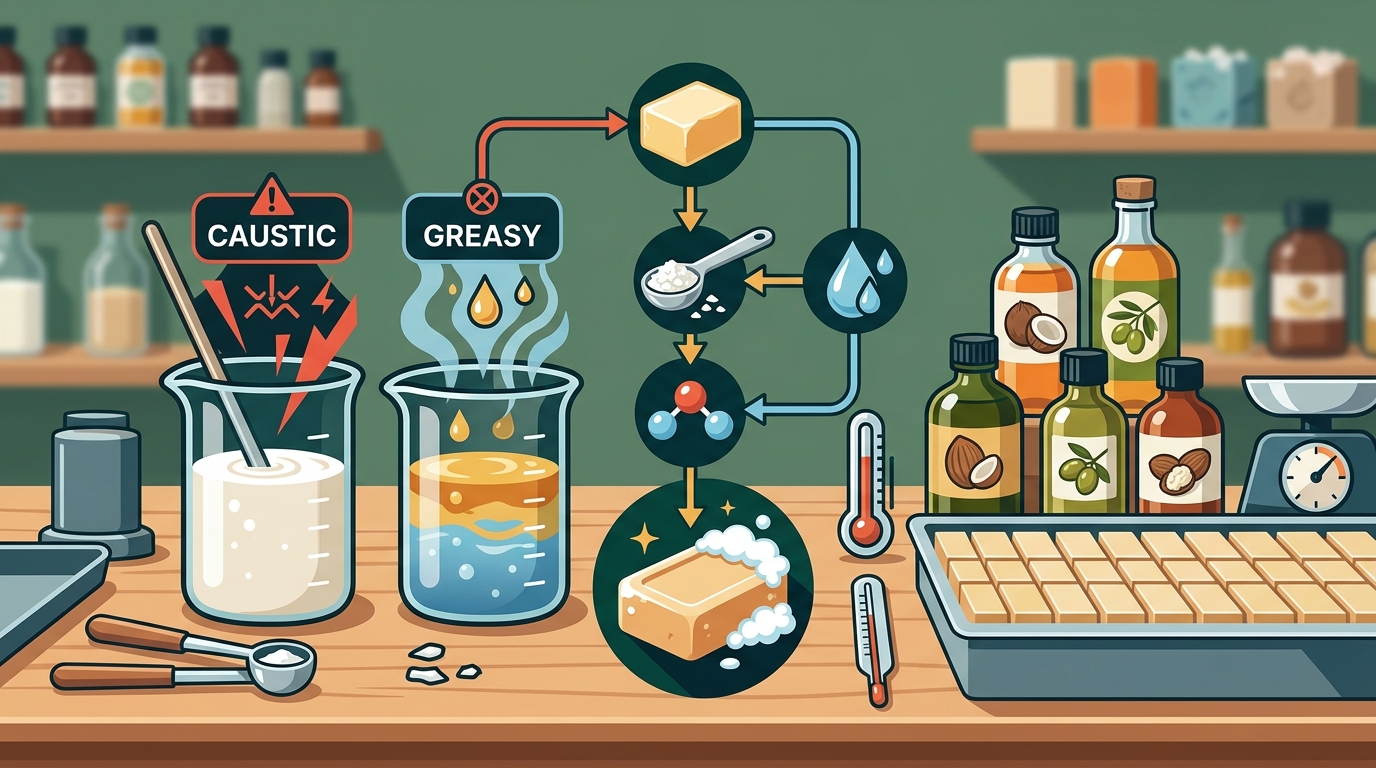
The foundation of any viable soap recipe is the saponification value. Saponification value is the specific amount of lye required to fully convert a particular oil into soap. If you use too much lye, the soap becomes caustic and unsafe for skin. If you use too little, the soap remains greasy and fails to lather properly. Makers must use a reliable calculator to determine these ratios for every oil in their blend. For additional details, review the Makesy shop fragrance oils.
Supersizing is a critical safety technique in this process. Supersizing is the practice of reducing the amount of lye by a small percentage to ensure no free lye remains in the final product. A common supersize range is 5% to 10%. This buffer accounts for measurement errors and ensures the soap is gentle. For example, if a recipe calls for 100 grams of lye, a 5% supersize would reduce it to 95 grams. This small adjustment significantly improves safety without drastically altering the soap's performance. For additional details, review the .
Implication: Prioritizing accurate saponification calculations and supersizing protects your brand reputation. A single batch of caustic soap can lead to customer complaints and legal liability. Consistency in these calculations builds trust with buyers who rely on your products for daily hygiene. For additional details, review the Customer Experience.
Selecting Oils for Market Appeal
Incorporating Fragrance and Color
Implication: A visually appealing and well-scented soap is more likely to be photographed and shared on social media. This organic marketing can drive significant sales for small businesses. By investing in high-quality fragrances and colorants, you create a product that stands out on the shelf and online. Consistency in color and scent from batch to batch is also crucial for maintaining customer loyalty. according to Soaps US Forest For additional details, review the Frequently Asked Questions.
Testing and Iterating Your Formulation
Before launching a new soap recipe, you must test it thoroughly. This involves making small batches and evaluating the soap over time. You should assess the soap's lather, hardness, and scent retention. Keep a detailed log of each batch, noting the ingredients, temperatures, and any observations. This data helps you identify trends and make informed adjustments. For example, if a batch turns out too soft, you might increase the percentage of hard oils in the next batch. according to Soaps US Forest For additional details, review the About.
Customer feedback is another valuable source of information. Once you have a stable recipe, share it with a small group of testers. Ask them about the soap's performance, scent, and overall experience. Their feedback can reveal issues you might have missed. For instance, testers might report that the scent fades too quickly or that the soap is too drying. Use this feedback to refine your formulation. Makesy's community forums and resources can also provide insights from experienced makers who have faced similar challenges.
Implication: Iteration is key to creating a successful soap recipe. By testing and refining your formulation, you ensure that your product meets the highest standards of quality and performance. This process also helps you identify potential issues before they become widespread. A well-tested recipe reduces the risk of customer dissatisfaction and returns, protecting your brand's reputation.
Key Takeaways
- Accurate saponification calculations and supersizing are essential for safety.
- Blending oils allows you to customize soap properties for specific markets.
- Fragrance and color are critical for visual appeal and impulse purchases.
- Thorough testing and customer feedback are necessary for refinement.
- Consistency in formulation builds trust and customer loyalty.
Frequently Asked Questions
What is the ideal supersize for a beginner soap maker?
A 5% to 10% supersize is generally recommended for beginners. This range provides a safety buffer against measurement errors while minimizing the impact on the soap's performance.
How do I know if my soap recipe is stable?
A stable recipe produces a consistent bar with the desired hardness and lather. You can test stability by making small batches and evaluating the soap over several weeks. If the soap remains consistent in texture and scent, it is likely stable.
Can I use essential oils in all soap recipes?
Not all essential oils are stable in all soap bases. Some may discolor or fade over time. It is best to test essential oils in small batches before committing to a large production run.
How important is the curing process for soap quality?
Curing is crucial for soap quality. It allows the soap to harden and the lye to fully react. A well-cured soap is harder, lasts longer, and is gentler on the skin.