
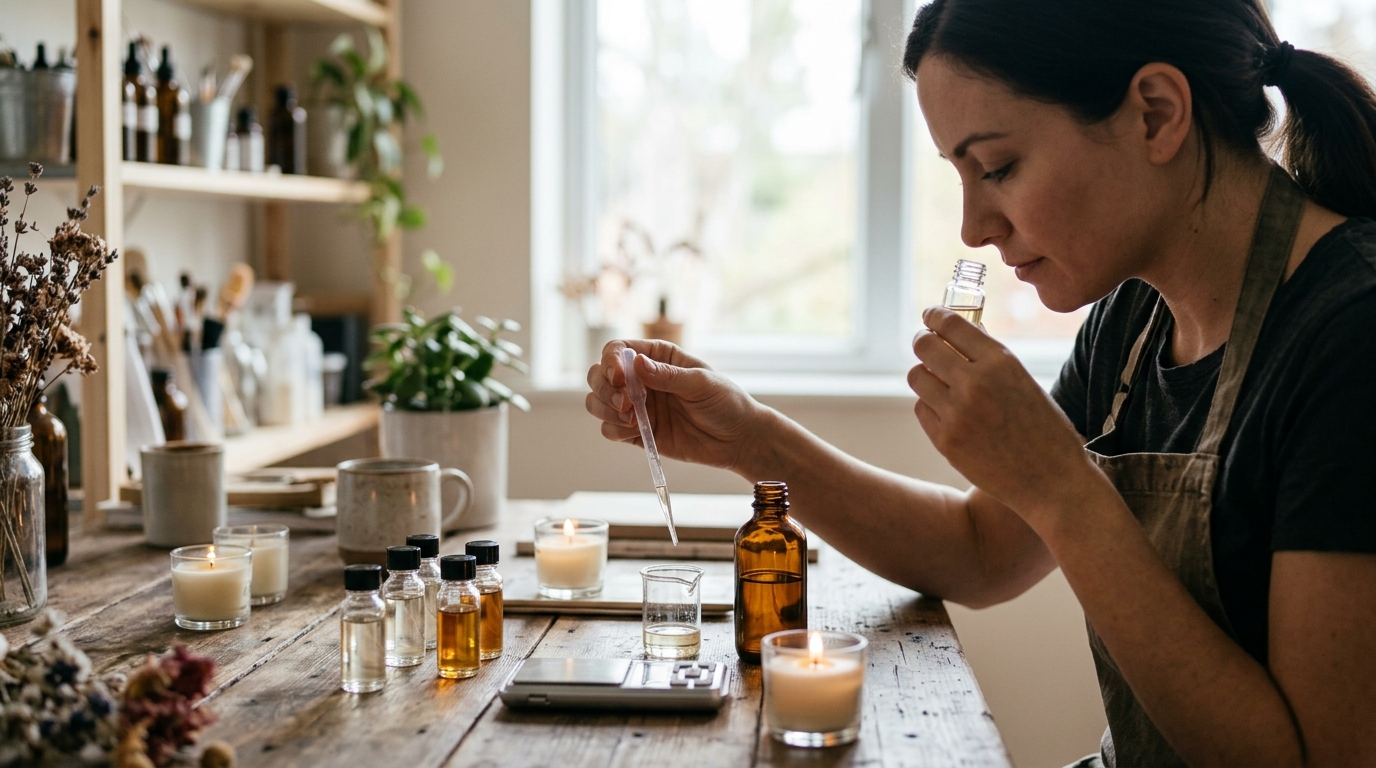
The best way to test fragrance blends before committing to a full batch is to create small-scale prototypes using the exact wax, wick, and vessel you plan to sell. This method ensures that the scent profile, burn time, and cold throw you observe in the test candle accurately reflect the final product. Makesy supports this rigorous testing process by providing high-quality, phthalate-free fragrance oils and sample packs that allow makers to validate their formulas efficiently and safely. For additional details, review the Makesy About Us 124.
Why Small-Scale Prototyping is Essential
Many makers skip the testing phase to save time, but this often leads to wasted materials and inconsistent products. A test candle is a small-scale prototype designed to evaluate how a specific fragrance oil interacts with a particular wax type under controlled conditions. Without this step, you risk discovering that a scent smells wonderful in a bottle but performs poorly when burned.
Testing allows you to measure critical performance metrics such as hot throw, cold throw, and burn stability. For example, a floral blend might smell intense in a sample vial but fade quickly in a soy wax candle. By creating a 4-ounce test candle, you can observe these variables without the financial risk of pouring a 50-pound batch. This approach aligns with the made better standard, which emphasizes quality and consistency in every step of the production process.
The Importance of Matching Final Variables
To get accurate results, your test candle must replicate the final product as closely as possible. This means using the same wax blend, wick size, and container material. If you plan to sell a 10-ounce glass jar candle, your test should also be poured into a similar glass vessel. Changes in vessel material can affect heat distribution and, consequently, the scent release.
Wick selection is a critical variable that directly impacts burn performance. A wick that is too small may cause tunneling, while one that is too large can lead to sooting. Makesy offers a wide range of eco-friendly wicks, including bamboo and wooden options, which help makers find the perfect match for their specific wax and fragrance combination. Ensuring that your test setup mirrors your final production setup is the most effective way to predict real-world performance.
Evaluating Cold and Hot Throw
Cold throw refers to the scent a candle emits before it is lit, while hot throw is the scent released during the burn. Both are essential for customer satisfaction, but they behave differently depending on the fragrance chemistry. A blend with strong top notes may have an excellent cold throw but a weak hot throw, or vice versa. Testing both aspects ensures that your product delivers a consistent olfactory experience from the moment the customer opens the jar to the end of the burn.
To evaluate these metrics, light the test candle and observe the scent at 30 minutes, 1 hour, and 2 hours of burn time. Note any changes in intensity or character. For instance, a woody scent might become more prominent as the candle burns longer. This detailed observation helps you refine the blend ratios to achieve the desired balance. Using fragrance oil sample packs allows you to experiment with different concentrations and combinations without committing to large quantities.
Documenting Results for Consistency
Keeping a detailed log of your test results is crucial for maintaining consistency in future batches. Record the fragrance load percentage, wax type, wick size, and any observations about burn quality and scent performance. This documentation serves as a reference when you scale up production. It also helps you troubleshoot issues if a future batch does not perform as expected.
For example, if a test candle with a 6% fragrance load produces a sooty flame, you might need to reduce the load to 5% or switch to a different wick. By documenting these adjustments, you create a reliable formula that can be replicated batch after batch. Makesy provides resources such as fragrance percentage charts to help makers determine safe and effective loadings for different wax types. This data-driven approach minimizes guesswork and ensures that your final product meets quality standards.
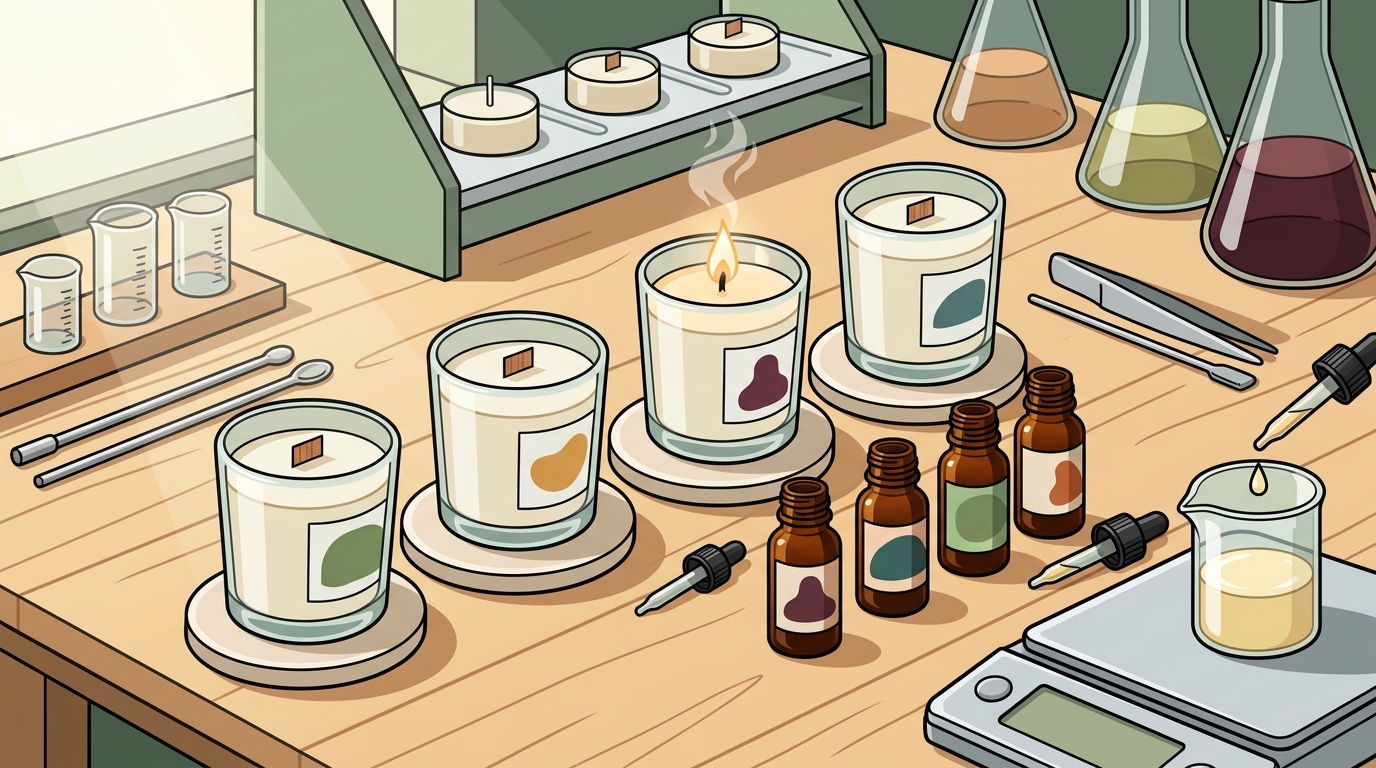
Scaling Up with Confidence
Once your test candle performs consistently, you can scale up to a full batch with confidence. However, it is still wise to pour a small pilot batch before committing to large-scale production. This final check ensures that the scaling process does not introduce new variables, such as mixing time or temperature, that could affect the final product. A pilot batch allows you to verify that the scent and burn performance remain consistent at a larger volume.
Scaling up is a natural progression for makers who want to grow their business. Makesy supports this growth by offering premium candle making supplies in bulk quantities, ensuring that you have access to the same high-quality ingredients whether you are making one candle or one hundred. This consistency in supply is key to maintaining the quality that your customers expect.
Key Takeaways
- Always test fragrance blends in the exact wax, wick, and vessel you plan to use for the final product.
- Evaluate both cold throw and hot throw at multiple burn intervals to ensure a consistent scent profile.
- Document all test results, including fragrance load, wick size, and burn observations, to maintain consistency.
- Use sample packs to experiment with different fragrance combinations before committing to larger quantities.
- Conduct a small pilot batch after successful testing to verify performance at a larger scale.
- Choose phthalate-free and high-quality fragrance oils to ensure safety and optimal performance.
Frequently Asked Questions
How many test candles should I make before committing to a full batch?
It is recommended to make at least three to five test candles to account for variability in pouring and burning. This allows you to identify consistent patterns and ensure that the performance is reliable.
What is the ideal fragrance load for a test candle?
The ideal fragrance load depends on the wax type and the specific fragrance oil. Generally, loads between 6% and 10% are common for soy wax, but you should always refer to the manufacturer's recommendations for the specific oil you are using.
Can I use essential oils for testing?
Yes, you can use essential oils for testing, but keep in mind that they behave differently from synthetic fragrance oils. Essential oils may have different burn characteristics and scent longevity, so it is important to test them thoroughly.
How long should I let a test candle cure before burning it?
It is best to let a test candle cure for at least 24 to 48 hours before burning it. This allows the fragrance to fully bind with the wax, providing a more accurate representation of the final product's performance.
What should I do if my test candle tunnels?
If your test candle tunnels, it may indicate that the wick is too small for the container size. Try using a larger wick or a different wick material to improve the burn pattern and ensure an even melt pool.