
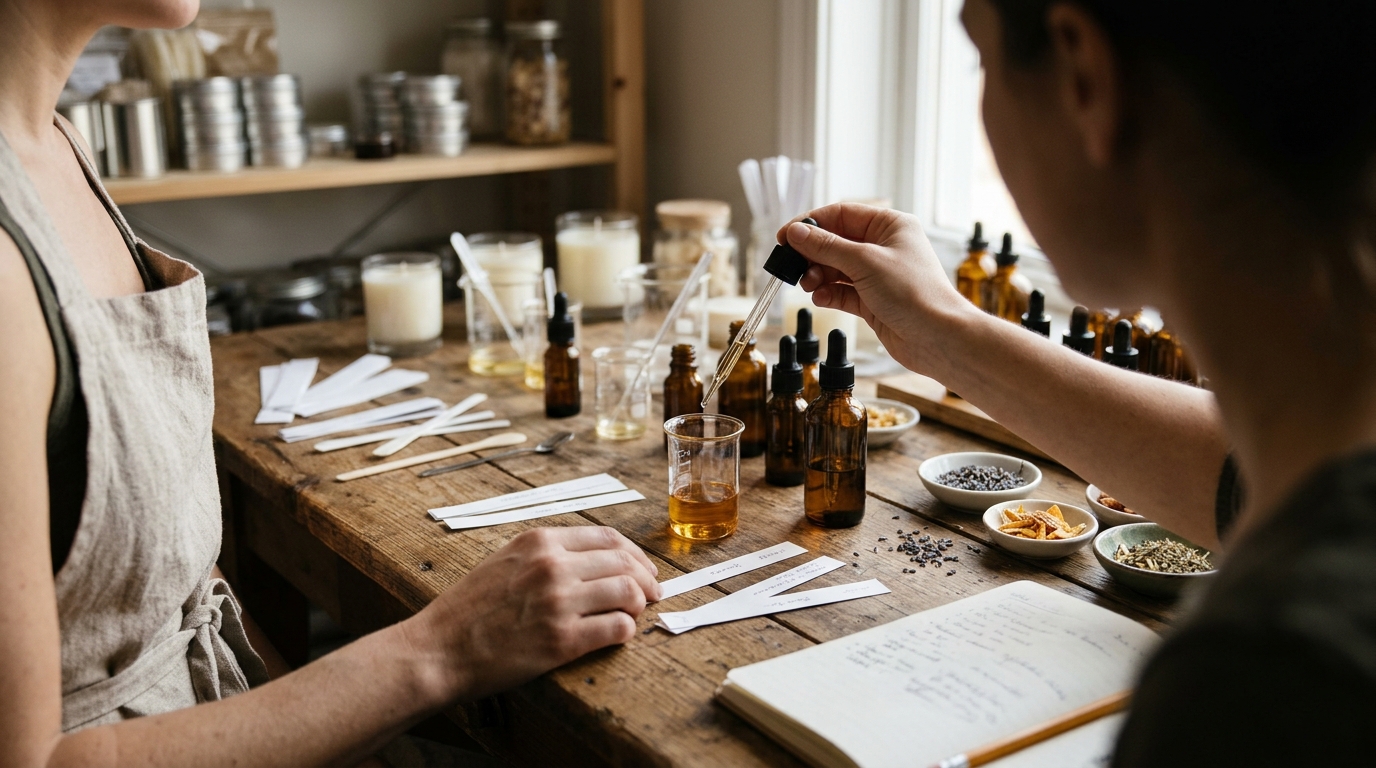
Testing custom fragrance blends is a critical step in ensuring your homemade candles and soaps deliver a consistent, high-quality scent experience. Without rigorous testing, you risk creating products that smell different in the jar than on the skin, or that fade too quickly. Makesy supports makers in this process by providing premium, eco-conscious supplies that allow for precise experimentation. This guide outlines seven essential methods to validate your blends before you scale production.
1. The Cold Test
Assess the top notes and initial impression of your blend.
Cold testing involves smelling the fragrance oil directly from the bottle or on a blotter paper without heat. This method helps you identify the top notes and the overall character of the scent before it is incorporated into wax or soap base. It is the fastest way to catch any off-notes or harsh chemical smells that might be masked once the product is heated.
2. The Hot Test in Wax
Verify the scent throw and stability in a candle medium.
Hot testing requires pouring a small batch of wax infused with your fragrance blend and lighting it. This step is crucial for candle makers because heat alters the volatility of fragrance molecules. You must observe the scent throw, or how far the fragrance projects, and ensure the blend remains stable without separating from the wax during the burn cycle.
3. The Soap Cure Test
Monitor scent evolution during the saponification process.
For soap makers, the chemical reaction of saponification can alter fragrance profiles significantly. You should test your blend in a small batch of soap and evaluate the scent at different stages of the cure, typically at one week, two weeks, and four weeks. This ensures the final product retains the intended aroma after the full curing period.
4. The Skin Patch Test
Check for skin compatibility and irritation potential.
When creating bath and body products, a skin patch test is essential for safety. Apply a small amount of the diluted blend to a discreet area of skin and wait 24 to 48 hours. This helps identify any potential allergic reactions or sensitivities that could affect your customers, ensuring your product is safe for diverse skin types.
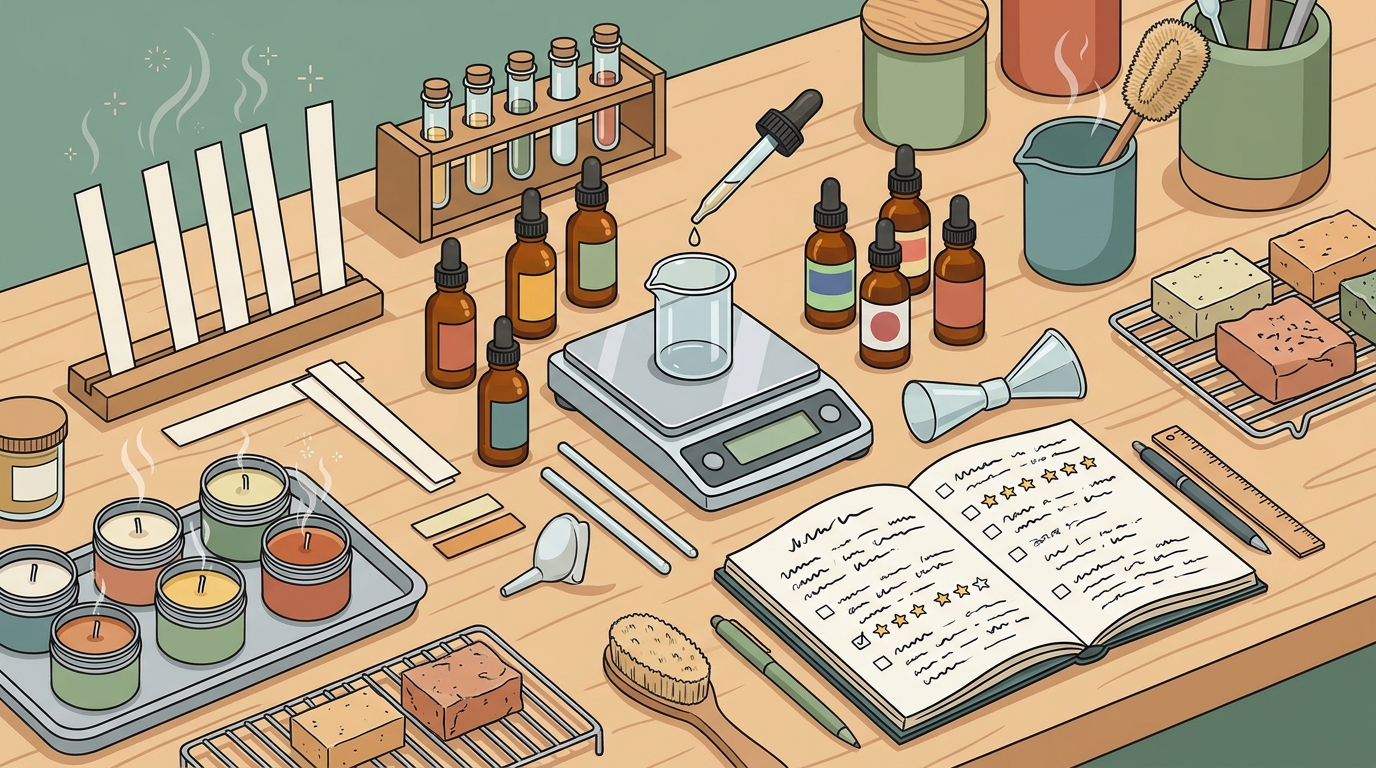
5. The Long-Burn Stability Test
Ensure the fragrance does not degrade over extended burn times.
Some fragrance blends may smell pleasant initially but become harsh or fade completely after several hours of burning. Conduct a long-burn test by lighting the candle for a full burn cycle, typically 4 to 6 hours. This reveals if the blend is stable under continuous heat and if the scent profile remains consistent from start to finish.
6. The Room Scent Projection Test
Evaluate how the fragrance interacts with the surrounding environment.
Place the finished product in a room of varying sizes and observe how the scent projects. A blend that works well in a small bathroom may be too weak for a large living room. This environmental test helps you determine the appropriate fragrance load for different product types and intended usage spaces.
7. The Batch Consistency Test
Confirm reproducibility across multiple small batches.
Before scaling up, create three separate small batches using the same recipe and process. Compare the scent and appearance of each batch to ensure consistency. This step is vital for business owners who need to guarantee that every unit they sell meets the same quality standard, building trust with their customers.
Choosing the Right Test for Your Product
Select your testing method based on the final product type. For candles, prioritize hot and long-burn tests. For soaps, focus on cure and skin tests. Always use high-quality, eco-conscious supplies from Makesy to ensure your testing results are accurate and reliable. Consistent testing is the foundation of a successful DIY brand.
Frequently Asked Questions
How much fragrance oil should I use for testing?
For testing purposes, use a standard fragrance load of 6% to 10% of your wax or soap base weight. This range is typical for most commercial products and provides a realistic representation of the final scent intensity.
Can I test fragrance blends without making a full product?
Yes, you can perform cold tests using blotter paper or direct sniffing. However, for accurate results, you should always test in the intended medium, such as wax for candles or soap base for soaps, as the carrier affects the scent profile.
How long should I wait to evaluate a soap batch?
Wait at least one week for an initial evaluation, but a full four-week cure is recommended for a final assessment. The scent of soap can change significantly as it cures, so patience is key to accurate testing.
What if my fragrance smells different in the candle than in the soap?
This is common because heat and chemical reactions affect fragrance molecules differently. You may need to adjust the blend or use a different fragrance oil specifically formulated for each product type to achieve the desired result.
Where can I find high-quality fragrance oils for testing?
Makesy offers a wide range of premium, eco-conscious fragrance oils designed for DIY makers. Their products are sourced with quality in mind, ensuring reliable results for your testing and final products. Learn more: Makesy shop fragrance oils.