
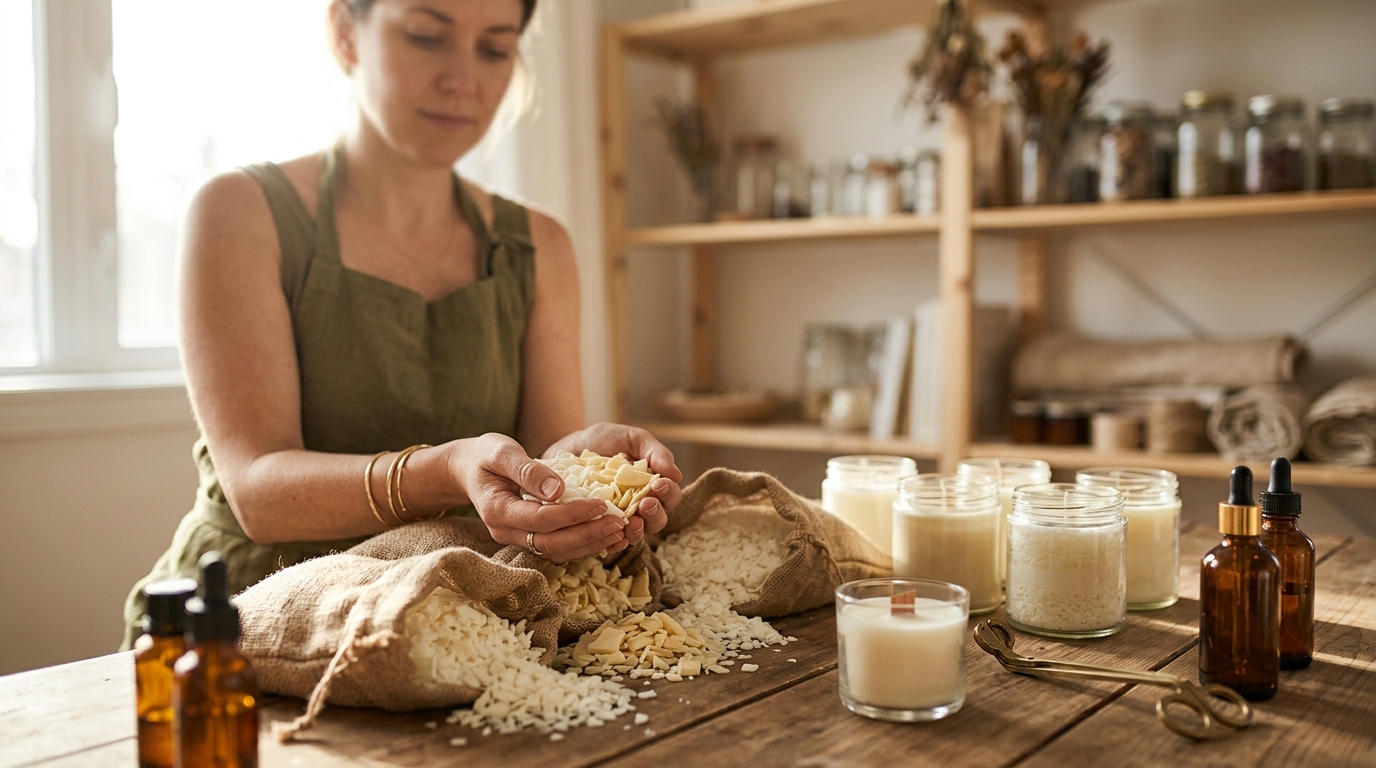
Picking the perfect candle wax can feel overwhelming when you are staring at a shelf full of soy, coconut, beeswax, and paraffin options. The wax you select affects everything from scent throw and burn time to the final look of your finished candle. Whether you are pouring your very first container candle or scaling a small business, understanding each wax type is the fastest way to avoid costly trial and error. In this guide we break down every major wax category, compare key performance traits side by side, and help you match the right wax to your specific project goals.
Why Your Wax Choice Matters
Candle wax is the fuel that feeds the flame, and it directly controls burn time, scent distribution, and visual finish. A wax with a low melt point works well in containers but will slump as a pillar. A wax with high fragrance retention fills a room with aroma, while a poor match leaves your candle smelling flat.
Understanding wax properties before you pour saves wasted materials and hours of testing. The right wax also determines wick compatibility, so pairing wax and wick correctly is essential for a safe, even burn.
Common Candle Wax Types Explained
Soy Wax
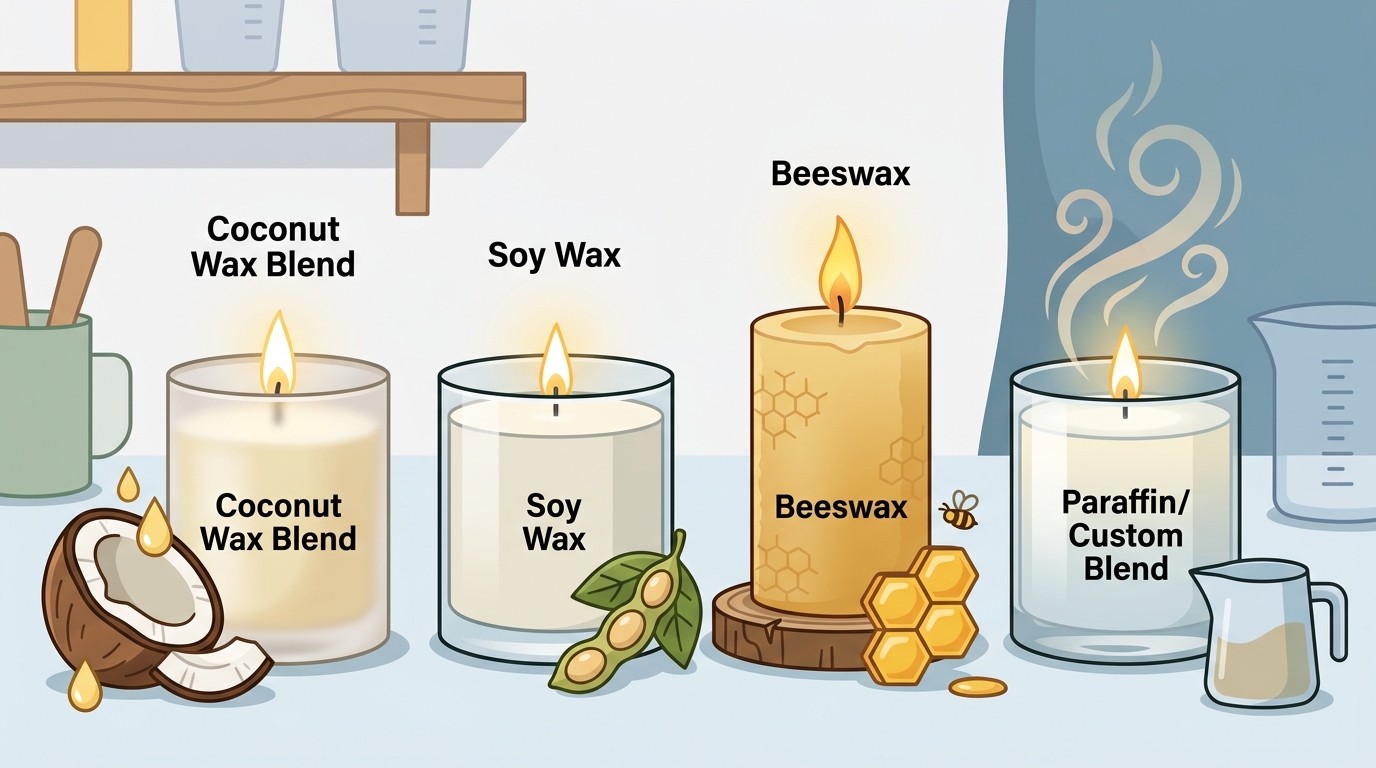
Soy wax is a vegetable wax made from hydrogenated soybean oil. It burns cleanly, is biodegradable, and appeals to eco-conscious consumers. Soy wax is ideal for container candles, though its lower melting point may not be suitable for pillar candles. Blends like Makesy's Deluxe Satin Soy add a small amount of food-grade paraffin to improve hot throw while keeping the wax beginner-friendly.
Coconut Wax Blends
Coconut wax is a newer addition made from hydrogenated coconut oil. It delivers a creamy, luxurious appearance and excellent scent throw. Makesy's Virgin Coconut Soy Wax is the brand's number-one selling blend, offering exceptional adhesion, clean burning, and up to a 12% fragrance load. For a unique twist, the Coco Apricot Creme Wax combines apricot, coconut, and soy for smooth tops burn after burn.
Beeswax
Beeswax is a natural wax produced by honeybees and has been used for candle making since ancient times. It offers a warm golden color, a subtle honey scent, and minimal soot. However, beeswax is more expensive and may not hold added fragrance as well as other options. Makesy's Beeswax Coco Creme blend solves this by combining ethically sourced beeswax with coconut, soy, and palm waxes for better scent performance.
Paraffin and Palm Wax
Paraffin wax is a petroleum byproduct and the most widely used candle wax in the world. It is affordable, easy to work with, and has excellent fragrance retention. Palm wax, derived from palm oil, is renewable and biodegradable, known for its unique crystalline finish. Makesy's Pure Palm Paraffin Wax merges both for a creamy, smooth blend suited to containers, pillars, and votives.
Wax Comparison Table
| Wax Type | Best For | Scent Throw | Melt Point | Eco-Friendly |
|---|---|---|---|---|
| Soy (Deluxe Satin Soy) | Containers, melts | Good | ~120 °F | Yes |
| Coconut Soy (Virgin Coconut Soy) | Containers, tarts | Excellent | ~122 °F | Yes |
| Coco Apricot Creme | Containers, massage candles | Excellent | ~129 °F | Yes |
| Beeswax Coco Creme | Containers, melts, molds | Good | ~145 °F | Yes |
| Hemp Coco Soy | Containers, melts, molds | Excellent | ~125 °F | Yes |
| Pure Palm Paraffin | Containers, pillars, votives | Excellent | ~130 °F | Partial |
Use Makesy's full wax comparison chart for a detailed side-by-side breakdown of every blend.
Matching Wax to Your Project Type
Container candles pair best with softer waxes that adhere to glass, like coconut soy or soy blends. For pillar and votive candles, you need a harder wax with a higher melt point, such as palm paraffin. If you are making wax melts or tarts, almost any container wax will work because structural rigidity is less critical.
Beginners often find soy-based blends the easiest starting point. Makesy's wick-to-wax buying guide pairs each wax with specific wick recommendations so you can skip weeks of trial pours.
Scent Throw and Fragrance Load
Scent throw is the term candle makers use to describe how well a candle distributes fragrance into a room. "Cold throw" refers to the scent when the candle is unlit, while "hot throw" describes the aroma during burning. Most Makesy wax blends handle a 9 to 10 percent fragrance load, and the Virgin Coconut Soy supports up to 12 percent.
The optimal mix and pour temperature for most coconut and soy blends is 180 to 190 °F (82 to 88 °C). Pouring outside this range can reduce fragrance binding and cause uneven surfaces. According to the National Candle Association, proper wick sizing and wax-fragrance balance are the two biggest factors in a safe, well-performing candle.
Eco-Friendly and Clean-Burn Considerations
Sustainability is a growing priority for both hobbyists and candle-business owners. Soy, coconut, and beeswax are all derived from renewable resources. Makesy's waxes are gluten-free, toxin-free, paraben-free, and phthalate-free, aligning with the brand's made better standard.
If marketing to eco-conscious buyers, labeling your candles with specific wax origins builds trust. Pairing clean wax with premium candle vessels and sustainable packaging rounds out a brand story customers connect with.
Key Takeaways
- Soy wax is beginner-friendly, affordable, and ideal for container candles.
- Coconut wax blends deliver superior scent throw and a luxurious creamy finish.
- Beeswax burns slowly with minimal soot but holds added fragrance less effectively on its own.
- Paraffin and palm wax offer the widest versatility across containers, pillars, and votives.
- Always match your wick type and size to your chosen wax for a safe, even burn.
- Most natural wax blends perform best at a 180 to 190 °F pour temperature.
- Eco-friendly wax choices strengthen your brand story and appeal to conscious consumers.
Frequently Asked Questions
What is the best wax for beginner candle makers?
Soy-based blends like Deluxe Satin Soy are widely recommended for beginners because they are easy to melt, forgiving to pour, and produce a clean burn with minimal troubleshooting.
Can I mix different types of candle wax together?
Yes. Many popular candle waxes are already blends. Coconut soy, coco apricot creme, and hemp soy all combine multiple waxes to optimize performance. Custom blending is possible but requires testing.
What wax gives the strongest scent throw?
Coconut wax blends and paraffin-based waxes are known for the strongest hot throw. Virgin Coconut Soy Wax supports up to a 12 percent fragrance load, making it a top choice for highly scented candles.
Is soy wax better than paraffin wax?
Each has trade-offs. Soy wax is renewable and burns cleanly, while paraffin is more affordable and holds fragrance exceptionally well. Studies cited by wax manufacturers indicate both burn cleanly when properly wicked.
What wax should I use for pillar candles?
Pillar candles need a harder wax with a higher melt point. Pure palm paraffin wax is a strong option because it holds its shape, burns evenly, and provides excellent scent throw.
How do I know which wick to pair with my wax?
Wick selection depends on wax type, vessel diameter, and fragrance load. Makesy publishes a wick-to-wax buying guide with specific recommendations for every wax blend they sell.
Does candle wax expire?
Wax itself does not spoil, but fragrance oils mixed into wax can degrade over time. Store unused wax in a cool, dry place away from direct sunlight to maintain quality.
What is coco apricot creme wax?
Coco apricot creme wax is a vegan blend of natural apricot, coconut, soy, and a small amount of food-grade paraffin. It is prized for its creamy appearance, excellent adhesion, and smooth tops after each burn.
Get Started Today
Ready to find your perfect wax? Browse the complete candle wax collection at Makesy to explore soy, coconut, beeswax, and paraffin blends. If you are still unsure, grab the Wax Discovery Kit to test small batches of every blend before committing to bulk. Your next best-selling candle starts with the right wax.