
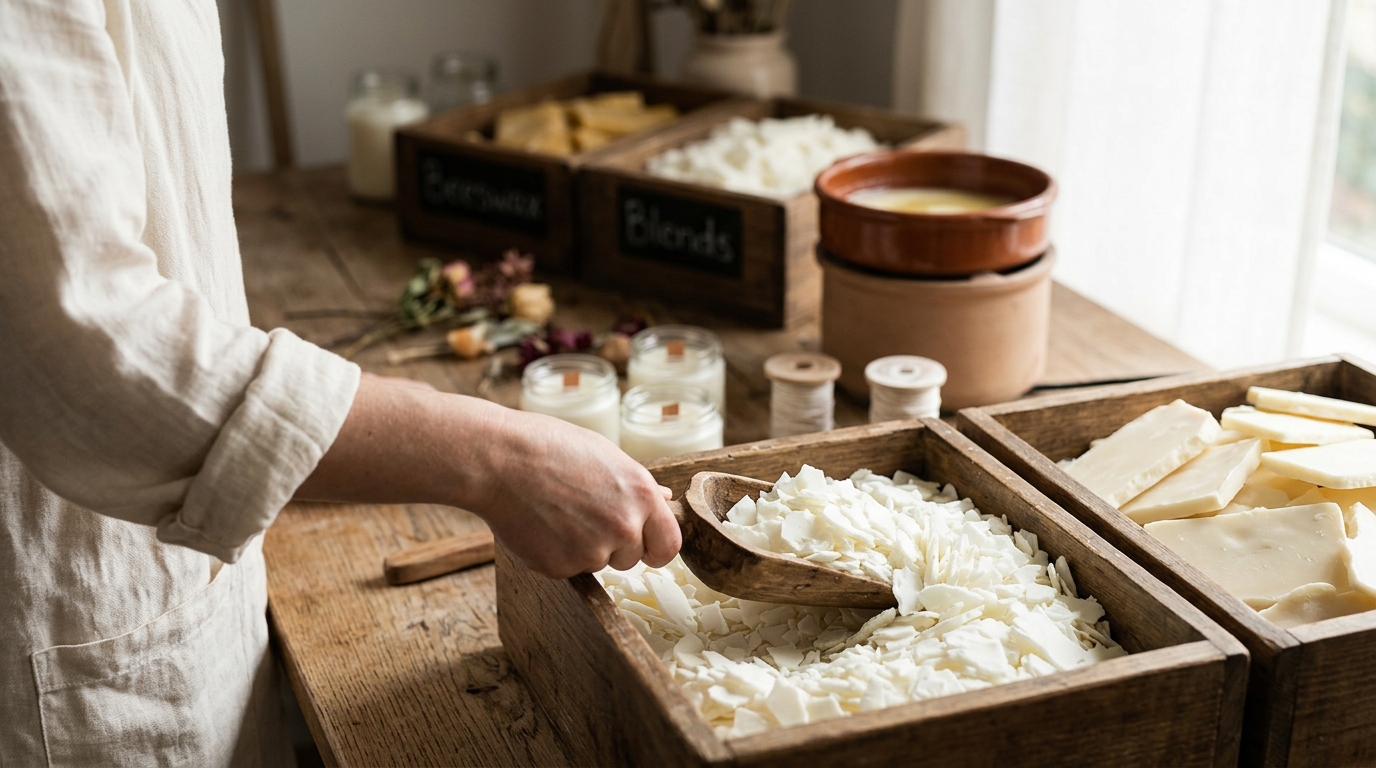
Choosing the right candle wax is one of the most important decisions you will make as a maker. The wax you select affects burn time, scent throw, appearance, and even the environmental footprint of your finished candle. With options ranging from soy and coconut blends to beeswax and paraffin, the choices can feel overwhelming. This guide breaks down every major wax type, compares their key properties side by side, and helps you match the perfect wax to your specific project, whether you are pouring your first container candle or scaling a small business.
What Is Candle Wax and Why Does It Matter?
Candle wax is the fuel source that feeds the flame through capillary action in the wick. According to the National Candle Association, the wax type directly determines how a candle burns, how it releases fragrance, and how long it lasts. Every wax has a unique melting point, hardness, and fragrance load capacity, so understanding these properties is essential before you pour.
Fragrance load is the maximum percentage of fragrance oil a wax can hold before performance degrades. Scent throw is the strength of a candle's fragrance, measured as cold throw (unlit) and hot throw (while burning). These two metrics should guide your wax decision just as much as aesthetics or cost.
Soy Wax: The Eco-Friendly Staple
Soy wax is a plant-based wax made from hydrogenated soybean oil. It is renewable, biodegradable, and produces less soot than paraffin, making it a top pick for environmentally conscious makers. Makesy's soy candle wax collection includes options like Supernatural Soy Flakes, which are 100% natural, skin-safe, and microwavable for easy melting.
Best Uses for Soy Wax
Soy wax is ideal for container candles, but its lower melting point means it generally is not suitable for freestanding pillar candles. It delivers a softer scent throw compared to paraffin, so makers who want a subtle, clean-burning candle often prefer it.
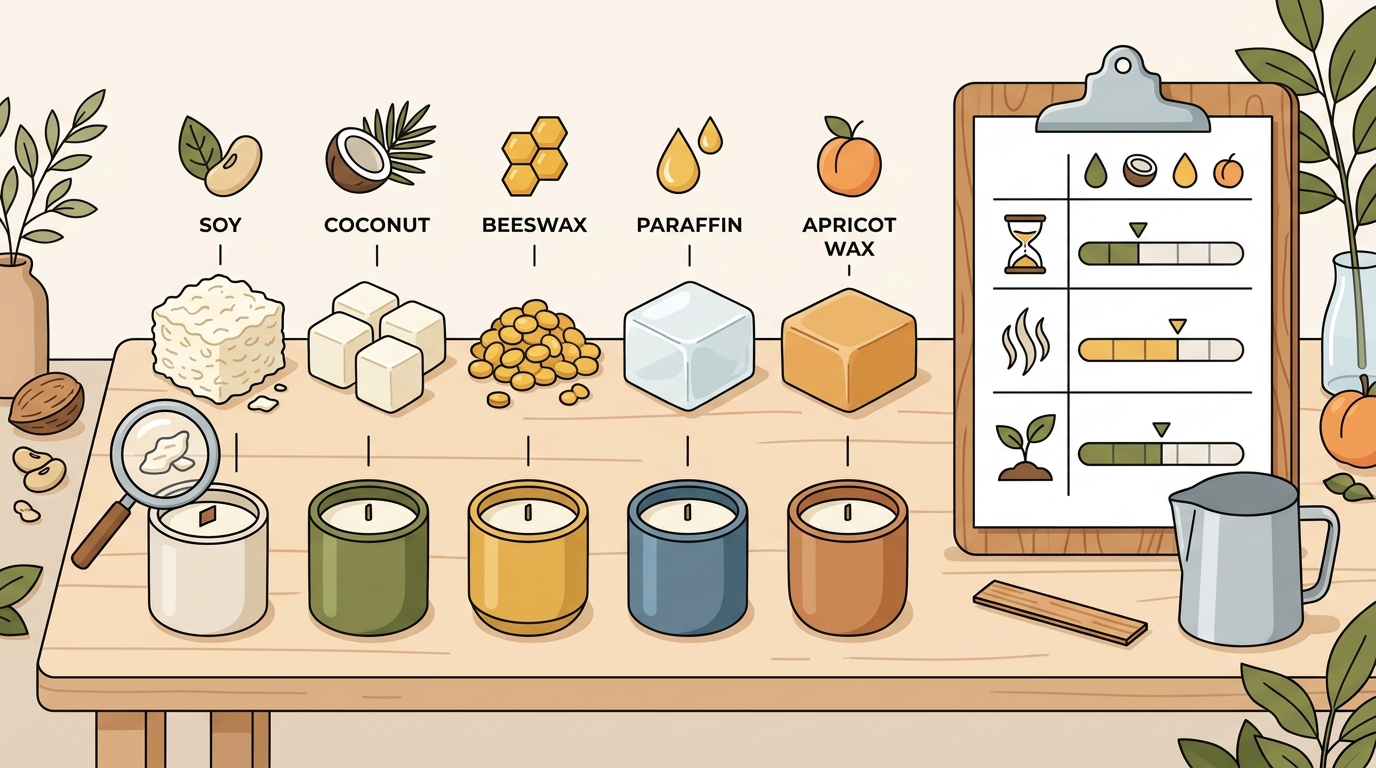
Fragrance Performance
Most pure soy waxes handle a fragrance load of around 8 to 10%. Blended soy waxes, such as Makesy's Deluxe Satin Soy, can handle up to 12% and offer improved hot throw thanks to their soy-and-paraffin formulation.
Coconut Wax Blends: Luxurious and Clean-Burning
Coconut wax is made from hydrogenated coconut oil and is a newer, eco-friendly addition to candle making. It is often blended with apricot, soy, or a small amount of food-grade paraffin to improve structure and performance. Makesy's coconut wax collection features two standout options.
Virgin Coconut Soy Wax
This vegan blend of natural soy and coconut is Makesy's number-one selling wax. It produces a creamy white appearance, exceptional adhesion, and excellent hot and cold throw. It is a single-pour wax, which means fewer steps for beginners.
Coco Apricot Creme Wax
Coco Apricot Creme is a luxurious blend made from natural apricot and coconut oils. Coconut wax candles in general deliver a creamy, high-end look and outstanding scent throw, which is why they have become a favorite among small-business candle makers.
Beeswax: The Natural Classic
Beeswax is a natural wax produced by honeybees and has been used for candle making since ancient times. It is non-toxic, sustainable, and features a natural honey scent with a warm golden color. Makesy's Beeswax Coco Creme blend combines the charm of beeswax with the performance of coconut wax, making it one of the easiest beeswax blends to work with.
Pure beeswax has a higher melting point (around 62 to 65 °C), which means longer burn times. However, it can be more expensive and harder to scent than other waxes. The blended version solves both issues while keeping the natural appeal intact.
Paraffin and Palm Wax: Versatile Performers
Paraffin wax is a byproduct of petroleum refining and remains the most widely used candle wax in the world. It is affordable, easy to work with, and has excellent fragrance retention. Paraffin candles provide a clean, bright burn and work for both container and pillar candles.
Palm Wax
Palm wax is derived from palm oil and is known for its unique crystalline appearance. It is renewable and biodegradable, with excellent fragrance retention and slow burn characteristics. Makesy's Pure Palm Paraffin Wax blends ethically sourced RSPO palm with paraffin, making it suitable for container, pillar, and votive styles.
Wax Comparison Table
| Wax Type | Source | Best For | Scent Throw | Eco-Friendly | Fragrance Load |
|---|---|---|---|---|---|
| Soy Wax | Soybean oil | Container candles, melts | Moderate | Yes | 8-10% |
| Coconut Soy Blend | Coconut & soy oils | Container candles | Strong | Yes | 9-12% |
| Coco Apricot Creme | Coconut & apricot oils | Container candles, melts | Strong | Yes | 10-12% |
| Beeswax Blend | Honeybee wax & coconut | Container candles | Moderate | Yes | 6-9% |
| Paraffin | Petroleum | Containers & pillars | Strong | No | 9-12% |
| Palm Paraffin Blend | Palm oil & paraffin | Containers, pillars, votives | Strong | Partially | 9-11% |
Matching Wax to Your Project Type
Your candle style should drive your wax choice. Container candles pair well with softer waxes like soy or coconut blends because they do not need to hold their shape independently. Pillar candles require harder waxes such as paraffin, palm blends, or beeswax that can stand on their own once cooled.
Wax Melts and Tarts
Wax melts need strong cold throw since they sit unlit on a shelf before use. Coconut blends and parasoy waxes tend to excel here. Makesy's Ultimate Candle Making Guide covers fragrance load charts for every wax type.
Wick Pairing Matters
Different waxes require different wick sizes. Soy wax generally needs a thicker or wider wick than paraffin. Always use a tool like the Makesy Wick Selection Guide to find the right pairing for your wax and vessel combination, and conduct burn tests before selling.
Key Takeaways
- Soy wax is renewable and ideal for container candles but has a softer scent throw than paraffin.
- Coconut wax blends deliver a luxurious appearance and strong hot and cold throw, making them a top seller.
- Beeswax burns the longest but is harder to scent; blended versions solve this issue.
- Paraffin remains the most versatile and affordable wax, suitable for both containers and pillars.
- Fragrance load capacity varies by wax; always check the manufacturer's recommended percentage.
- Your candle type (container, pillar, melt) should be the first factor in choosing a wax.
- Always pair your wax with the correct wick size and conduct burn testing before launching a product.
Frequently Asked Questions
What is the best wax for beginners?
Coconut soy blends are widely recommended for beginners because they are single-pour, forgiving, and produce smooth tops with minimal effort. Makesy's Virgin Coconut Soy Wax is a popular starting point.
Is soy wax better than paraffin wax?
It depends on your priorities. Soy wax is renewable and produces less soot, but paraffin offers stronger scent throw and works for a wider range of candle styles. Many makers use blends to get the best of both.
What wax gives the strongest scent throw?
Paraffin and coconut apricot blends generally deliver the strongest hot throw. If you want an eco-conscious option with powerful fragrance, coconut wax blends are an excellent choice.
Can I mix different types of candle wax?
Yes. Blending waxes is common and can improve performance. For example, adding a small amount of paraffin to soy can boost scent throw and reduce frosting. Makesy offers pre-blended options so you do not have to experiment from scratch.
What wax should I use for pillar candles?
Pillar candles require harder waxes that hold their shape. Paraffin, palm blends, and 100% beeswax are all suitable. Makesy's pillar candle guide walks you through the full process.
How do I know what wick to use with my wax?
Wick selection depends on your wax type, vessel diameter, fragrance load, and additives. Use the Makesy Wick Selection Guide as a starting point, then burn test in 4-hour intervals.
What does fragrance load mean?
Fragrance load is the percentage of fragrance oil relative to the weight of your wax. Exceeding the recommended load can cause sweating, poor burns, or safety issues. Most waxes support between 8% and 12%.
Where can I sample different waxes before committing?
Makesy offers Wax Discovery Kits that include samples of their exclusive blends so you can test before buying in bulk.
Get Started With Makesy
Ready to find your perfect wax? Browse the full candle wax collection at Makesy to explore soy, coconut, beeswax, paraffin, and palm options, all backed by the made better™ standard for eco-conscious making. Free shipping is available on orders over $149.