

Choosing the right candle wax is the single most important decision you will make before you pour your first candle. The wax you select determines burn time, scent throw, appearance, and even how eco-friendly your finished product is. With options ranging from classic soy to luxurious coconut blends, beeswax, paraffin, and palm wax, the choices can feel overwhelming. This guide breaks down every major wax type, compares their performance characteristics side by side, and helps you match the perfect wax to your specific candle project, whether you are a first-time hobbyist or a growing candle business owner.
Why Your Wax Choice Matters
Candle wax is the fuel that feeds the flame, and its chemical composition directly impacts burn behavior, fragrance release, and visual finish. A wax with a low melting point, like soy, will create a larger melt pool at lower temperatures, while a harder wax like beeswax burns slowly and holds its shape without a container.
Understanding melting point is essential for selecting the right wax for your application. According to Blended Waxes, the melting point influences heat resistance, structural stability, adhesion, and surface finish. Getting this wrong can lead to tunneling, poor scent throw, or candles that simply will not hold up in warm weather.
Major Candle Wax Types Explained
Soy Wax
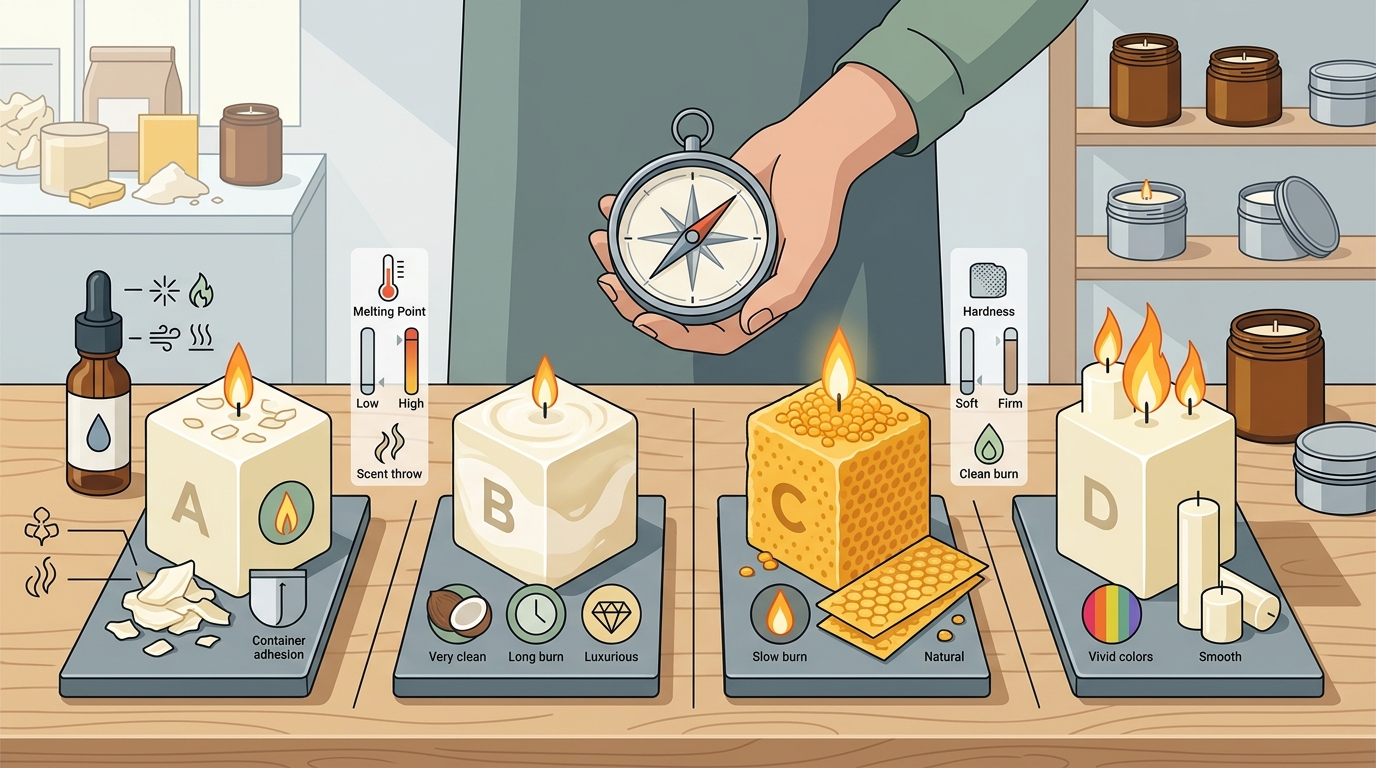
Soy wax is a plant-based wax made from hydrogenated soybean oil. It is a renewable, biodegradable resource that produces less soot and has a longer burn time than paraffin wax. Soy wax is ideal for container candles, but its lower melting point (around 120 to 140 degrees Fahrenheit) may not be suitable for pillar candles. Makesy offers options like their virgin coconut soy wax, which is formulated for amazing glass adhesion, fantastic scent throw, and a super smooth finish.
Coconut Wax Blends
Coconut wax is a newer, eco-friendly wax made from hydrogenated coconut oil. It is often blended with apricot, soy, or a minuscule amount of food-grade paraffin for structure. Coconut wax candles have a creamy, luxurious appearance and excellent scent throw. Makesy's popular coco apricot creme wax is a luxurious blend made from natural apricot and coconut oils, making it a favorite among makers who want a premium look and strong fragrance performance.
Beeswax
Beeswax is a natural wax produced by honeybees and has been used for candle making for over 1,000 years. It is the most expensive of candle waxes, valued for its slow burn, golden color, and unique honey aroma. Beeswax has a high melting point of roughly 144 to 149 degrees Fahrenheit, which makes it well suited for pillar candles. Makesy's beeswax coco creme wax blends ethically sourced beeswax with coconut, soy, and palm waxes for excellent scent throw and glass adhesion.
Paraffin and Palm Wax
Paraffin wax is a petroleum byproduct and the most widely used wax in candle making. It is affordable, easy to work with, and has excellent fragrance retention. Paraffin candles provide a clean, bright burn and work for both container and pillar candles. Palm wax, derived from palm oil, is renewable and biodegradable, known for its unique crystalline appearance and slow, low-soot burn.
Wax Comparison Table
| Wax Type | Melting Point | Best For | Scent Throw | Eco-Friendly |
|---|---|---|---|---|
| Soy Wax | 120 to 140 °F | Container candles, melts | Moderate | Yes |
| Coconut Wax Blend | 124 to 127 °F | Container candles | Excellent | Yes |
| Beeswax | 144 to 149 °F | Pillars, tapers, containers | Moderate (natural honey scent) | Yes |
| Paraffin Wax | 115 to 142 °F | Containers, pillars, votives | Strong | No (petroleum-based) |
| Palm Wax | 130 to 140 °F | Pillars, votives | Strong | When responsibly sourced |
Matching Wax to Your Project Type
Your candle style should drive your wax choice. Container candles pair best with softer waxes like soy or coconut blends because the jar holds the wax as it melts. Pillar candles require harder waxes such as paraffin, palm, or beeswax that hold their freestanding shape.
If you are making wax melts or tarts, consider a soy or coconut blend with a higher fragrance load capacity. For makers looking at sculptural or molded candles, Makesy's pillar candle guide recommends soy, paraffin, or 100 percent beeswax paired with sturdy silicone molds.
How Wax Affects Scent Throw
Scent throw is the term candle makers use to describe how well a candle disperses fragrance into the surrounding space. Cold throw is the scent released from an unlit candle. Hot throw is the scent released while burning.
Soy wax candles tend to have a softer scent throw compared to paraffin candles, while coconut wax blends are known for excellent fragrance performance. Paraffin remains the industry standard for maximum hot throw. To get the best results from any wax, heat it to the manufacturer-recommended temperature (typically around 185 degrees Fahrenheit) before adding fragrance oil, then stir briskly for two to three minutes so the fragrance molecules bind with the wax.
Eco-Friendly and Sustainability Considerations
If sustainability is a priority, soy, coconut, and beeswax are all renewable, biodegradable options. Makesy's commitment to eco-conscious making is reflected in their made better™ standard, which ensures thoughtfully sourced ingredients and non-toxic wax blends. Their pure palm paraffin wax uses responsibly sourced palm, offering a middle ground between performance and environmental responsibility.
When choosing wax, also consider your customer base. The growing consumer demand for clean-burning, natural candles means labeling transparency matters. Waxes like 100 percent soy or coconut blends carry strong marketing appeal.
Key Takeaways
- Soy wax is best for container candles: it is renewable, clean-burning, and easy to work with.
- Coconut wax blends deliver a premium, creamy finish with excellent scent throw.
- Beeswax is the most expensive option but offers a naturally beautiful golden color and slow burn.
- Paraffin gives the strongest fragrance throw and works for all candle types, but it is petroleum-based.
- Match your wax to your candle style: soft waxes for containers, hard waxes for pillars.
- Always add fragrance oil at the recommended temperature (around 185 °F) for optimal scent binding.
- Eco-conscious wax choices like soy and coconut are increasingly preferred by consumers.
Frequently Asked Questions
What is the best wax for beginners?
Soy wax is widely recommended for beginners because it is forgiving, melts at a low temperature, and cleans up easily with soap and water. Makesy's virgin coconut soy wax is especially popular for its smooth, even setting.
Can I mix different wax types together?
Yes. Blending waxes is common and can improve performance. For example, blending beeswax with soy wax can increase the melting point and hardness while enhancing natural scent. Many commercial waxes are already proprietary blends.
Which wax has the strongest scent throw?
Paraffin wax traditionally delivers the strongest hot throw. Among natural options, coconut wax blends like coco apricot creme are known for excellent fragrance performance that rivals paraffin.
Is soy wax suitable for pillar candles?
Standard soy wax has a low melting point and is generally not ideal for freestanding pillar candles. For pillars, choose a harder soy blend, paraffin, palm wax, or beeswax that can hold its shape without a container.
What temperature should I melt candle wax to?
Most waxes should be heated to around 185 degrees Fahrenheit before adding fragrance oil so the wax molecules expand enough to bind with the scent. Pouring temperature varies by wax type, typically between 120 and 160 degrees Fahrenheit.
Is paraffin wax safe for candle making?
Research commissioned by the National Candle Association found that soy, paraffin, beeswax, and palm candles all produced nearly identical combustion byproducts and were considered safe to use. Paraffin remains the most common commercial candle wax worldwide.
How do I choose the right wick for my wax?
Wick selection depends on your wax type, vessel size, and fragrance combination. Makesy offers a wick selection guide and candle testing tools to help you find the perfect match.
Where can I buy eco-friendly candle wax?
Makesy carries a full range of eco-conscious candle waxes, including soy, coconut blends, beeswax blends, and responsibly sourced palm paraffin. Browse the complete candle wax collection to find the right fit for your project.
Get Started Today
Ready to pour your first (or next) candle? Explore Makesy's complete candle wax collection to find the perfect wax for your project. Whether you choose creamy coconut soy, golden beeswax, or classic paraffin, you will have access to premium, eco-conscious supplies backed by a thriving maker community. Start making today.