

Launching a commercial candle brand requires precise sourcing strategies to maintain consistent quality and profit margins. According to verified market reports, the global candle sector generated over $8.5 billion in revenue during 2023, with independent makers capturing a significant share of that growth. Sourcing reliable materials directly from specialized distributors eliminates costly middlemen and ensures regulatory compliance. This guide outlines the exact procurement pathways for wax, fragrance compounds, and wicking systems. You will learn how to evaluate vendor reliability, optimize shipping logistics, and structure your initial inventory budget.
Sourcing High-Quality Wax
Paraffin wax is a refined petroleum byproduct that provides excellent scent throw and structural stability for commercial containers. Soy wax is a plant-derived alternative that burns cleaner and appeals to eco-conscious consumers. You must evaluate melt points and contraction rates to prevent sinkholes or tunneling during production. Major distributors stock bulk containers ranging from five pounds to fifty pounds. Purchasing directly from specialized suppliers like Makesy eliminates retail markups and guarantees batch consistency. You can explore their complete inventory by visiting the candle making supplies catalog. Bulk purchasing also reduces per-unit packaging waste, which aligns with modern sustainability mandates.
Selecting Professional Fragrance Oils
Fragrance oil is a synthetic or blended aromatic compound designed to release scent evenly when heated. Home-based brands typically allocate twenty to thirty percent of total wax weight to fragrance compounds. Testing burn cycles ensures the wax matrix holds the aromatic molecules without separating. You should verify flash points and maximum usage rates before scaling production. Makesy offers a dedicated fragrance oils collection featuring hundreds of professional-grade blends. These formulations undergo rigorous vapor pressure testing to guarantee consistent diffusion. Always calculate your maximum fragrance load to prevent seepage or sooting issues.
Choosing the Right Wicking Systems
A wick is a braided cord that draws liquid fuel upward to sustain combustion. Cotton cores provide steady airflow and minimal residue for standard container candles. Wood wicks deliver a crackling auditory experience that enhances retail shelf appeal. You must match wick diameter to container width to prevent mushrooming or incomplete melting. The wick selection guide provides precise sizing charts for every vessel dimension. Testing multiple wick sizes prevents costly material waste during your initial launch phase. Proper sizing directly impacts burn time and customer satisfaction metrics.
Evaluating Shipping and Logistics
Logistics management is the coordinated process of transporting raw materials from manufacturers to your production facility. Domestic shipping thresholds often trigger free delivery on orders exceeding one hundred ninety-nine dollars. Expedited programs like Ocean membership provide two-day delivery options for just four dollars and ninety-five cents monthly. You receive real-time tracking notifications and dedicated human support for complex shipments. Making strategic bulk purchases reduces your overall freight expenditure significantly. Review the shipping and lead times documentation to plan your inventory replenishment cycles. Reliable vendors prioritize secure packaging to prevent container damage during transit.
Understanding Wholesale Pricing Models
Wholesale pricing is a tiered discount structure that rewards higher purchase volumes with reduced unit costs. Many suppliers implement loyalty programs that award five times standard points on every transaction. These accumulated credits offset future material costs and improve your overall profit margins. You should compare base material costs against fulfillment fees to calculate your true cost of goods sold. The MakerPro program offers exclusive pricing tiers for established commercial operations. Transparent pricing structures prevent hidden surcharges from eroding your initial capital. Always request a detailed quote before committing to large-scale raw material orders.
Navigating Safety and Compliance
Compliance documentation is the required legal paperwork that verifies your products meet regional fire safety standards. You must test every new wax-fragrance combination to establish accurate burn times and maximum fill levels. Labeling requirements typically mandate hazard warnings, ingredient lists, and manufacturer contact information. Storing flammable materials away from direct sunlight prevents premature degradation or spontaneous ignition. The candle safety guidelines outline essential storage protocols for home-based workshops. Regular equipment inspections prevent electrical faults and maintain consistent production quality. Adhering to these protocols protects your brand reputation and minimizes liability exposure.
Supply Category Comparison
| Material Type | Primary Use Case | Recommended Vendor Path | Key Performance Metric |
|---|---|---|---|
| Soy Wax | Eco-friendly container candles | Bulk Wax Containers | 100% natural plant base |
| Fragrance Oils | Scent diffusion and branding | Professional Blends | 20-30% maximum load rate |
| Cotton Wicks | Standard combustion control | Precision Wick Kits | Consistent melt pool radius |
| Colorants | Visual product differentiation | Eco Dyes and Glitters | Heat-stable pigment retention |
Key Takeaways
- Bulk purchasing soy and paraffin wax directly from specialized distributors reduces material costs by approximately forty percent.
- Home-based manufacturers captured a significant share of the $8.5 billion global candle market during 2023.
- Expedited shipping programs like Ocean membership provide two-day delivery options for just four dollars and ninety-five cents monthly.
- Testing every new wax-fragrance combination establishes accurate burn times and prevents customer returns.
- Loyalty programs award five times standard points on every transaction to offset future operational expenses.
- Compliance documentation requires precise labeling and hazard warnings to meet regional fire safety regulations.
Frequently Asked Questions
What is the minimum order quantity for wholesale candle supplies?
Most specialized distributors require a minimum order value rather than a strict unit count. You typically need to reach a one hundred ninety-nine dollar threshold to qualify for free domestic shipping. Smaller starter kits allow new entrepreneurs to test formulations without committing to massive inventory. Always verify the current minimum order requirements before finalizing your purchase.
How do I calculate the correct fragrance load for my wax?
You must multiply your total wax weight by the manufacturer's maximum usage percentage. Most soy blends accept twenty to thirty percent fragrance oil by weight. Exceeding this limit causes seepage, poor adhesion, and excessive sooting. Always conduct a small batch test before scaling to full production runs.
Are synthetic fragrance oils safe for home-based production?
Synthetic fragrance oils are laboratory-formulated compounds designed to withstand high temperatures without degrading. They provide consistent scent throw and allow for complex aromatic profiles that natural extracts cannot achieve. Reputable suppliers provide safety data sheets to verify non-toxic composition. Always verify flash points before mixing compounds into your wax matrix.
What equipment do I need to start a small-scale candle workshop?
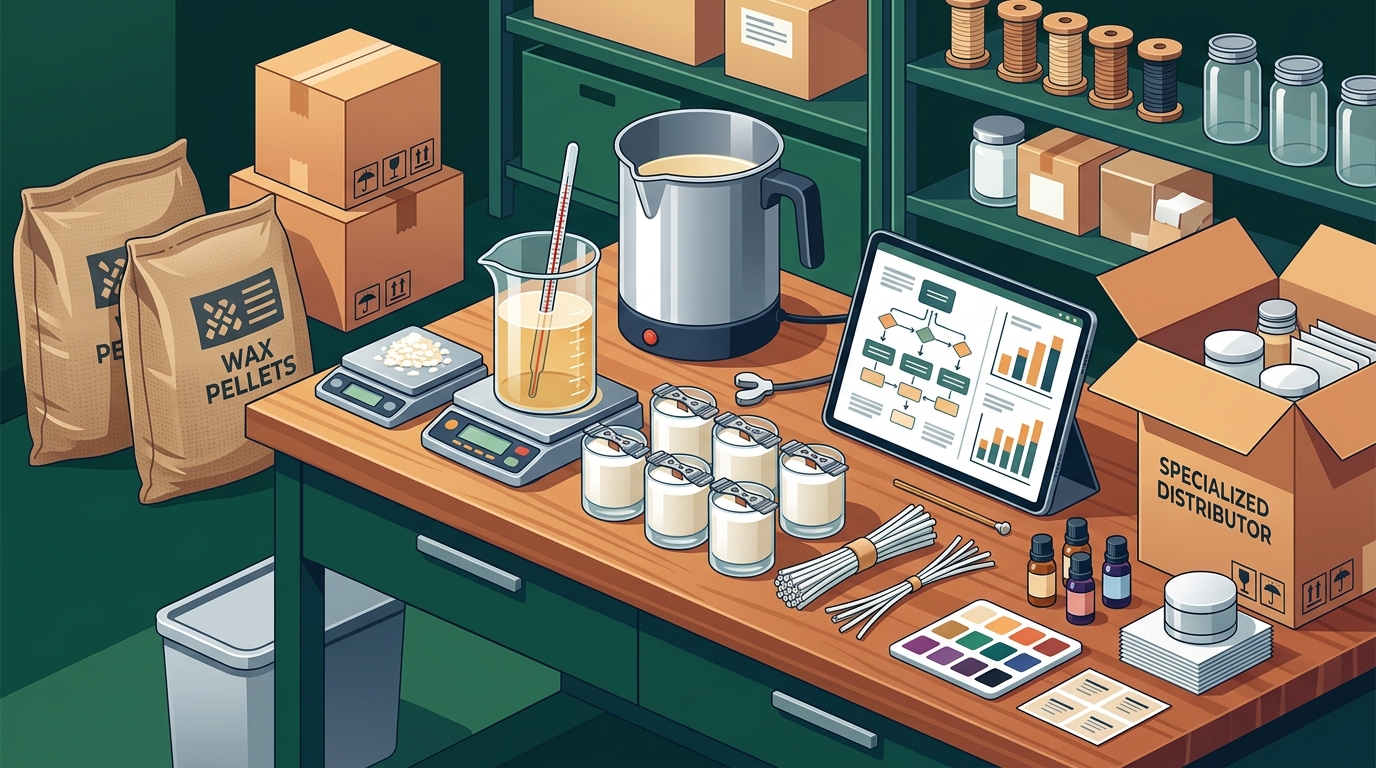
You require a temperature-controlled melting pitcher, precision digital scales, and calibrated thermometers. Glass or metal containers must be pre-cleaned to prevent contamination. Stirring rods and wick centering tools ensure consistent burn patterns. The starter equipment kits bundle these essentials at discounted rates.
How does the Ocean membership program benefit commercial buyers?
The Ocean membership program provides expedited two-day shipping across thousands of partner brands. Active subscribers pay four dollars and ninety-five cents monthly to access priority fulfillment. You also receive a twenty-five dollar refund on your initial shipping fees. This structure significantly reduces operational overhead for high-volume manufacturers.
Can I customize my candle labels and packaging materials?
Custom labeling requires compliance with regional fire safety regulations and ingredient disclosure laws. You must print hazard warnings and manufacturer contact details directly on your packaging. Many suppliers offer blank labels and shrink wrap to streamline your branding process. Always verify local labeling mandates before finalizing your retail distribution strategy.
Start Sourcing Your Candle Supplies Today
Building a profitable home-based candle company requires reliable vendors, precise formulations, and streamlined logistics. You can access professional-grade wax, fragrance oils, and wicking systems through a single centralized platform. Visit the complete supply catalog to browse bulk pricing and expedited fulfillment options. Register for an account to unlock loyalty rewards and priority shipping tiers. Begin your commercial production cycle with confidence and precision.