

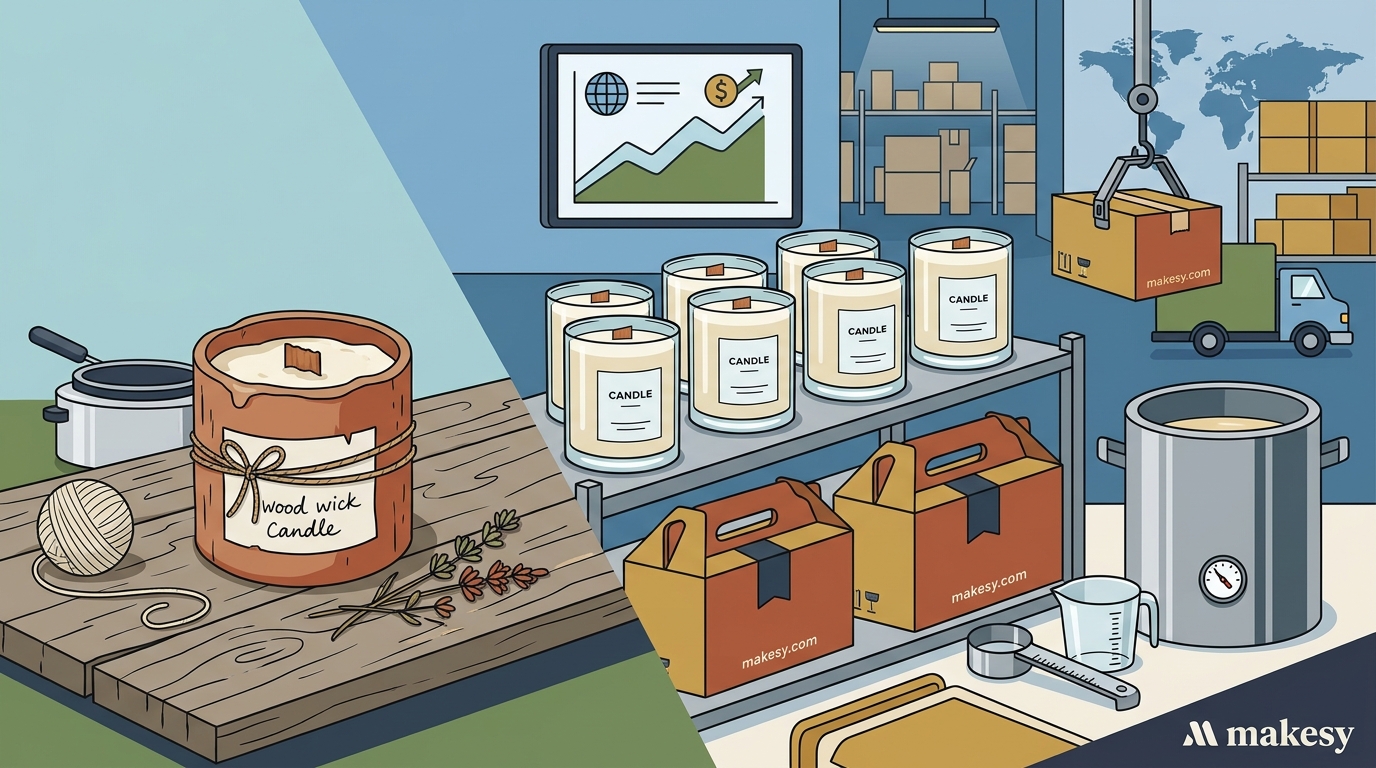
The global candle market generated over $4.2 billion in annual revenue across North America alone, according to industry reports. This rapid expansion creates a clear opportunity for makers to transition from casual crafting to a structured commercial enterprise. Scaling your passion requires precise sourcing, compliant manufacturing, and strategic pricing models. You must evaluate your operational capacity before committing to large-scale inventory. This guide outlines the essential resources, supply chain strategies, and compliance frameworks needed to launch a sustainable candle brand. (Collections 124 makesy)
Sourcing Professional Candle Supplies
Essential Materials and Vendor Selection
Building a reliable supply chain is the foundation of any successful candle enterprise. A professional candle maker is a specialized artisan who formulates, tests, and packages wax-based lighting products for commercial distribution. You must source high-quality wax, functional fragrances, and properly sized wicks to ensure consistent burn performance. Reliable vendors offer bulk pricing tiers and transparent shipping policies. You can streamline your procurement process by utilizing curated supply hubs that specialize in maker-grade materials. Exploring comprehensive collections allows you to compare wax types, fragrance oil concentrations, and vessel options in one centralized location. When you evaluate your initial inventory needs, you should prioritize vendors that offer transparent return policies and consistent batch quality. Many successful brands start by purchasing starter kits to test formulations before committing to wholesale quantities. (Makesy shop fragrance oils)
Navigating Safety and Compliance Standards
Regulatory Requirements and Testing Protocols
Commercial candle production requires strict adherence to safety regulations and labeling requirements. A candle safety standard is a mandatory set of guidelines that governs flammability testing, warning labels, and material disclosures for consumer lighting products. You must verify that your wax blends meet specific flash point thresholds to prevent hazardous conditions during shipping and storage. Proper labeling includes burn time estimates, warning instructions, and ingredient disclosures. You should consult official regulatory databases to understand state-specific fire codes and transportation restrictions. Many makers partner with accredited laboratories to conduct burn testing and flash point verification. Establishing a documented safety protocol protects your brand from liability and builds consumer trust. You can access detailed compliance guides and safety checklists through official maker support portals. (Cart)
Structuring Profitable Pricing Models
Cost Analysis and Margin Optimization
Calculating accurate product costs is essential for maintaining healthy profit margins. A wholesale candle supplier is a specialized distributor that provides raw materials and finished components at bulk pricing tiers for commercial manufacturers. You must account for material costs, labor hours, packaging expenses, and platform fees when setting your retail price. Many emerging brands underprice their products by ignoring fulfillment costs and marketing overhead. You should implement a tiered pricing structure that rewards bulk purchases while maintaining healthy margins on single-unit sales. Tracking your cost of goods sold on a monthly basis allows you to adjust pricing dynamically. You can optimize your checkout experience by offering tiered shipping thresholds that encourage larger average order values.
Marketing and Brand Positioning
Digital Presence and Customer Acquisition
Building a recognizable brand identity requires consistent messaging and targeted digital outreach. A functional fragrance is a specialized scent formulation designed to deliver specific olfactory benefits beyond basic aroma diffusion. You should develop a cohesive visual identity that reflects your brand values and target demographic. Social media platforms remain the most effective channels for showcasing product photography and behind-the-scenes manufacturing processes. You must invest in high-quality product photography and detailed product descriptions to reduce return rates. Implementing an email marketing sequence that nurtures subscribers from first visit to repeat purchase will drive long-term revenue. You can leverage subscription box programs to secure recurring revenue and reduce customer acquisition costs.
Scaling Production and Fulfillment
Inventory Management and Logistics Optimization
Transitioning from hobbyist to commercial manufacturer requires robust inventory tracking and streamlined fulfillment workflows. A MakerPro membership is a specialized commercial program that provides discounted pricing, priority support, and exclusive supply access for high-volume candle manufacturers. You should implement batch production schedules that align with seasonal demand fluctuations. Maintaining optimal stock levels prevents stockouts during peak sales periods while minimizing storage costs. You must evaluate third-party logistics providers versus in-house fulfillment based on your order volume and geographic distribution. Many successful brands utilize automated inventory tracking software to sync sales channels with warehouse stock levels. You can upgrade your shipping capabilities by utilizing expedited logistics programs that reduce delivery times and improve customer satisfaction.
| Resource Category | Primary Use Case | Estimated Cost Range | Best For |
|---|---|---|---|
| Raw Material Suppliers | Wax, fragrance oils, wicks | $15 to $85 per unit | Small batch testing |
| Commercial Membership Programs | Bulk discounts, priority support | $4.95 monthly subscription | High-volume manufacturers |
| Compliance Testing Labs | Burn testing, flash point verification | $200 to $600 per batch | Regulatory compliance |
| Fulfillment Logistics | Shipping, tracking, returns | $3 to $12 per order | Order scaling |
Key Takeaways
- Professional candle making requires precise wax-to-fragrance ratios and verified wick sizing for optimal burn performance.
- Compliance testing and accurate labeling are mandatory for commercial distribution and liability protection.
- Accurate cost tracking prevents margin erosion and ensures sustainable pricing strategies.
- Commercial membership programs offer significant bulk discounts and priority support for scaling brands.
- Subscription-based sales models reduce customer acquisition costs and stabilize monthly revenue.
- Expedited shipping partnerships improve customer retention and reduce cart abandonment rates.
- High-quality product photography and detailed descriptions directly impact conversion rates and return volumes.
Frequently Asked Questions
What is the minimum equipment needed to start a commercial candle brand?
You need a reliable melting pot, precision scales, temperature probes, and properly sized vessels. Testing your initial batches ensures consistent burn performance before scaling production.
How do I calculate accurate product costs for pricing?
You must track material costs, labor hours, packaging expenses, and platform fees. Dividing total expenses by your projected sales volume reveals your true cost per unit.
Are fragrance oils safe for commercial candle production?
Professional fragrance oils are specifically formulated for high-temperature wax blending and meet safety standards for indoor use. You should verify flash point ratings and maximum usage rates for your specific wax type.
What labeling requirements apply to handmade candles?
Commercial labels must include warning instructions, burn time estimates, and ingredient disclosures. You should consult official regulatory databases to ensure full compliance with state and federal guidelines.
How can I streamline my fulfillment process as order volume grows?
Implementing automated inventory tracking software syncs your sales channels with warehouse stock levels. You should evaluate third-party logistics providers to compare shipping rates and delivery times.
Is a commercial membership program worth the investment?
Commercial programs offer bulk pricing tiers and priority support that significantly reduce per-unit costs. You should calculate your projected annual spend to determine the break-even point for subscription fees.
Ready to Scale Your Candle Brand?
Transitioning from hobbyist to commercial manufacturer requires precise sourcing, compliant manufacturing, and strategic pricing models. You can begin building your professional inventory today by exploring our comprehensive supply collections. Visit our main catalog to browse wax types, fragrance oils, and vessel options. Complete your initial order through our streamlined checkout process and take advantage of expedited shipping upgrades. Start your commercial candle journey with the resources trusted by professional makers worldwide.