
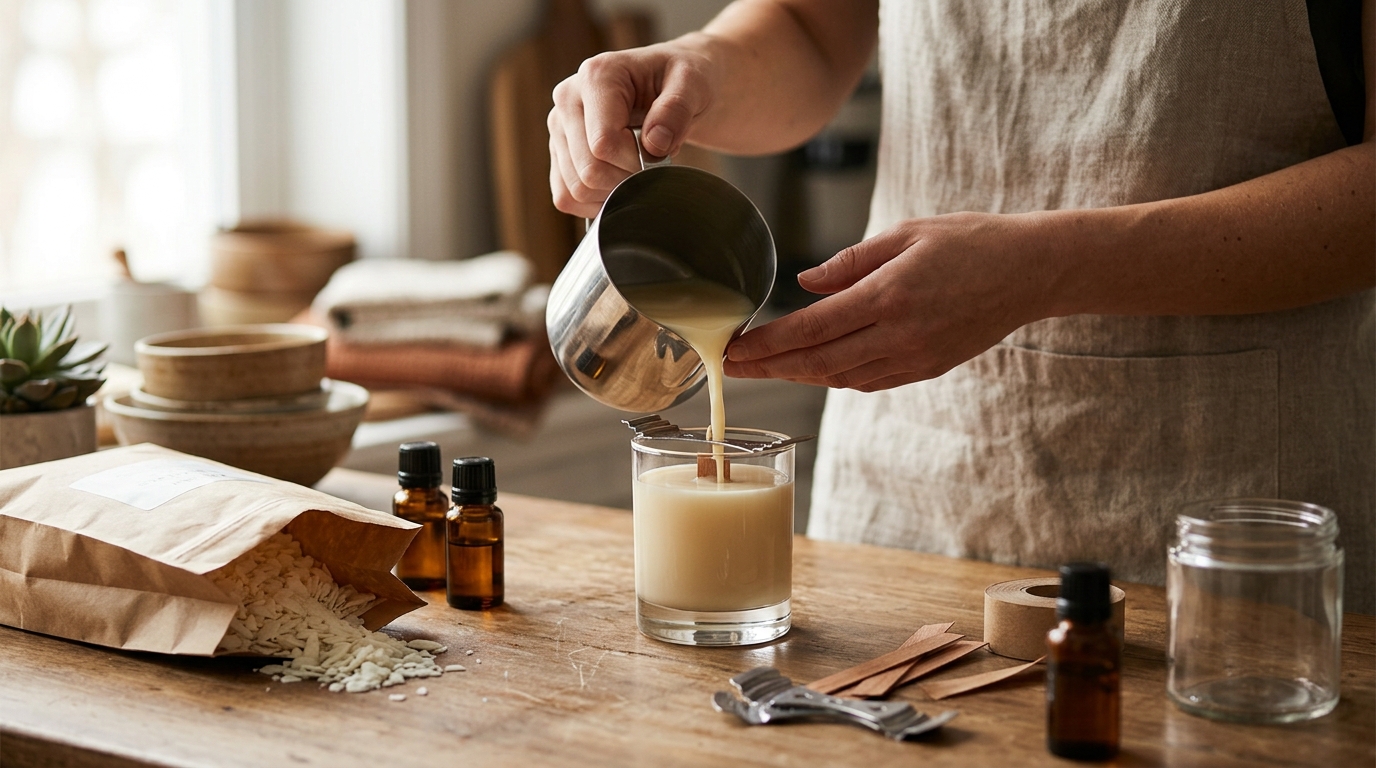
Starting a candle making journey requires more than just wax and a wick. According to recent industry data, the global candle market is projected to reach significant growth by 2026, driven largely by the surge in DIY home decor enthusiasts. This explosion in popularity means that sourcing high-quality, reliable materials is critical for your first successful pour. Without the right foundation, beginners often face issues like poor throw, tunneling, or uneven burning. This guide breaks down the essential components you need to start crafting professional-grade candles at home.
Essential Wax Types Explained
Wax is the structural backbone of your candle. For beginners, understanding the properties of different waxes is the first step toward success. Soy wax is a renewable, plant-based wax that offers excellent scent throw and a clean burn. It is widely considered the best starting point for hobbyists due to its forgiving nature and eco-friendly profile. Soy wax typically requires a lower melt pool temperature compared to other varieties, making it safer for home use.
Another popular option is paraffin wax, a petroleum-derived wax known for its superior fragrance holding capacity. While some consumers prefer natural alternatives, paraffin remains a staple in the industry for its ability to hold heavy fragrance loads and provide a smooth, glossy finish. It is often used in commercial settings where cost-effectiveness and performance are paramount.
Beeswax is a third option, derived from honeycombs. Beeswax is a natural wax produced by honeybees that burns longer and cleaner than most other waxes. It has a distinct, sweet honey scent and requires no added fragrance. However, it is significantly more expensive and harder to work with for beginners due to its high melting point. For your first projects, we recommend starting with a high-quality soy blend to balance ease of use with performance.
Choosing the Right Wicks
The wick is the engine of the candle. Selecting the correct wick size and type is crucial for a proper burn. A wick that is too small will cause tunneling, where the wax burns down the center without reaching the edges. A wick that is too large can create a dangerous flame and produce excessive soot.
Makesy offers a comprehensive wick selection guide to help you match wicks to your specific wax and vessel diameter. Generally, thicker vessels require larger or multiple wicks to maintain a proper melt pool. Testing is key. You should always perform a burn test with your chosen wick before committing to a large batch.
Common wick materials include cotton, paper-core, and zinc-core. Cotton wicks are the most traditional and are widely available. Paper-core wicks offer a stiffer structure, which can be helpful for beginners who struggle with wick centering. Zinc-core wicks are self-supporting but are less common in eco-friendly candle making due to the metal content.
Fragrance and Essential Oils
2Fragrance transforms a candle from a light source into an experience. Not all scents are created equal. Fragrance oils are synthetic or blended scents designed specifically for candle making, offering a wide variety of complex aromas. They are generally more stable and have a stronger scent throw than essential oils in wax environments.
Essential oils are natural extracts from plants. While they appeal to those seeking a purely natural product, they often have a lighter scent throw and can be more expensive. When adding fragrance to your wax, it is critical to follow the recommended fragrance load percentage, typically between 6% and 10% for soy wax. Adding too much fragrance can cause the wax to weep or fail to cure properly.
Makesy provides a vast collection of functional fragrances tailored for candle makers. Their catalog includes everything from seasonal scents to custom blends. Understanding the flash point of your fragrance oil is also important, as it determines when you should add it to the wax to preserve the aroma.
Vessels and Core Tools
Your choice of vessel dictates the style and safety of your candle. Glass jars are the most popular choice for beginners because they are heat-resistant and visually appealing. A candle vessel is the container that holds the wax and wick, designed to withstand high temperatures without cracking. Ensure your vessel is clean and dry before pouring. Any moisture can cause the wax to separate or adhere poorly to the glass.
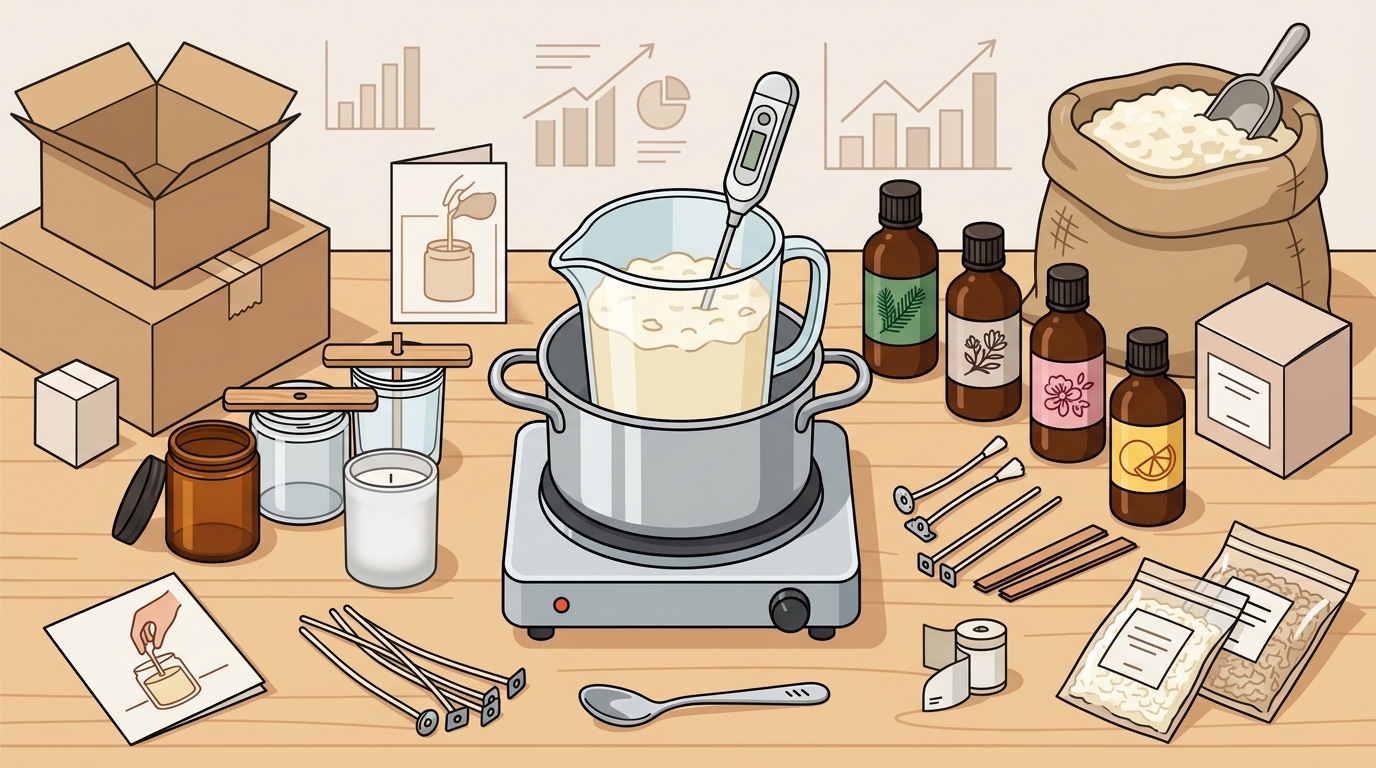
Beyond the vessel, you need a few core tools. A reliable candle making thermometer is non-negotiable. You must monitor both the melt temperature and the pour temperature to ensure proper adhesion and finish. A double boiler or a dedicated wax melting pot is necessary for safe, even heating. Never melt wax directly on a stove burner, as hot wax is highly flammable.
Other essential tools include a stirring spoon, wick centering devices, and a scale for precise measurements. Accuracy in weighing your wax and fragrance is vital for consistency. Makesy also offers Aura candle vessels and lids that are specifically designed to complement their wax blends, ensuring a professional look right out of the box.
Safety and Best Practices
Candle making involves hot liquids and flammable materials. Safety must be your top priority. Always work in a well-ventilated area. Keep a fire extinguisher nearby and never leave melting wax unattended. Wear protective gear, such as aprons and gloves, to prevent burns.
Proper curing is another critical step. After pouring, allow your candles to cure for at least 48 to 72 hours, or up to two weeks for soy wax, to allow the fragrance to bind fully with the wax. This process significantly enhances the scent throw. For more detailed safety guidelines, refer to the candle safety resources provided by Makesy.
Key Takeaways
- Start with Soy Wax: It is eco-friendly, easy to clean, and forgiving for beginners.
- Match Your Wick: Use a wick size chart to ensure a full melt pool and prevent tunneling.
- Monitor Temperatures: Use a thermometer to track melt and pour temperatures for optimal results.
- Choose Quality Fragrance: Use candle-specific fragrance oils for the best scent throw.
- Prioritize Safety: Always work in a ventilated area and keep fire safety equipment nearby.
- Allow for Curing: Let your candles cure for several days to maximize fragrance performance.
- Invest in Tools: A good scale and thermometer are essential for consistent, professional outcomes.
Frequently Asked Questions
What is the easiest wax for beginners?
Soy wax is widely considered the easiest wax for beginners. It has a lower melting point, is easy to clean up with soap and water, and offers a clean, natural burn. It is also more forgiving of temperature fluctuations than paraffin or beeswax.
How do I choose the right wick size?
Wick size depends on the diameter of your vessel and the type of wax you are using. A general rule is to use a wick that creates a full melt pool to the edges of the jar within two to four hours of burning. Makesy provides detailed wick charts to help you select the correct size for your specific setup.
Can I use essential oils in candles?
Yes, you can use essential oils, but they have a lower flash point and may not hold scent as well as fragrance oils. You may need to increase the fragrance load slightly, but be careful not to exceed the wax's maximum load capacity, which can cause weeping or poor burning.
How long should I let my candles cure?
For soy wax, it is recommended to let candles cure for at least 48 hours, but ideally 1 to 2 weeks. This curing period allows the fragrance molecules to bind with the wax crystals, resulting in a stronger scent throw when the candle is lit.
What tools do I absolutely need?
You need a melting pot, a thermometer, a scale, a stirring utensil, and a vessel. A wick centering device is also highly recommended to keep the wick straight during the pour. These tools ensure precision and safety throughout the process.
Is paraffin wax safe?
Paraffin wax is safe when used correctly and in well-ventilated areas. It is a byproduct of petroleum refining and is widely used in the candle industry. However, some consumers prefer soy or beeswax for environmental or health reasons. Always ensure your paraffin wax is of candle-grade quality.
Where can I buy candle making supplies?
Makesy is a leading supplier of candle making materials, offering a wide range of waxes, wicks, fragrances, and vessels. You can browse their full collection of supplies to find everything you need for your projects.
Start Your Candle Making Journey
Creating your own candles is a rewarding hobby that combines creativity with science. By starting with the right supplies and following safety protocols, you can produce beautiful, high-quality candles that make perfect gifts or home decor items. Visit Makesy.com today to explore their extensive catalog of beginner-friendly candle making supplies and join a community of passionate makers.