

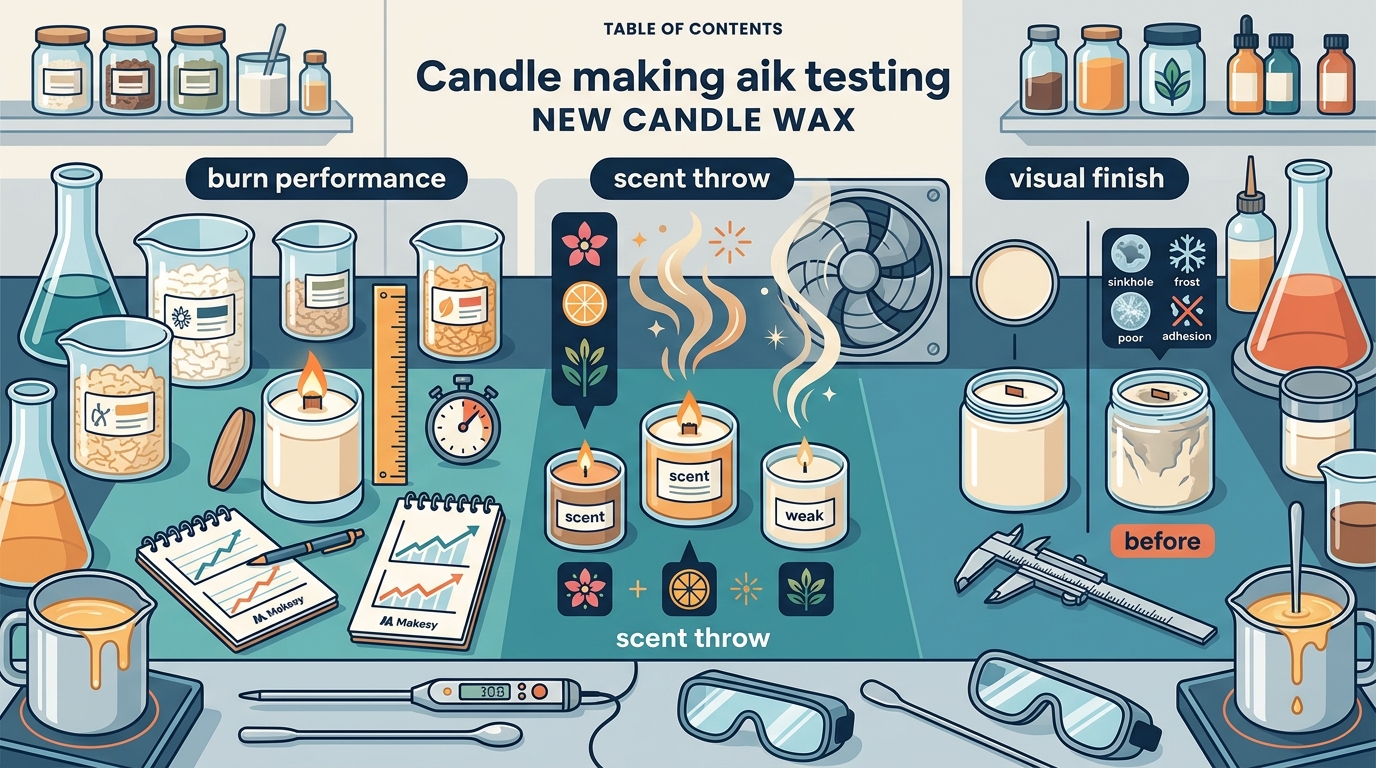
When testing a new candle wax, you must evaluate burn performance, scent throw, and visual finish before committing to production. Makesy provides the premium ingredients and testing tools you need to validate these variables safely. By isolating one variable at a time, you ensure your final product meets quality standards and customer expectations.
Burn Performance and Wick Compatibility
The most critical test is how the wax interacts with your wick. A new wax may require a different wick size or material than your previous formula. You must observe the flame height, soot production, and melt pool formation. If the melt pool does not reach the edges of the container within the first hour, the wick is likely too small. Conversely, a flame that is too tall or produces excessive soot indicates the wick is too large. Makesy offers a wide range of wood wick sample kits and cotton wicks to help you find the perfect match for your specific wax blend.
Observing the Melt Pool
Watch the melt pool expand over time. A healthy burn creates a full melt pool that reaches the container walls. This ensures the candle burns evenly and prevents tunneling. If you notice tunneling, where the wax burns down the center but leaves a ring of unburned wax on the sides, you need to adjust your wick size or consider a different wax formulation.
Scent Throw and Fragrance Load
Scent throw is the ability of a candle to release fragrance into the air. You must test both hot throw (when lit) and cold throw (when unlit). Start with a standard fragrance load, typically between 6% and 10%, depending on the wax type. If the scent is too weak, you may need to increase the load, but be careful not to exceed the maximum recommended load for that specific wax. Makesy provides premium candle scents that are designed to perform well with various wax types, ensuring a consistent and pleasant aroma.
Testing Different Fragrance Loads
Create multiple test candles with varying fragrance loads. For example, make one candle at 6%, another at 8%, and a third at 10%. Burn each for a set period and evaluate the scent intensity. This method helps you determine the optimal load for your specific fragrance and wax combination.
Visual Finish and Surface Quality
The visual appearance of your candle is just as important as its performance. Inspect the surface for any imperfections such as cracking, frosting, or uneven coloring. Some waxes are prone to frosting, which can be a desirable aesthetic in some cases but a defect in others. If you notice cracking, it may indicate that the wax cooled too quickly or that the container was not pre-warmed. Makesy offers Coco Apricot Creme wax, which is known for its smooth finish and minimal frosting, making it a popular choice for makers who prioritize visual appeal.
Color and Opacity
Consider how the wax interacts with dyes. Some waxes are more transparent than others, which can affect the final color of your candle. Test your dyes with the new wax to ensure the color is vibrant and consistent. If the wax is too opaque, you may need to use a higher concentration of dye to achieve the desired effect.
Burn Time and Efficiency
Burn time is a key metric for both you and your customers. A candle that burns too quickly may not provide good value, while one that burns too slowly may be frustrating for users. To test burn time, weigh your candle before and after a set burn period. This allows you to calculate the burn rate, which is the amount of wax consumed per hour. Makesy provides guides on determining candle burn time to help you accurately measure this important metric.
Calculating Burn Rate
Record the weight of your candle before lighting it. After burning for a specific duration, such as four hours, weigh it again. Subtract the final weight from the initial weight to find the amount of wax burned. Divide this by the burn time to get the burn rate. This data helps you predict the total burn time of your finished product.
Safety and Stability
Safety is non-negotiable in candle making. Ensure that your wax and wick combination meets safety standards. Look for any signs of instability, such as the wick bending or the flame flickering excessively. If you notice any safety concerns, do not proceed to production. Makesy is committed to providing safe and phthalate-free fragrances that meet industry standards, giving you peace of mind when testing new formulas.
Documenting Your Tests
Keep detailed notes on each test. Record the wax type, wick size, fragrance load, and any observations. This documentation is invaluable when you move to production, as it helps you replicate your successful tests and troubleshoot any issues that arise.
Key Takeaways
- Always test burn performance, including melt pool formation and soot production.
- Evaluate both hot and cold scent throw to ensure a consistent fragrance experience.
- Inspect the visual finish for cracking, frosting, and color consistency.
- Calculate burn time to ensure your candle provides good value to customers.
- Prioritize safety by ensuring your wax and wick combination meets industry standards.
- Document all test results to facilitate replication and troubleshooting.
Frequently Asked Questions
How long should I burn a test candle?
Burn a test candle for at least four hours to observe the melt pool and scent throw. This duration provides enough time to evaluate the performance of the wax and wick combination.
What is the ideal fragrance load for a new wax?
The ideal fragrance load varies by wax type, but a good starting point is 6% to 10%. Test different loads to find the optimal balance between scent intensity and wax stability.
How do I know if my wick is too small?
If the melt pool does not reach the edges of the container within the first hour, your wick is likely too small. This can lead to tunneling and an uneven burn.
Can I use the same wick for different waxes?
No, different waxes have different burn characteristics and may require different wick sizes or materials. Always test your wick with each new wax to ensure optimal performance.
What should I do if my candle frosts?
Frosting is a natural occurrence in some waxes. If it is undesirable, you can try pre-warming the container or adjusting the cooling rate. Some waxes, like Makesy's Coco Apricot Creme, are formulated to minimize frosting.
Start Your Testing with Makesy
Testing a new candle wax is a critical step in ensuring the quality and safety of your final product. By systematically evaluating burn performance, scent throw, visual finish, and safety, you can create candles that meet the highest standards. Makesy is your trusted partner in this process, providing the premium ingredients and resources you need to succeed. Explore our collections to find the perfect wax and supplies for your next project.