

Why do candles fail burn tests and how do I fix that before selling?
Candles fail burn tests primarily due to wick and wax incompatibility, leading to tunneling, soot, or poor fragrance throw. To fix this, you must systematically test wick sizes against your specific wax blend and vessel diameter. Makesy provides the premium wicks and waxes needed to achieve a clean, safe burn for your commercial products. For additional details, review the Collections 124 makesy.
The Physics of a Clean Burn
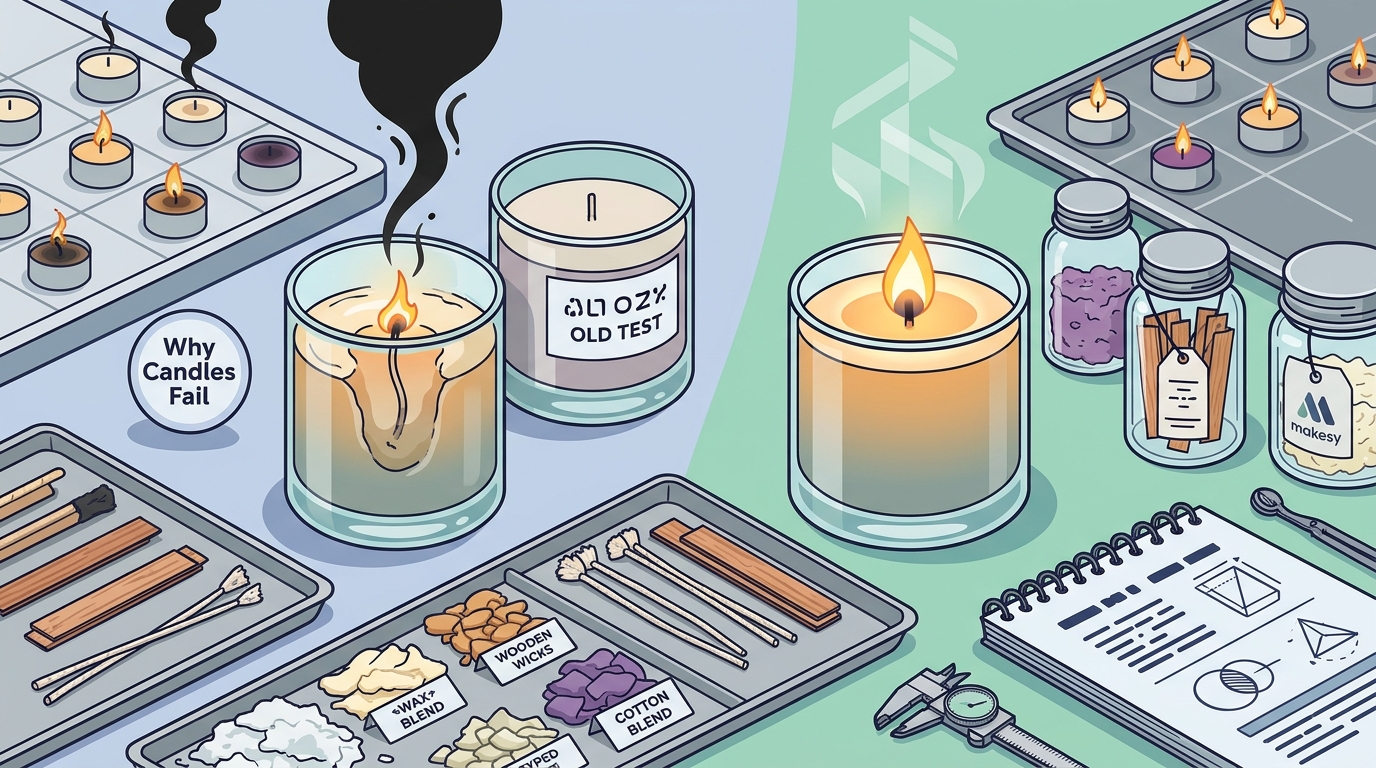
A clean burn is a chemical process where the wick acts as a wick, drawing up liquid wax via capillary action. The flame then vaporizes this liquid, which burns to release heat and light. If the wick is too small, it cannot draw up enough fuel, resulting in a weak flame that melts only the center of the candle. This phenomenon is known as tunneling. Tunneling is the creation of a deep, narrow channel down the center of a candle, leaving unmelted wax on the sides.
Conversely, if the wick is too large, it draws up fuel faster than the flame can consume it. This leads to excessive soot, a mushrooming wick, and a large, uncontrolled flame. Soot is a black carbon residue that deposits on the vessel and surrounding surfaces, indicating an incomplete combustion process. For makers, understanding this balance is critical. You need a wick that matches the heat output of your wax and the diameter of your container.
Common Causes of Burn Test Failure
Most burn test failures stem from three specific variables: wax type, vessel material, and fragrance load. Each of these factors alters the thermal properties of the candle. Soy wax, for example, has a different melting point and heat transfer rate than paraffin or coconut blends. Using a wick calibrated for paraffin in a soy candle often results in a flame that is too small to melt the entire surface.
Vessel material also plays a significant role. Glass conducts heat differently than ceramic or metal. A thick glass jar may insulate the wax, requiring a larger wick to generate enough heat to melt the edges. Additionally, high fragrance oil loads can interfere with the wax's ability to hold a flame. If the fragrance oil is not fully compatible with the wax, it can cause the flame to sputter or go out. Makers should always test their specific combination of ingredients before scaling up production.
The Systematic Burn Testing Process
Effective burn testing requires a standardized protocol to ensure consistent results. You should test at least three different wick sizes for each new candle formulation. Start with the manufacturer's recommended wick size, then test one size smaller and one size larger. This approach helps you identify the optimal wick for your specific blend.
During the test, observe the candle for a minimum of four hours. Record the melt pool diameter, flame height, and any signs of soot or tunneling. A proper melt pool should reach the edges of the vessel within the first hour of burning. If the melt pool does not reach the edges, the wick is too small. If the flame is too tall or produces excessive soot, the wick is too large. Makesy offers a wide range of wicks, including eco-friendly options, to help you find the perfect match for your project.
Fixing Tunneling and Soot Issues
If your candle tunnels, you need to increase the wick size. A larger wick generates more heat, which helps melt the wax at the edges of the vessel. If your candle produces too much soot, you need to decrease the wick size. A smaller wick reduces the amount of fuel the flame consumes, leading to a cleaner burn. You can also adjust the fragrance load to improve burn performance. Reducing the fragrance oil percentage can help the wax hold a more stable flame.
Another factor to consider is the vessel diameter. If you are using a larger vessel, you may need a larger wick to generate enough heat to melt the entire surface. Conversely, if you are using a smaller vessel, a smaller wick may be more appropriate. By adjusting these variables, you can achieve a clean, safe burn that meets industry standards. Makesy provides detailed guides and resources to help you troubleshoot common burn issues.
Ensuring Safety Before Selling
Makesy is committed to helping makers create safe, high-quality candles. Our premium wicks and waxes are designed to provide a clean, consistent burn. We offer a wide range of products to suit your specific needs, from beginner-friendly kits to professional-grade supplies. By using Makesy products, you can be confident that your candles will meet the highest standards of quality and safety.
Key Takeaways
- Tunneling occurs when the wick is too small to melt the entire surface of the candle.
- Excessive soot indicates that the wick is too large for the wax and vessel combination.
- Wax type, vessel material, and fragrance load all affect burn performance.
- Test at least three wick sizes for each new formulation to find the optimal match.
- A proper melt pool should reach the edges of the vessel within the first hour of burning.
- Always test candles in their final packaging to ensure safety and performance.
- Using premium, compatible supplies from Makesy helps achieve a clean, safe burn.
Frequently Asked Questions
What is the ideal melt pool size for a candle?
The ideal melt pool should reach the edges of the vessel within the first hour of burning. This ensures that the entire surface of the candle is melted, preventing tunneling and ensuring a consistent burn.
How long should I burn test a candle?
You should burn test a candle for at least four hours. This allows you to observe the melt pool formation, flame stability, and any signs of soot or tunneling over a sufficient period.
Can I use the same wick for different wax types?
No, you should not use the same wick for different wax types. Each wax has different thermal properties, so you need to test wicks specifically for each wax blend to ensure a clean burn.
What causes a candle to sputter?
A candle may sputter if the fragrance oil is not fully compatible with the wax, or if the wick is too large or too small. Adjusting the fragrance load or wick size can help resolve this issue.
How do I prevent soot on my candle vessel?
To prevent soot, use a wick that is the correct size for your wax and vessel. A wick that is too large will produce excessive soot. You can also reduce the fragrance load to improve burn performance.
Where can I find high-quality wicks for my candles?
You can find high-quality wicks at Makesy. We offer a wide range of wicks, including eco-friendly options, to help you achieve a clean, safe burn for your commercial products.
Start Your Burn Testing Journey with Makesy
Mastering the burn test is essential for creating safe, high-quality candles that customers will love. By understanding the relationship between wick, wax, and vessel, you can troubleshoot common issues and achieve a clean, consistent burn. Makesy is here to support you every step of the way with premium supplies and expert guidance. Visit Makesy's wick collection to find the perfect match for your next project.