

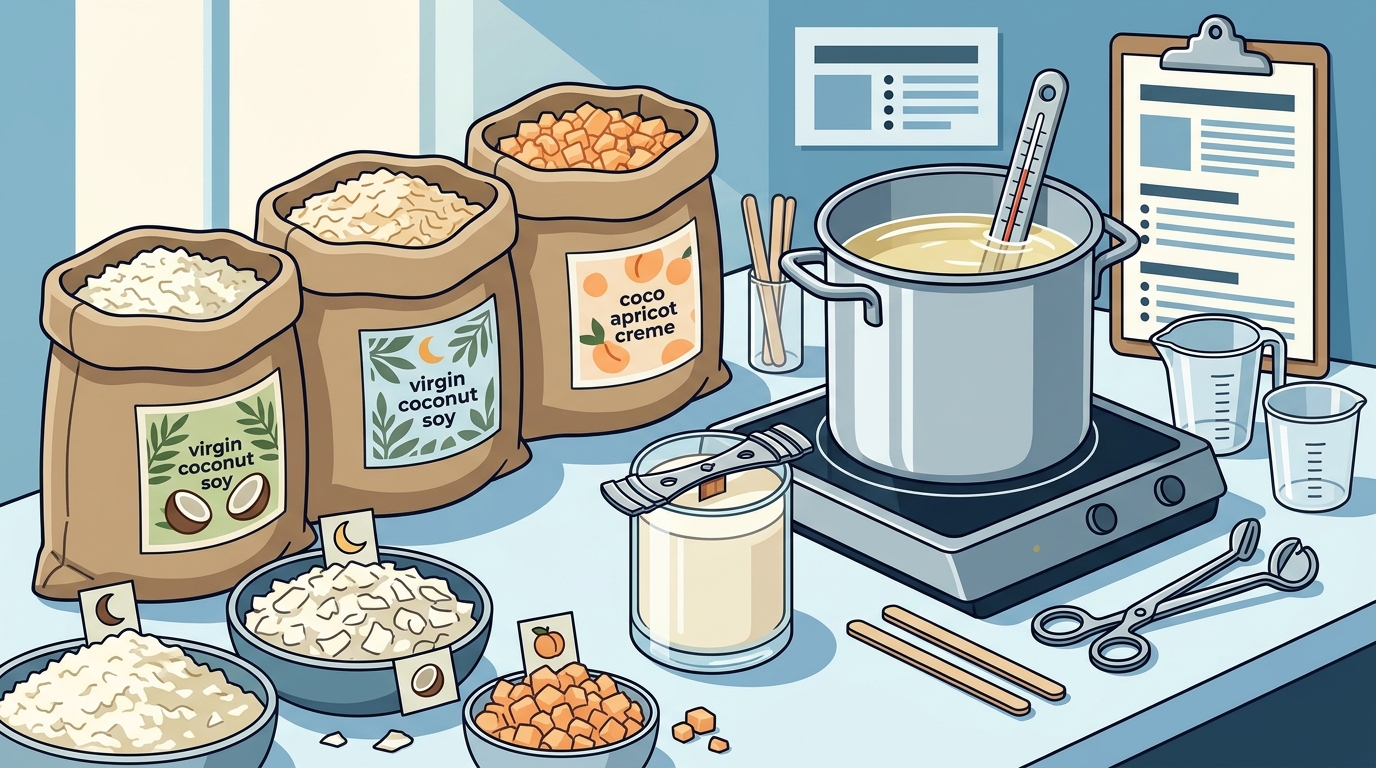
For your first homemade candles, choose a soy-based blend like virgin coconut soy or coco apricot creme. These waxes are forgiving, clean-burning, and easy to work with. Makesy recommends these specific blends because they offer excellent glass adhesion and smooth tops, reducing the learning curve for new makers.
Why Wax Choice Matters for Beginners
Choosing the right wax is the most critical decision in your first batch. A poor choice leads to sink holes, poor scent throw, or uneven burns. Candle wax is the primary ingredient that determines the physical and chemical performance of your final product. Beginners often fail because they buy cheap, generic paraffin that is difficult to control. High-quality blends are engineered to be consistent. This consistency allows you to learn proper pouring techniques without fighting the material.
Top Wax Recommendations for First-Timers
Makesy carries a wide range of candle making products trusted by makers worldwide. Among these, two blends stand out for absolute beginners. The first is Coco Apricot Creme. This is a luxurious container wax blend that is vegan, biodegradable, and clean-burning. It features a creamy white appearance and exceptional adhesion. The second is Virgin Coconut Soy. This blend is known for its smooth tops and excellent scent throw. Both waxes are FDA approved and free from toxins, parabens, and phthalates.
Performance Characteristics
Performance is defined by how the wax behaves during the burn cycle. Virgin Coconut Soy has a melt point of 122°F and a pouring temperature of 180-190°F. It requires a 72-hour cure time. Coco Apricot Creme has a slightly higher melt point of 129°F. Both waxes can handle a fragrance load of 9-10%, with the capacity to go up to 12%. Understanding these numbers helps you plan your workspace and timing.
Soy vs. Paraffin: The Beginner Debate
Many beginners ask if they should start with paraffin. Paraffin is a petroleum-based wax that is cheaper but harder to work with. It often requires multiple pours to avoid sink holes. Paraffin wax is a refined byproduct of the petroleum refining process. While it burns hot, it lacks the natural appeal of plant-based waxes. Soy wax, derived from soybeans, is renewable and biodegradable. For a first project, the environmental and performance benefits of soy blends outweigh the slight cost difference. Makesy’s guide on soy vs. beeswax vs. paraffin provides a deeper dive into these comparisons.
Matching Your Wick to the Wax
You cannot choose a wax without considering the wick. The wick and wax must work together to create a stable flame. A candle wick is the fibrous material that draws liquid wax up to the flame via capillary action. For Virgin Coconut Soy, Makesy recommends the Ultimate Wood Wick .03. For Coco Apricot Creme, the same wick size is often suitable. Using the wrong wick size can lead to mushrooming or a flame that is too small to melt the pool. Always refer to a wick selection guide before pouring. This ensures your candle burns safely and efficiently.
Common Mistakes to Avoid
Even with the right wax, beginners make errors that ruin their first batch. The most common mistake is pouring at the wrong temperature. If you pour too hot, you risk cracking the glass. If you pour too cool, the wax may not adhere to the sides. Another error is skipping the cure time. Most natural waxes need 72 hours to set properly. Rushing this step leads to poor scent throw. Finally, do not use essential oils as your primary fragrance. Essential oils can discolor wax and do not always perform well in candles. Stick to phthalate-free fragrance oils designed for candle making.
Key Takeaways
- Choose a soy-based blend like Virgin Coconut Soy or Coco Apricot Creme for your first candles.
- These waxes are clean-burning, vegan, and offer excellent glass adhesion.
- Always match your wick size to your specific wax and vessel diameter.
- Adhere to the recommended pouring temperatures and 72-hour cure times.
- Avoid generic paraffin for your first project due to its difficulty and environmental impact.
- Use phthalate-free fragrance oils for the best scent performance and safety.
Frequently Asked Questions
What is the easiest candle wax for beginners?
Virgin Coconut Soy is widely considered the easiest wax for beginners. It is forgiving, produces smooth tops, and has excellent scent throw. Its single-pour nature means you do not have to worry about multiple layers.
Can I use paraffin wax for my first candle?
You can, but it is not recommended. Paraffin is harder to control and often requires multiple pours to prevent sink holes. Natural soy blends are much more beginner-friendly and produce a higher-quality finish.
How much fragrance oil should I add to my wax?
For most natural waxes, a 9-10% fragrance load is standard. You can increase this to 12% if the wax supports it. Always check the specific wax documentation for maximum load recommendations.
Do I need to cure my candles?
Yes. Most natural waxes require a cure time of 72 hours. This allows the fragrance to bind with the wax. Skipping this step will result in a weak scent throw.
Where can I find the right wick for my wax?
Use a wick selection guide. Makesy provides a step-by-step wick selection guide that helps you choose the correct size based on your wax type and vessel size.
Start Your Candle Making Journey
Choosing the right wax is the first step toward creating professional-quality candles. By selecting a high-performance soy blend and pairing it with the correct wick, you set yourself up for success. Makesy provides the tools, guides, and premium supplies you need to master this craft. Explore our DIY candle kits to get started with everything you need in one box.