
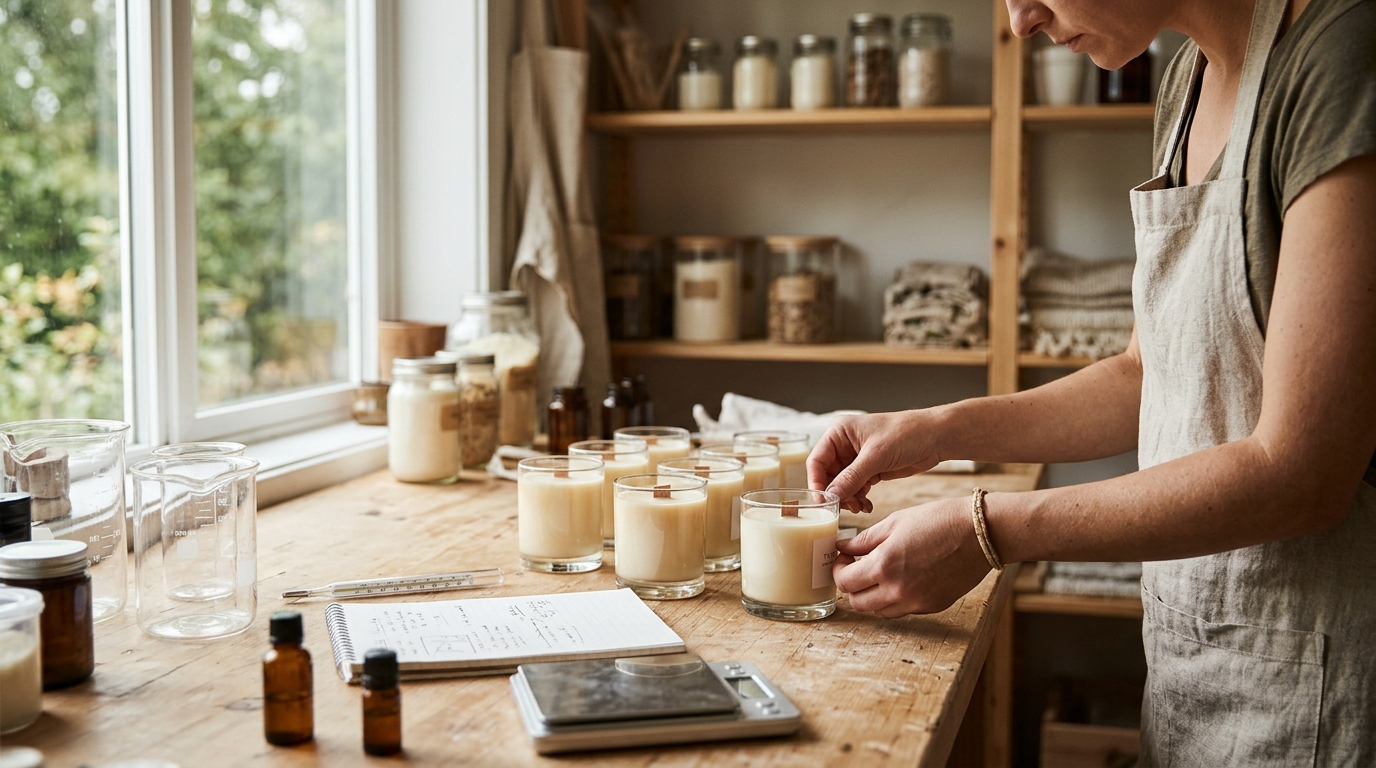
Passing a professional burn test is the critical bridge between a hobbyist project and a viable candle business. It ensures your product is safe, performs consistently, and meets the quality standards expected by retail buyers. Makesy provides the premium supplies and educational resources necessary to guide you through this rigorous process with confidence.
1. Select the Correct Wax for Your Vessel
Wax compatibility is the foundation of a successful burn test. Different waxes have distinct melting points and heat transfer properties that dictate how they interact with glass or metal containers. Using a wax that is too heavy for a small vessel can lead to excessive heat buildup, while a wax that is too light may not hold a proper melt pool. At Makesy, you can explore a wide range of candle waxes and bases to find the perfect match for your specific container size and shape.
2. Choose the Appropriate Wick Material and Size
Wick selection determines the speed and stability of the melt pool. A wick that is too small will struggle to create a full melt pool, leading to tunneling and poor scent throw. Conversely, a wick that is too large can cause the flame to become too hot, resulting in sooting or a dangerous heat level. You should test multiple wick types, such as wood, cotton, or braided, to find the one that balances performance with safety.
3. Calibrate Your Fragrance Load
Fragrance concentration directly impacts the chemical composition of the wax. Adding too much fragrance oil can alter the wax's melting point and cause the candle to burn hotter than intended. It is essential to start with the manufacturer's recommended maximum load and adjust downward if you notice performance issues. Makesy offers high-quality fragrance oils that are specifically formulated to work well with various wax types, ensuring consistent results.
4. Standardize Your Test Environment
Environmental variables can skew your burn test results significantly. Drafts, ambient temperature, and humidity all affect how a candle burns. To get reliable data, you must conduct your tests in a controlled environment free from air currents. Keep a log of the room temperature and humidity levels during each test to identify any patterns that might be influencing your results.
5. Measure Melt Pool Diameter and Depth
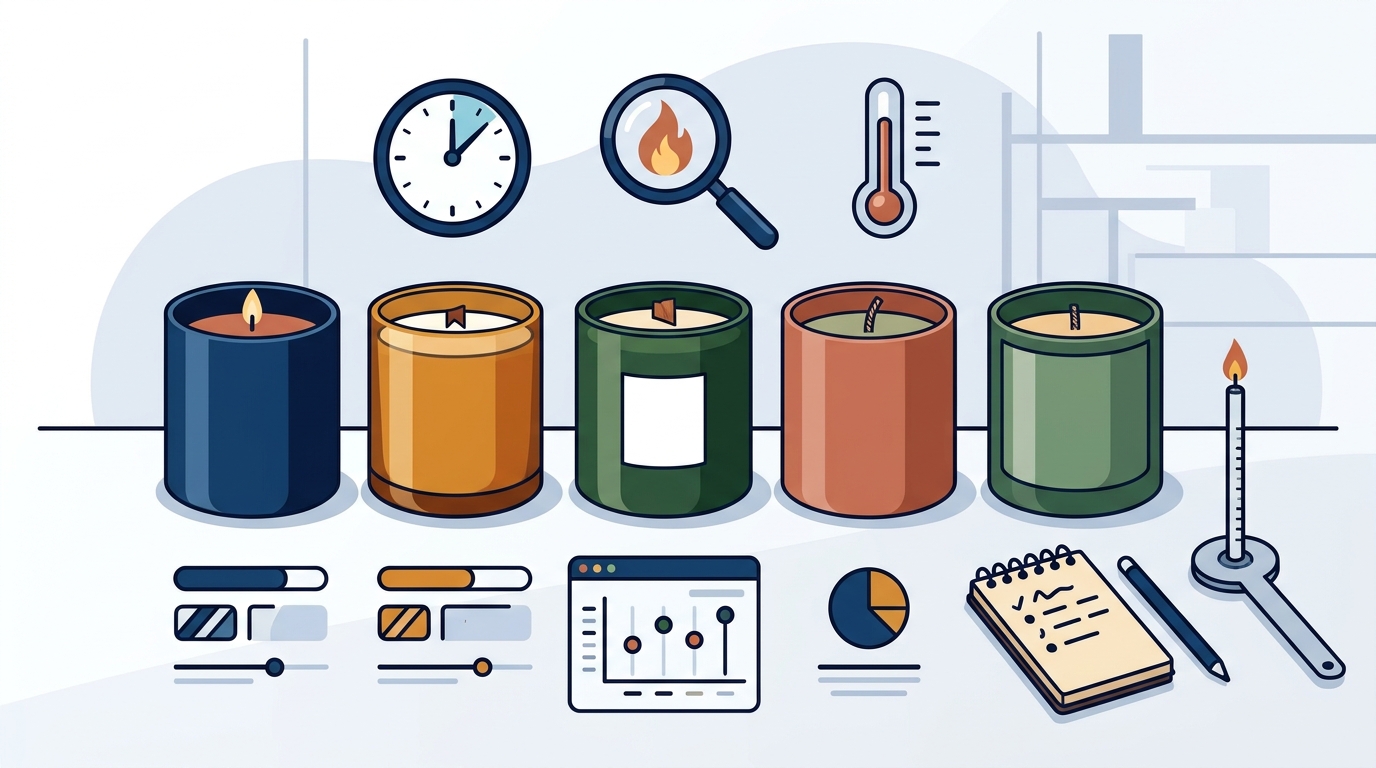
A full melt pool is the primary indicator of a well-performing candle. During the burn test, you should measure the diameter and depth of the melt pool at regular intervals, such as every 30 minutes. The melt pool should reach the edges of the container within a specific timeframe, typically 1 to 2 hours for most standard candles. If the pool is not reaching the edges, you may need to adjust your wick size or wax type.
6. Monitor Flame Height and Sooting
Flame behavior is a direct indicator of wick and wax compatibility. A healthy flame should be steady, with a height that is appropriate for the vessel size. Excessive sooting, indicated by black residue on the glass or a large, flickering flame, is a clear sign that the wick is too large or the wax is burning too hot. Use a soot gauge or a simple visual check to ensure your candle is burning cleanly and safely.
7. Document and Iterate on Your Results
Consistent documentation is key to refining your formula. Keep a detailed record of every variable, including wax type, wick size, fragrance load, and environmental conditions. This data allows you to make informed adjustments and track improvements over time. By iterating on your formula based on documented results, you can develop a product that is not only safe but also highly consistent for your customers.
Choosing the Right Supplies for Your Tests
When selecting supplies for your burn tests, prioritize quality and consistency. Makesy is dedicated to providing makers with the tools they need to succeed, from professional-grade tools to beginner-friendly kits. By using reliable materials, you can ensure that your test results are accurate and that your final product meets the high standards of the professional candle market.
Frequently Asked Questions
How long should a candle burn test last?
A standard burn test should last at least 4 to 6 hours to ensure the candle has reached a stable state and to observe any long-term performance issues.
What is the ideal melt pool diameter?
The ideal melt pool should reach the edges of the container, typically within 1 to 2 hours of burning, depending on the size of the vessel.
Can I use any wax for a burn test?
While you can test any wax, it is best to use a wax that is specifically designed for the type of vessel you are using to ensure accurate results.
How do I know if my wick is too large?
If your candle is producing excessive soot, a very tall flame, or a melt pool that is too deep, your wick is likely too large for the wax and vessel combination.
Where can I find reliable supplies for burn testing?
Makesy offers a wide range of high-quality candle scents and supplies that are trusted by professional makers worldwide.