
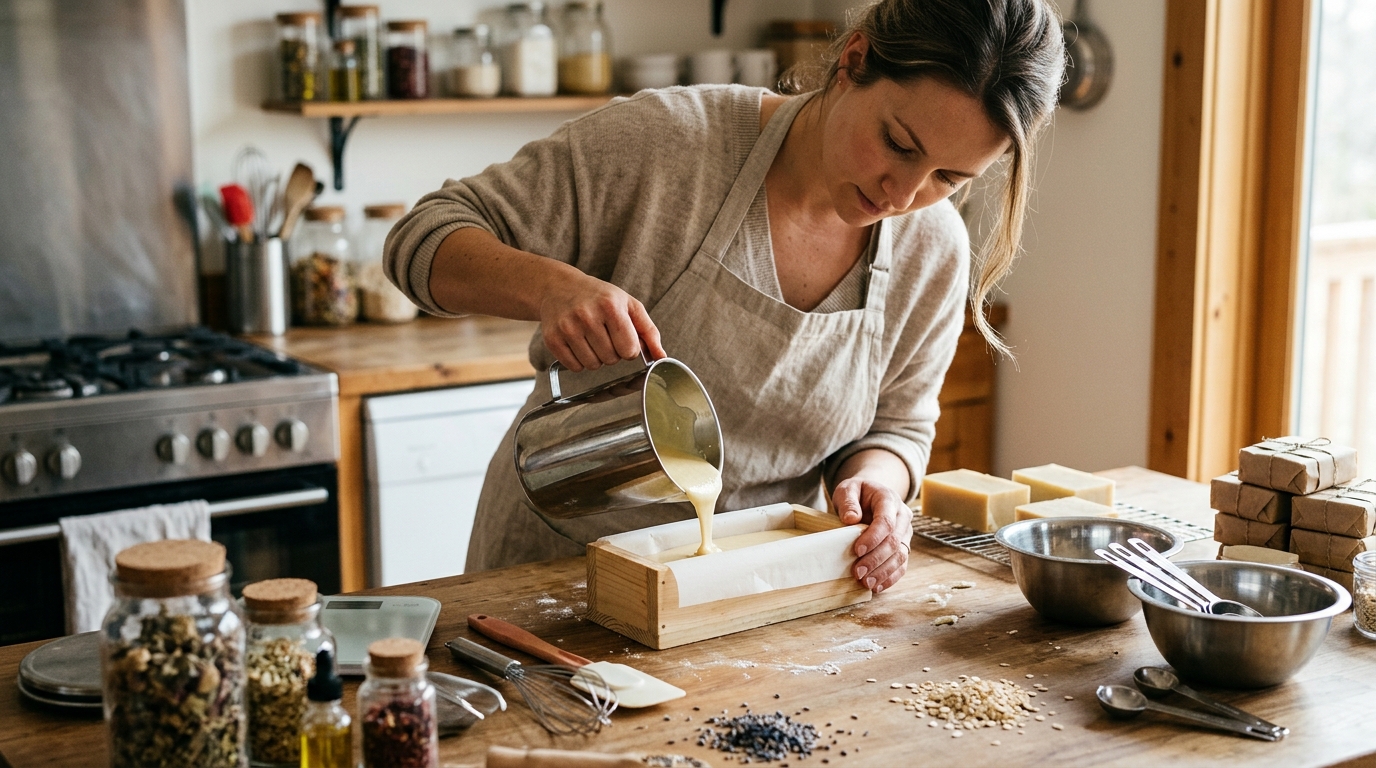
Forget the glossy startup fantasy. The most successful small soap businesses begin exactly where you are right now—at a kitchen counter, with a handful of oils, a reliable scale, and a willingness to learn the chemistry behind a great bar. This hands-on tutorial walks you through every practical step, from your first test batch to your fiftieth sale, with real cost numbers and regulatory specifics so you can move forward with confidence.
Step 1: Decide on Your Soap-Making Method
Your production method shapes everything—equipment costs, turnaround time, creative range, and even how regulators classify your product. There are three primary paths:
Cold Process
Cold process soap is the gold standard for artisan makers. You combine oils with sodium hydroxide (lye), pour the batter into molds, and wait for saponification to do its work. The trade-off is patience: bars typically need four to six weeks to cure. However, makesy has developed an innovative cold process method that dramatically shortens that timeline. Their Cold Process Soap Pro Kit produces soap that is safe to use and sell in just two days, using a premixed 50/50 lye solution that streamlines the process for beginners and experienced makers alike.
Melt and Pour
Melt-and-pour soap uses a pre-made base that you heat, customize with fragrance and color, and pour into molds. There is no lye handling involved, which makes it the most beginner-friendly option. The downside: lower differentiation and slimmer margins because you are paying for a finished base.
Hot Process
Hot process uses external heat (usually a slow cooker) to accelerate saponification. The soap is technically usable sooner than cold process, though most makers still recommend a short cure for a harder bar. It produces a rustic, textured look that some customers love.
Practical recommendation: If you plan to build a brand with unique formulas and premium pricing, cold process offers the most creative control. If speed-to-market matters more, start with melt and pour to validate demand, then graduate to cold process as your skills grow.
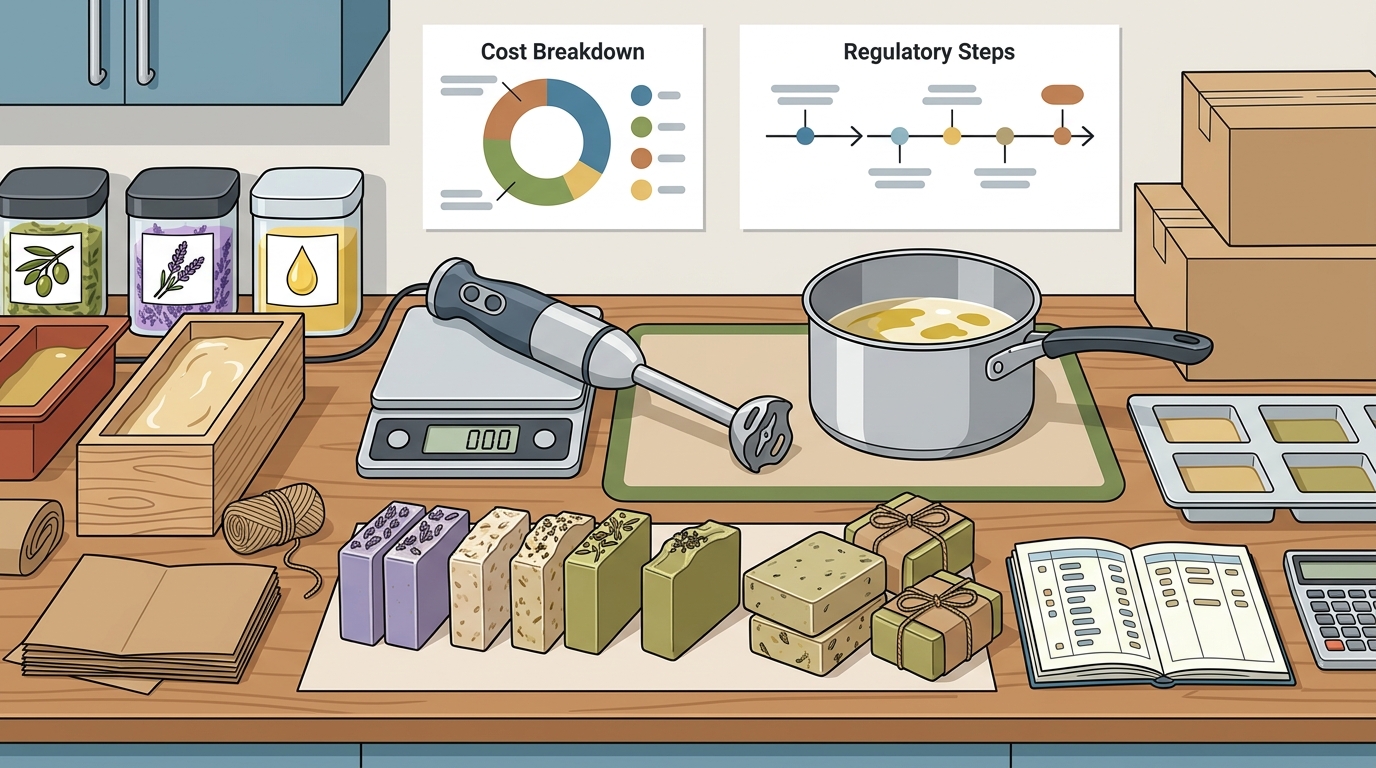
Step 2: Understand Startup Costs (With Real Numbers)
One of the biggest myths about soap making is that you need tens of thousands of dollars to start. You do not.
Home-Based Startup: $500–$2,000
A lean home-based launch covers the essentials you need to test the market with minimal risk. Key expenses include basic equipment ($150–$300), a starting inventory of raw materials ($200–$500), simple packaging ($100–$200), and business registration fees ($50–$300). You can start even leaner with a budget of $300–$500, which covers a starter soap-making kit ($100–$150), safety gear like goggles and gloves ($30–$50), a digital scale ($20–$40), and a stick blender ($20–$50).
Dedicated Workshop: $10,000–$25,000
If you want to go bigger from day one, a dedicated workshop setup typically requires commercial space rent and deposit ($2,000–$5,000), professional-grade equipment ($3,000–$7,000), bulk raw material purchases ($2,000–$4,000), and a marketing launch budget ($1,000–$3,000).
Real-World Benchmark
Consider this: one home-based soap maker named Ashley started with roughly $400, no paid advertising, and no business background. By 2025, her business generated $320,000 in annual revenue—primarily through organic social media and multiple income streams including soap sales, an online course, and recipe sales. That trajectory is the exception, not the rule, but it proves the low barrier to entry is real.
Step 3: Source Quality Ingredients and Supplies
Your ingredient quality is your product quality. For cold process soap, you need base oils (olive, coconut, palm, or specialty blends), sodium hydroxide (lye), fragrance oils or essential oils, colorants, and additives like clays or botanicals.
Makesy offers a comprehensive soap-making supply line including high-quality bases, fragrance oils, butters, oils, molds, enhancers, and additives—with bulk discounts and free shipping on qualifying orders. Their soap ingredient collection includes natural powders, butters, and oils specifically formulated for soap making. For cold process makers, makesy carries wholesale cold process supplies with bulk pricing designed for small-business scaling.
Cost-saving tip: Purchase raw materials in bulk whenever possible. You will typically save 30–40% compared to retail prices, dramatically improving your profit margins as you scale.
Step 4: Navigate Regulations Before You Sell a Single Bar
This is the step most aspiring soap makers skip—and the one most likely to create expensive problems later. U.S. regulations around soap are more nuanced than most people realize.
True Soap vs. Cosmetic vs. Drug
The regulatory classification of your product depends on what it is made of, what causes its cleaning action, and how it is intended to be used. Traditional soap made primarily from an alkali salt of fatty acids, whose cleaning action comes from those compounds, and that is labeled and sold only as soap, falls under the jurisdiction of the Consumer Product Safety Commission (CPSC), not the FDA.
However, if you make claims such as "moisturizing," "exfoliating," or "making the user smell nice," your product may be classified as a cosmetic and fall under FDA regulation. If you claim it treats skin conditions like acne or eczema, it could be classified as a drug—with significantly more stringent requirements.
The Modernization of Cosmetics Regulation Act of 2022 (MoCRA) further tightened requirements. Under MoCRA, inclusion of ingredients commonly recognized as having cosmetic properties may classify your product as a cosmetic even if no cosmetic claims are made. Small businesses receive some exemptions from facility registration and product listing requirements, but safety substantiation, adverse event reporting, and labeling rules still apply to all makers.
Labeling Requirements
If your soap qualifies as a true soap under CPSC jurisdiction, there are no specific ingredient-listing requirements—though consumer expectations mean you should list ingredients anyway. If your product is classified as a cosmetic, FDA regulations require a complete ingredient list in descending order of predominance, plus your business name and address on the label.
Business Licensing
Beyond federal classification, you will need state and local business licenses. Costs typically range from $50 to $400 annually. Liability insurance is another essential expense, generally running $300 to $1,500 per year. Contact your state authorities and consider consulting the Small Business Administration for location-specific requirements.
Step 5: Develop and Test Your Product Line
Resist the temptation to launch with twenty different scents. Start with three to five signature bars that showcase range without overwhelming your production capacity.
Recipe Development Tips
- Use a lye calculator for every recipe to ensure proper saponification ratios. Tools like SoapCalc help you balance performance and cost before committing to large batches.
- Manage your superfat percentage. Most makers default to 5%, but adjusting to 2–3% for certain products like hand soaps still delivers quality while reducing oil costs.
- Use dual-purpose ingredients like coconut oil or shea butter to simplify your formula and reduce spend.
- Test rigorously. Make at least three test batches of each recipe before selling. Document everything—temperatures, timing, ingredient weights, cure duration.
Cure Time Matters
Cold process bars should cure for about four to six weeks for peak hardness and lather. Some makers then bevel the edges so the bar feels smoother on first use. If you are using makesy's cold process method, the cure time is dramatically shorter—just two days—which can be a significant competitive advantage when managing inventory and cash flow.
Step 6: Price for Profit, Not Just Sales
Underpricing is the number-one mistake new soap makers commit. Here is how to think about pricing:
Know Your Cost Per Bar
Home-based makers producing small batches typically see costs of $2 to $5 per bar, driven primarily by purchasing supplies at retail prices. Scaling up and buying in bulk can lower that cost to $0.50 to $1.50 per bar.
Set Retail Prices That Sustain Growth
Handmade artisan soap commonly retails between $8 and $14 per bar. Your price should cover materials, labor, packaging, overhead, shipping, and a healthy margin. A good rule of thumb: retail price should be at least three to four times your total cost of goods sold.
Bundle Strategically
Simple bundle deals like "buy three, get one free" push higher cart sizes without requiring paid advertising. This approach increases average order value while giving customers a reason to try multiple scents.
Step 7: Build Your Brand and Start Selling
Your brand is the reason a customer picks your bar over the one next to it on the shelf—or the one above yours in a search result.
Brand Identity Essentials
- Name and logo: Choose something memorable that communicates your niche (natural, luxury, playful, minimalist).
- Packaging: Sustainable, eco-friendly packaging adds appeal with environmentally conscious consumers and can justify premium pricing.
- Photography: Invest time in well-lit product photos. For soap, close-up texture shots and lifestyle images outperform plain white-background shots on social media.
Sales Channels
- Your own website: Platforms like Shopify give you full control over branding and customer data.
- Local markets and craft fairs: Excellent for initial feedback, building a customer base, and testing price points face-to-face.
- Online marketplaces: Etsy and Amazon Handmade provide built-in traffic but charge fees that reduce margins.
- Wholesale: Approach local boutiques and gift shops once you have consistent production capacity.
Step 8: Market Without a Budget
Paid advertising is not required to build a profitable soap business. Organic social media can be your primary growth engine.
The most effective content strategy for soap makers is deceptively simple: film what you are already doing. Pouring soap, cutting bars, packing orders—these are inherently satisfying to watch. Edit the best moments, add a voiceover or text overlay, and post consistently. Aim for at least one post per day across platforms like Instagram Reels and TikTok.
The advice most new makers resist but need to hear: stop overthinking and start posting. Consistency beats perfection. The soap-making process is visually compelling on its own—lean into that.
Step 9: Scale Thoughtfully
Once you have proven demand and dialed in your processes, scaling is about efficiency—not just volume.
- Batch size: Increase batch sizes gradually. An experienced home maker can produce 400 bars in a day with the right equipment and workflow.
- Ingredient sourcing: Shift from retail to wholesale purchasing. Buying base oils in bulk is substantially cheaper than grocery store prices.
- Revenue diversification: Consider adding complementary income streams like soap-making courses, recipe sales, or brand collaborations. These high-margin digital products can significantly boost total revenue.
- Shipping optimization: As shipping costs grow (expect $4,500–$6,000 per month at scale), negotiate carrier rates and explore regional fulfillment options.
Key Takeaways
- You can start for under $500. A home-based soap business requires minimal upfront investment to test the market.
- Regulatory classification matters. True soap is regulated by the CPSC; cosmetic claims trigger FDA oversight. Know the difference before you print a single label.
- Cold process offers the highest margins and most differentiation. Makesy's method can reduce cure time to two days, giving you a speed advantage.
- Price at 3–4× your COGS. Retail prices of $8–$14 per bar are standard; bulk purchasing pushes per-bar costs well below $2.
- Organic social media works. Multiple six-figure soap businesses have been built with zero advertising spend.
- Start with 3–5 products, not 20. Focus on quality and consistency before expanding your line.
Frequently Asked Questions
How much does it cost to start a soap-making business from home?
A home-based soap startup typically costs between $500 and $2,000, covering basic equipment, raw materials, simple packaging, and business registration fees. You can start even leaner—around $300 to $500—with a starter kit, safety gear, a digital scale, and a stick blender.
Does the FDA regulate handmade soap?
True soap made from fats or oils and an alkali, labeled and sold only as soap, is regulated by the Consumer Product Safety Commission (CPSC), not the FDA. However, if you make cosmetic claims like "moisturizing" or "anti-aging," your product falls under FDA jurisdiction and must meet cosmetic labeling requirements.
What is the difference between cold process and melt-and-pour soap for a business?
Cold process soap is made from scratch using oils and lye, typically requires a four-to-six-week cure, and offers the most creative control and highest profit margins. Melt-and-pour uses a pre-made base—no lye handling needed—but offers lower margins and less product differentiation.
Can I really make a living selling handmade soap?
Yes. Part-time soap makers report average annual income of $10,000 to $15,000, while full-time makers can earn $40,000 to over $100,000. Success depends on production efficiency, smart pricing, and consistent marketing effort.
What profit margin should I expect per bar of soap?
Home-based makers producing small batches typically see costs of $2 to $5 per bar. Scaling up and buying in bulk can lower that to $0.50 to $1.50 per bar. With retail prices of $8 to $14 per bar, margins of 60–80% are achievable at scale.