
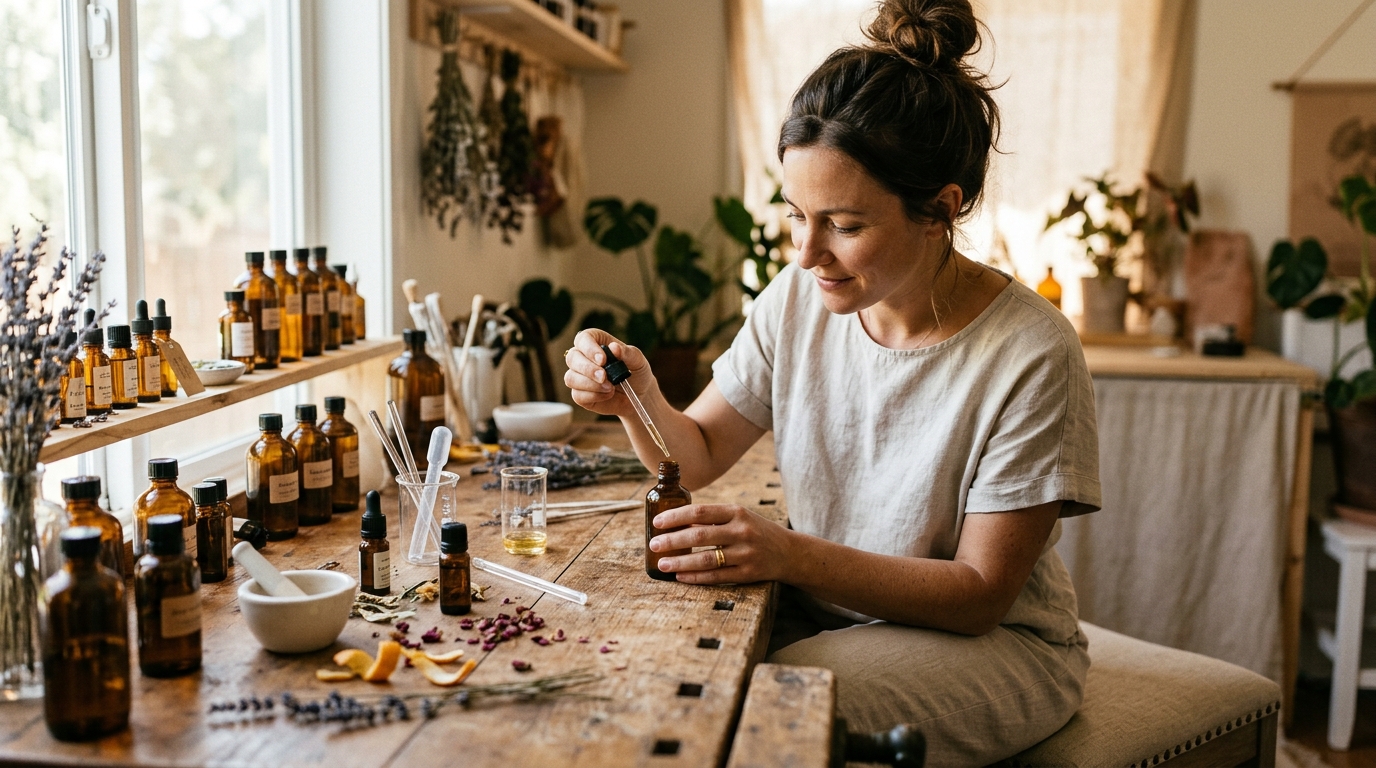
Creating a custom fragrance blend is one of the most rewarding parts of making candles, soaps, body care products, and home fragrances. A signature scent sets your creations apart, whether you are crafting for personal enjoyment or building a small business. The process combines a little science with a lot of creativity. In this guide, you will learn how fragrance notes work, how to choose and combine oils, the ideal ratios for balanced blends, and how to test your results. By the end, you will have a repeatable system for developing scents that are uniquely yours.
Understanding Fragrance Notes
A fragrance note is an individual scent layer that contributes to a blend's overall profile. In perfumery, scents are organized into three main layers: top, heart (middle), and base notes. These layers form what perfumers call the fragrance pyramid.
Top Notes
Top notes are the first scents you detect after application. They are bright, airy, and volatile, typically lasting 5 to 30 minutes. Common top notes include citrus fruits like bergamot and lemon, as well as fresh herbs like mint and eucalyptus.
Middle (Heart) Notes
Middle notes are the core personality of a fragrance. They emerge as top notes fade and usually last one to four hours. Floral, spicy, and herbal scents such as lavender, rose, geranium, and cinnamon fall into this category.
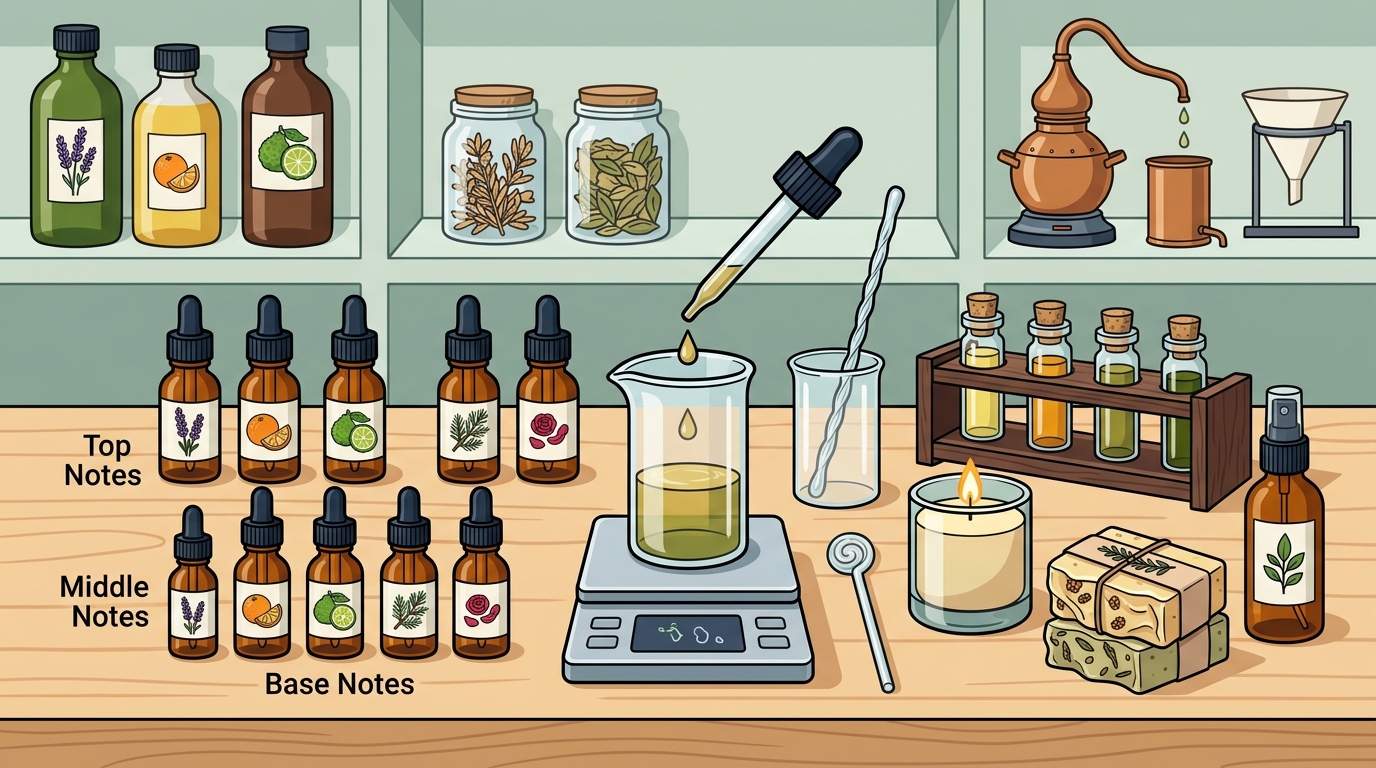
Base Notes
Base notes are the foundation that gives a blend depth and longevity. Ingredients like sandalwood, vanilla, musk, and patchouli can linger for six hours or more, anchoring the lighter notes above them.
Choosing Between Fragrance Oils and Essential Oils
A fragrance oil is a specially formulated scent compound designed to perform consistently across product types like candles, soaps, and lotions. An essential oil is a 100% natural, highly concentrated plant extract obtained through distillation. Both have a place in custom blending.
Essential oils are single-noted, meaning each one smells like one specific ingredient. If you want a more complex scent profile while staying natural, you can blend multiple essential oils together or explore natural fragrance oils made from nature-identical materials. For the widest creative range, clean fragrance oils deliver exceptional scent performance and longevity across candles, soap, perfume, and body care.
| Attribute | Essential Oils | Fragrance Oils |
|---|---|---|
| Source | Plant distillation | Formulated blend (synthetic + natural) |
| Scent Complexity | Single-noted | Multi-layered |
| Scent Throw | Moderate | Strong |
| Product Versatility | Limited (flash point concerns in candles) | High (candles, soap, body care, perfume) |
| Cost per oz | Higher for pure botanicals | Generally more affordable |
Blending Ratios That Work
Getting proportions right is the difference between a balanced scent and an overpowering one. A widely recommended starting ratio is 30% top notes, 50% middle notes, and 20% base notes. This structure ensures the blend opens with freshness, settles into a rich heart, and finishes with lasting depth.
These ratios are guidelines, not rules. Some oils are more potent than others, so you will need to tweak amounts by testing. Build your blend drop by drop: start with the base notes, add the middles, and finish with the tops. This method gives you control and makes it easy to experiment with curated fragrance kits that group complementary scents together.
Step-by-Step Blending Process
1. Define Your Vision
Decide the mood or story your scent should tell. Is it warm and cozy? Fresh and energizing? Write down two or three adjectives to guide your oil selection.
2. Select Your Oils
Pick one to three oils per note category. Use fragrance test strips to evaluate each oil individually, then hold strips together to preview combinations. Makesy offers a custom 10-scent sample pack that lets you build a personalized collection for testing.
3. Blend and Record
Using a glass dropper, combine oils drop by drop into a small glass vessel. Keep a detailed journal of every drop count. This documentation is essential so you can reproduce successes or adjust blends that need work.
4. Rest and Re-evaluate
Allow your blend to rest for 24 to 48 hours. Fragrance blends undergo transformations as they age, and a scent you initially question may evolve into something beautiful. Re-smell on a fresh strip and adjust if needed.
Applying Blends to Different Homemade Products
Your custom blend will behave differently depending on the product format. Candle wax, soap base, and lotion each interact with fragrance in unique ways.
For candles, usage amounts vary based on your desired fragrance strength and wax type. Most makers add fragrance oil at 6% to 10% of wax weight. Be cautious with citrus essential oils in candles because many have low flash points that create a combustion risk near open flames. Check the candle making supplies guide for wax-specific recommendations.
For soaps, always reference the skin-safe percentage listed on the IFRA certificate before adding fragrance. Makesy's eco-friendly soap making guide walks you through safe usage levels for melt-and-pour and cold-process methods.
For body care and perfume, dilute your blend in a carrier oil like jojoba or a grain alcohol base. Start at a low concentration (1% to 3% for body lotion, up to 15% to 20% for eau de parfum) and increase gradually.
Safety, IFRA Standards, and Clean Formulation
IFRA (International Fragrance Association) is the global body that sets safety guidelines for fragrance ingredient usage in consumer products. Always check the IFRA certificate and Safety Data Sheet (SDS) for every oil you use, especially for leave-on skin products.
Clean formulation matters. Look for fragrance oils that are phthalate-free, carcinogen-free, and cruelty-free. Makesy's Made Better standards ensure that none of their fragrances require Prop 65 labeling and that all products are vegan, phthalate-free, and free of reproductive, organ, or acute toxins.
Key Takeaways
- Every fragrance blend is built on three layers: top notes (first impression), middle notes (heart and character), and base notes (depth and longevity).
- A reliable starting ratio is 30% top, 50% middle, and 20% base notes.
- Essential oils are single-noted and natural; fragrance oils offer multi-layered complexity and stronger scent throw.
- Always check IFRA certificates and SDS documents before using a fragrance in skin-contact products.
- Build blends drop by drop, journal every experiment, and let blends rest 24 to 48 hours before finalizing.
- Adjust fragrance load percentages for each product type: candles, soaps, lotions, and perfumes each have different safe usage levels.
- Choose clean, phthalate-free, and cruelty-free fragrance oils to meet consumer demand for safer products.
Frequently Asked Questions
What is the best ratio for blending fragrance oils?
A common starting point is 30% top notes, 50% middle notes, and 20% base notes. This provides a balanced scent that evolves nicely over time. Adjust based on the strength of individual oils.
Can I mix essential oils and fragrance oils together?
Yes. Many makers combine essential oils with fragrance oils to get the natural benefits of botanicals plus the complexity and scent throw of formulated fragrances. Just confirm each oil is safe for your intended product.
How much fragrance oil should I add to candle wax?
Most candle makers use 6% to 10% fragrance oil by wax weight. The exact amount depends on your wax type and desired scent strength. Always follow the manufacturer's maximum recommended load.
Are fragrance oils safe for skin products like soap and lotion?
They can be, provided the oil is rated as skin-safe. Always check the IFRA certificate for maximum usage percentages in rinse-off and leave-on applications before adding any fragrance to body care products.
How do I make my fragrance blend last longer?
Increase the proportion of base notes such as sandalwood, vanilla, or musk. Base notes have the slowest evaporation rate and anchor lighter scents, extending the overall longevity of your blend.
What is the difference between a fragrance oil and an essential oil?
An essential oil is a natural plant extract obtained through distillation. A fragrance oil is a formulated scent compound that may contain both synthetic and natural ingredients, offering a wider range of scent profiles and typically stronger performance.
Where can I find clean, non-toxic fragrance oils for DIY products?
Look for suppliers that publish IFRA certificates, SDS documents, and transparent ingredient standards. Makesy's fragrance oil collection features phthalate-free, vegan, cruelty-free oils with the Made Better certification.
How many oils should I include in a single blend?
For beginners, start with three to five oils total (one or two per note category). This keeps the blend focused and makes it easier to identify what is working. As you gain experience, you can layer more complex combinations.
Start Blending Your Signature Scent Today
Ready to create a fragrance that is entirely your own? Explore Makesy's best-selling fragrance oils and grab a sample pack to start experimenting. With clean, non-toxic oils and a supportive maker community, you have everything you need to turn your next idea into a signature scent.