
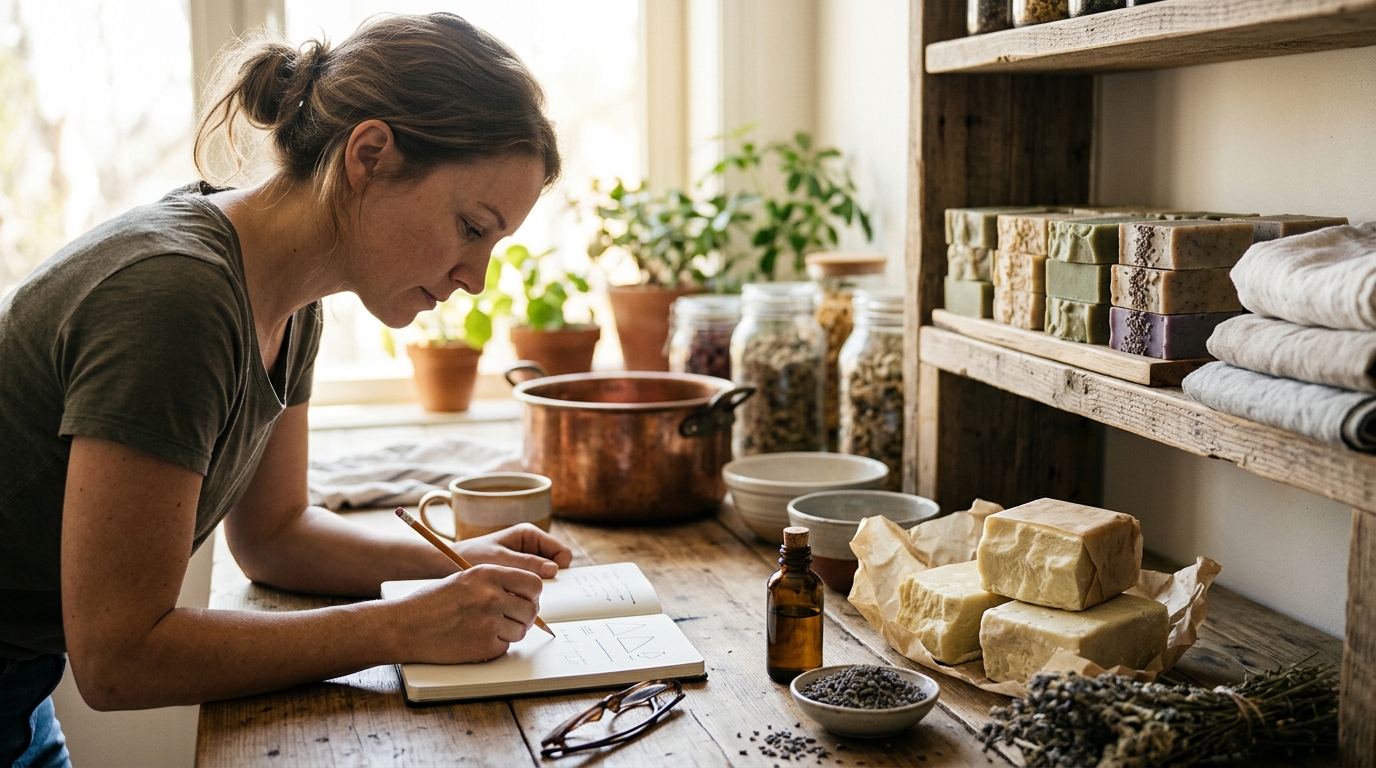
Turning a love of handmade soap into a profitable small business is more achievable than most people think. The global bar soap market is projected to reach $44.5 billion by 2030, and consumer demand for artisanal, eco-friendly products keeps climbing. Whether you plan to sell cold process bars at farmers markets or launch a full online brand, you need a clear roadmap. Below you will find seven essential steps, from choosing your soap-making method all the way to scaling operations, plus the supplies, regulations, and pricing strategies that separate hobbyists from thriving entrepreneurs.
1. Choose Your Soap-Making Method
Every soap business begins with a core process. The three most common approaches are cold process, melt and pour, and hot process. Cold process soap is a method that combines oils and lye (sodium hydroxide) through saponification to produce fully customizable bars. Melt and pour soap is a beginner-friendly technique that uses a pre-made soap base you melt, scent, color, and pour into molds.
If you are brand new, melt and pour offers a low learning curve and minimal safety concerns. Cold process gives you more creative control and stronger brand differentiation, but bars typically need a four-to-six-week cure time. Makesy offers an innovative method with their Cold Process Soap Pro Kit that uses a premixed 50/50 lye solution, producing bars that are safe to use and sell in just two days.
| Method | Skill Level | Startup Cost | Cure Time | Customization |
|---|---|---|---|---|
| Cold Process | Intermediate | $200 - $500 | 4 - 6 weeks | Very high |
| Melt & Pour | Beginner | $100 - $300 | None (cooling only) | Moderate |
| Hot Process | Intermediate | $200 - $400 | 1 - 2 weeks | High |
2. Source High-Quality Supplies
Your ingredients directly determine product quality and customer loyalty. Core supplies include soap bases or carrier oils (coconut oil, olive oil, palm oil), lye, fragrance oils, colorants, molds, and packaging. Carrier oil prices can fluctuate 20 to 30 percent depending on harvests and supply chains, so finding a reliable wholesale supplier matters from day one.
Makesy stocks a full range of soap ingredients including natural powders, butters, and oils. Their fragrance oils for soap making are clean-formula and IFRA-compliant, and bulk discounts plus free shipping over $199 help keep your per-unit costs low. For tools like digital scales, stick blenders, and silicone molds, browse their soap-making tools collection.
3. Develop a Focused Product Line
A product line is the curated set of products you offer under your brand. One of the most common mistakes new soap makers commit is designing products around their own preferences instead of their target market. Start with a tight lineup of no more than ten products focused on a single audience.
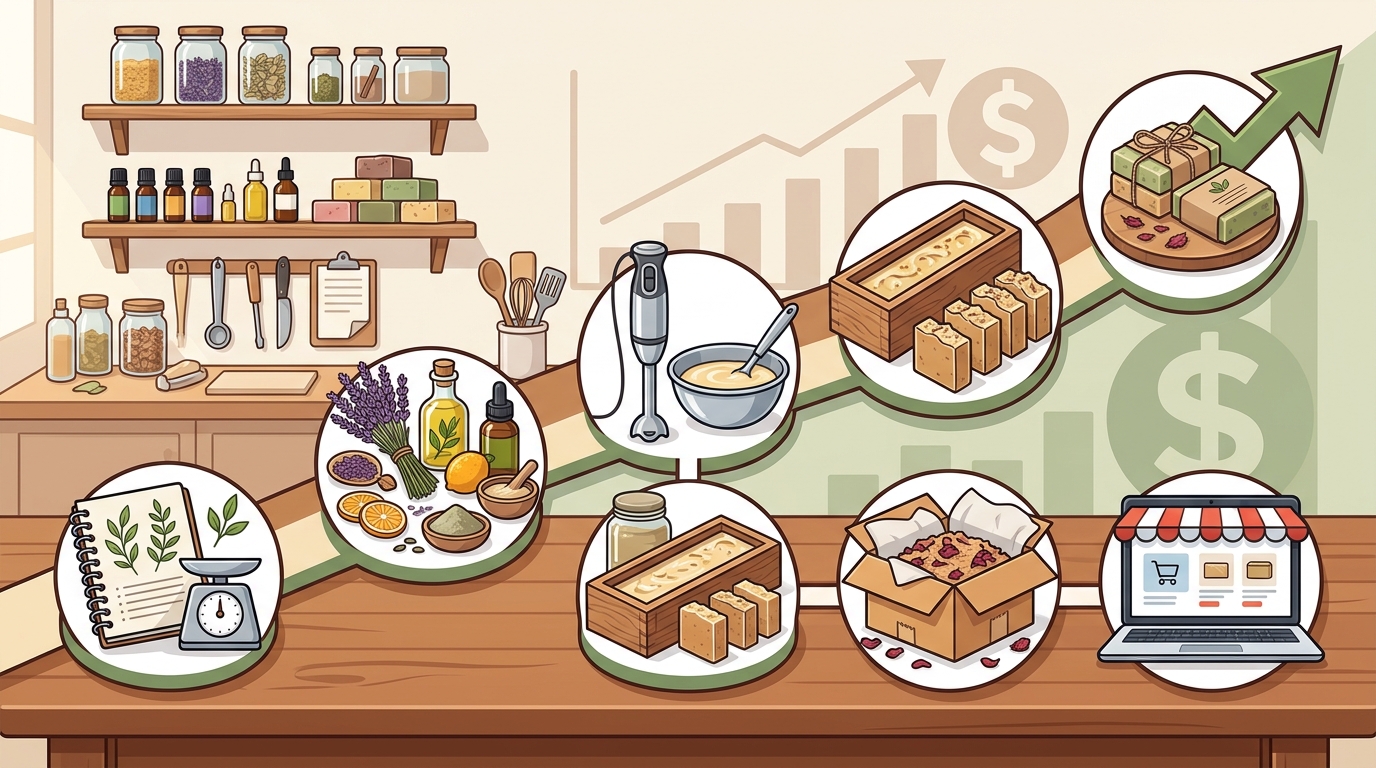
Identify Your Niche
Successful soap businesses thrive by specializing. Think vegan, organic, luxury, or sensitive-skin formulas. Create buyer personas that include age, income, preferred shopping channels, and skin-care pain points.
Test and Iterate
Use tried-and-tested recipes before customizing. Soap making is chemistry, and every gram of lye and every type of oil serves a purpose. Makesy's soap recipes and step-by-step guides help you experiment confidently while keeping results consistent.
Create a Signature Scent
Fragrance is often the number-one purchase driver. Explore makesy's best-selling fragrance oils or commission a custom fragrance oil that belongs exclusively to your brand.
4. Handle Legal and Regulatory Requirements
Compliance protects both your customers and your business. In the United States, basic soap that makes no cosmetic or drug claims is exempt from FDA cosmetic regulations. However, if your label states that your soap "moisturizes skin" or "kills bacteria," it loses the exemption and must comply with cosmetic or drug labeling rules.
The Modernization of Cosmetics Regulation Act of 2022 (MoCRA) is the most significant change to U.S. cosmetic regulation since 1938. MoCRA introduced mandatory facility registration, product listing, adverse-event reporting, and upcoming Good Manufacturing Practice (GMP) rules. Small businesses with under $1 million in average annual U.S. cosmetic sales are exempt from product listing, but facility registration and safety substantiation still apply.
Beyond federal rules, remember to register your business entity (LLC is popular for liability protection), obtain a state sales tax permit, and check local cottage-food or home-production laws.
5. Price Your Products for Profit
A pricing strategy is the formula you use to set retail and wholesale prices that cover costs and generate margin. Many new makers undervalue handmade soap. Material costs for a single bar can run $1 to $3, while artisanal bars commonly retail between $6 and $12 each.
A solid pricing formula accounts for ingredients, labor, packaging, overhead, and a target profit margin. Aim for a minimum 50 percent margin on direct-to-consumer sales and 25 to 30 percent on wholesale. Track actual ingredient costs per batch rather than relying on initial recipe estimates, because input prices shift. Tools in the makesy Business Hub can help you price products with confidence.
6. Build Your Brand and Start Selling
Branding goes far beyond a logo. Your brand should guide every decision you make, from packaging design to social-media voice. Develop a unique selling proposition (USP) rooted in your niche, whether that is locally sourced botanicals, zero-waste packaging, or luxury fragrance blends.
Choose Your Sales Channels
Start where your audience already shops. Local farmers markets let you test products face to face. Online platforms like Etsy and Shopify extend your reach to thousands. Soap is easy to package and ship, making it an excellent e-commerce product.
Leverage Social Media
Posting your soap-making process on Instagram and TikTok builds trust and drives sales. One soap entrepreneur grew from farmers-market sales to $320,000 in annual revenue largely through organic social media content and viral videos.
7. Scale Your Operations
Scaling means increasing production volume without sacrificing quality. A home-based soap business typically costs between $500 and $2,000 to launch, while a mid-range workshop setup with commercial-grade equipment runs $10,000 to $25,000. Most successful makers start at home and reinvest early profits.
Makesy's soap kits contain all the tools and ingredients you need to start your own soap line, and their MakerPro membership offers 1-on-1 consultations, private sales, and next-day order processing. Buying in bulk locks in better unit economics, but ties up working capital, so scale gradually and track inventory carefully.
Key Takeaways
- Choose a soap-making method (cold process, melt and pour, or hot process) that matches your skill level and brand goals.
- Source wholesale supplies from a reliable partner like makesy to lock in quality and bulk pricing.
- Start with a focused product line of no more than ten items aimed at a clearly defined audience.
- Understand FDA soap exemptions and MoCRA requirements before you sell your first bar.
- Price for profit: cover ingredients, labor, packaging, overhead, and a minimum 50 percent margin on DTC sales.
- Build your brand through social media and local markets before investing in paid advertising.
- Scale gradually by reinvesting profits into better equipment and larger ingredient orders.
Frequently Asked Questions
How much does it cost to start a soap-making business?
A home-based soap business typically costs between $500 and $2,000 to launch in 2026. You can start for even less with a beginner kit. Initial costs cover ingredients, basic equipment, packaging, and business registration fees.
Do I need FDA approval to sell soap?
In the U.S., basic soap that makes no cosmetic or drug claims does not require FDA approval. However, if your product makes claims like "moisturizes" or "anti-aging," it is classified as a cosmetic and must comply with FDA labeling and MoCRA requirements.
What is MoCRA and does it affect soap sellers?
MoCRA is the Modernization of Cosmetics Regulation Act of 2022, the biggest update to U.S. cosmetic law since 1938. It requires facility registration, product listing, and adverse-event reporting for cosmetics. True soap is generally exempt, but any cosmetic claims on your label bring your product under MoCRA's scope.
What is the best soap-making method for beginners?
Melt and pour is the easiest starting point because it requires no lye handling and has virtually no cure time. Once comfortable, many makers transition to cold process for greater creative control and higher perceived value.
How should I price handmade soap?
Calculate your total cost per bar (ingredients, labor, packaging, overhead) and apply at least a 50 percent markup for direct-to-consumer sales. Handmade artisanal soaps commonly retail between $6 and $12 per bar. Never undervalue your work.
Where should I sell my handmade soap?
Start at local farmers markets and craft fairs to get direct customer feedback. Expand online through Etsy, Shopify, or your own website. Soap ships easily, making e-commerce a natural growth channel.
Can I run a soap business from home?
Yes. Many successful soap businesses start as home-based operations. Check local zoning laws and cottage-industry regulations, maintain a dedicated workspace, and follow good manufacturing practices to ensure product safety and consistency.
What supplies do I need to start making soap?
Essential supplies include a soap base or carrier oils, lye (for cold process), fragrance oils, colorants, molds, a digital scale, a stick blender, a thermometer, and packaging materials. Makesy's soap kits bundle everything you need in one purchase.
Get Started Today
Ready to turn your soap-making passion into a real business? Explore makesy's complete soap-making supplies, kits, and tutorials to find everything you need in one place. From wholesale ingredients and premium fragrance oils to business education and the MakerPro membership, makesy makes soap-making simple, safe, and scalable. Start your first batch today.