
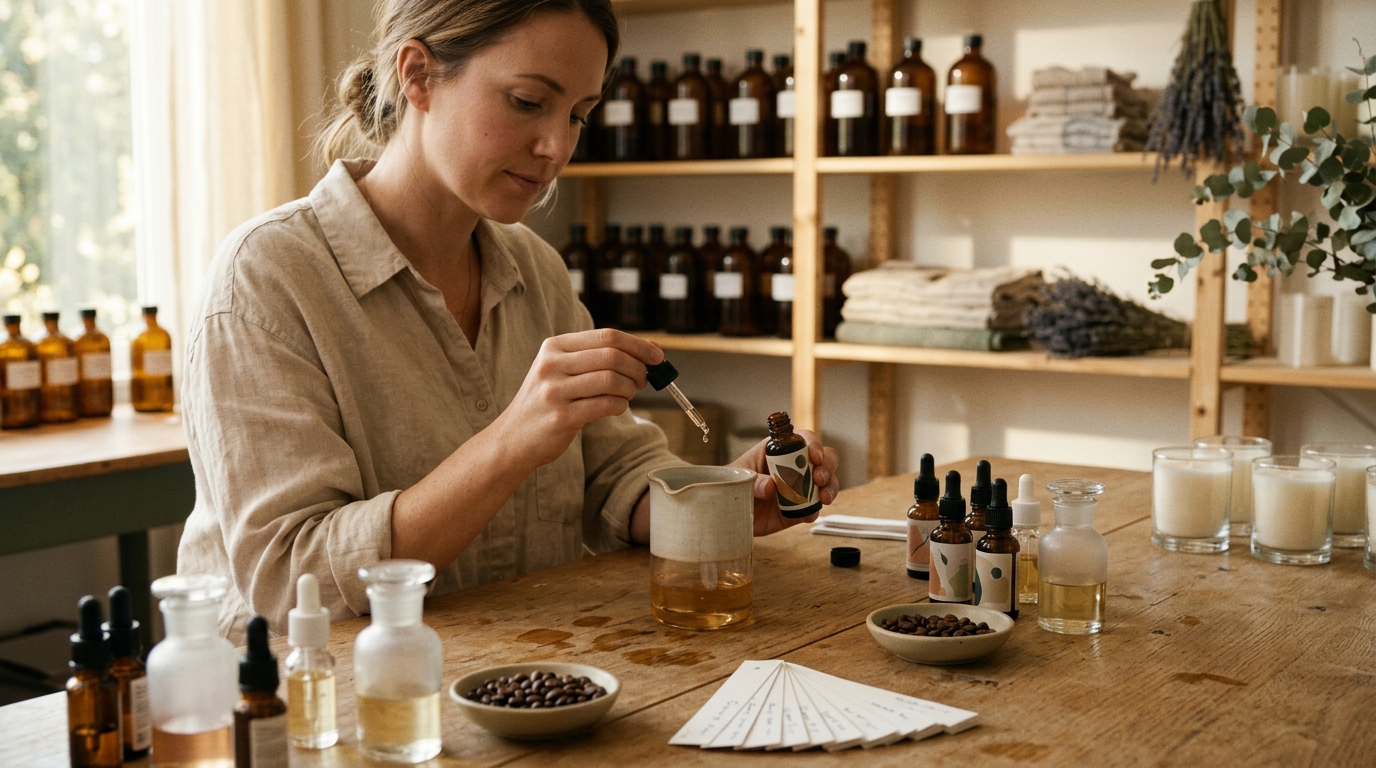
Creating a custom fragrance blend is one of the most rewarding parts of making candles, soaps, skincare, and other DIY products. A signature scent sets your creations apart and turns a simple handmade item into a memorable sensory experience. Whether you are a weekend hobbyist or building a small business, learning how to layer and balance fragrance oils is a skill that pays off in every batch you pour. In this tutorial, you will learn the fundamentals of scent architecture, essential tools, blending ratios, and practical tips for developing fragrances that are uniquely yours.
What Are Fragrance Oils?
Fragrance oils are synthetically crafted aromatic compounds designed to replicate natural scents with consistent strength and longevity. Unlike pure essential oils, they offer a broader palette of aromas, from gourmand vanilla to complex designer-inspired profiles. Makesy's fragrance oil collection includes clean, made better™ formulations spanning fine fragrances, certified natural options, and functional blends infused with mood-enhancing technology.
Essential oils are plant-derived extracts obtained through distillation or cold pressing. They bring therapeutic qualities but tend to have a narrower scent range. Many makers combine both types. You can explore 100% pure essential oils at Makesy to supplement your blending toolkit.
Understanding the Fragrance Note Pyramid
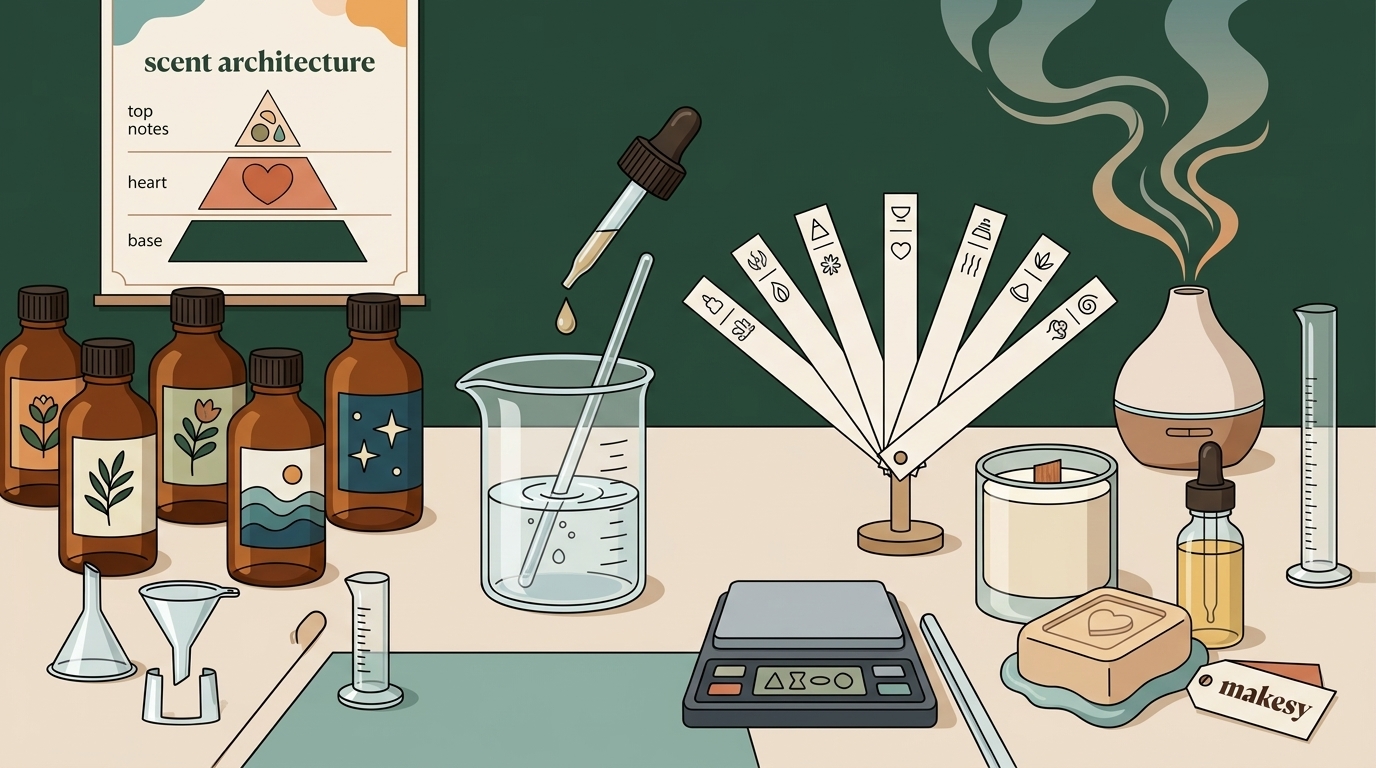
A fragrance note pyramid is a three-tier framework that describes how a scent unfolds over time. According to Wikipedia's perfumery entry, notes are separated into top, middle, and base layers that correspond to molecular weight and evaporation speed. Grasping this structure is the single most important step before you start blending.
Top Notes
Top notes are the light, volatile scents you detect first. Common examples include bergamot, lemon, eucalyptus, and peppermint. They evaporate within 5 to 20 minutes but create a critical first impression.
Middle (Heart) Notes
Middle notes are the core personality of a blend, emerging after top notes fade and lasting anywhere from 20 minutes to several hours. Lavender, jasmine, cinnamon, and geranium are popular heart notes. They typically make up around 40 to 70 percent of a blend's overall architecture.
Base Notes
Base notes are the deep, rich scents that anchor the entire composition and provide lasting power. Vanilla, sandalwood, amber, patchouli, and musk are classic choices. Without sufficient base notes, even a lovely blend will fade quickly.
Essential Tools for Blending
Precision matters when creating repeatable fragrance blends. Here is what you need on your workstation:
- Digital scale (0.1 g accuracy) for measuring oils by weight.
- Scent blotters (also called testing strips) for evaluating blends before committing to a full batch.
- Precision droppers or pipettes for adding oils in controlled amounts.
- Glass beakers or mixing vessels that will not absorb or react with fragrance compounds.
- Fragrance journal for recording every ratio and observation.
Makesy stocks a full range of making tools and supplies purpose-built for DIY creators.
Step-by-Step Blending Process
1. Define Your Vision
Start by choosing a mood or setting. A relaxing lavender blend suits bedroom candles, while a bright citrus-herb combination energizes a kitchen or living space. Aligning your blend with its intended context makes creative decisions easier.
2. Select Your Notes
Pick one or two oils from each tier of the fragrance pyramid. Keeping it simple is a proven strategy. A few well-chosen oils often produce a more striking effect than an overcrowded formula. Fragrance sample kits from Makesy let you test a curated range of scents before buying full bottles.
3. Blend and Evaluate
Combine small quantities, dip a scent blotter, and wave it gently under your nose. Wait several minutes for the top notes to settle so you can evaluate heart and base layers. Document every ratio in your fragrance journal for future replication.
4. Cure and Revisit
Allow your blend to rest for 24 to 48 hours. Fragrance oils need time to marry, and initial impressions can shift once the molecules fully integrate. Revisit the blend after curing to decide whether adjustments are needed.
Recommended Blending Ratios
The table below provides starting-point ratios. Adjust to taste once you gain experience.
| Note Layer | Percentage of Blend | Common Ingredients | Role |
|---|---|---|---|
| Top Notes | 15 – 25% | Citrus, Mint, Eucalyptus | First impression, freshness |
| Middle Notes | 40 – 55% | Lavender, Rose, Cinnamon | Core character, body |
| Base Notes | 25 – 35% | Vanilla, Sandalwood, Musk | Depth, longevity, anchor |
These percentages apply to the fragrance concentrate itself. Your total fragrance load in the finished product (candle, soap, lotion) will depend on the base material. Makesy's fragrance oil blending guide offers additional detail on safe usage rates.
Applying Blends to Different Products
Custom blends behave differently depending on the medium. Always test how your fragrance interacts with other ingredients, especially different wax types or soap bases, to ensure stability and performance.
| Product Type | Typical Fragrance Load | Key Consideration |
|---|---|---|
| Soy Candles | 8 – 12% | Add fragrance at recommended pour temperature for best scent throw |
| Cold Process Soap | 3 – 6% | Some notes accelerate trace; test in small batches first |
| Melt & Pour Soap | 2 – 4% | Stir gently to avoid bubbles |
| Lotion / Body Butter | 1 – 3% | Confirm IFRA compliance for skin-safe usage levels |
| Room Spray | 10 – 20% | Use a solubilizer for even dispersion in water-based formulas |
For soap-specific fragrances, browse Makesy's soap making fragrance oils. Each listing includes recommended usage amounts and application suitability. If you want a completely bespoke scent, Makesy even offers a customized fragrance oil service where the formula created belongs exclusively to you.
Key Takeaways
- Custom fragrance blending follows the three-tier note pyramid: top, middle, and base.
- Middle (heart) notes should make up the largest share of your blend, roughly 40 to 55 percent.
- Precision tools like digital scales, pipettes, and scent blotters are essential for repeatable results.
- Always test blends in small quantities before scaling up to full production batches.
- Allow blends to cure for at least 24 hours so the oils can fully integrate.
- Fragrance load varies by product type; check IFRA guidelines for skin-safe applications.
- Keep a detailed fragrance journal to track ratios, observations, and refinements.
Frequently Asked Questions
What is the difference between fragrance oils and essential oils?
Fragrance oils are synthetic or semi-synthetic blends engineered for consistent aroma and broad scent variety. Essential oils are natural plant extracts with therapeutic properties. Many makers blend both to get the best of each world.
How many fragrance oils should I combine in one blend?
Start with two to four oils total. A few well-chosen oils produce a more striking effect than an overcrowded formula. You can increase complexity as your skills develop.
Can I blend fragrance oils from different brands?
Technically yes, but using oils from the same supplier ensures compatible formulations and simplifies troubleshooting. Makesy's collection of over 1,000 products gives you plenty of variety within one trusted source.
How do I know if a fragrance oil is safe for skin products?
Check the oil's IFRA (International Fragrance Association) certificate, which specifies maximum safe usage levels for different product categories. Reputable suppliers like Makesy provide IFRA documentation with each fragrance.
Why does my blend smell different after 24 hours?
Fragrance oils need time to fuse into a harmonious scent. Top notes settle, and the heart and base layers become more prominent. This curing period is normal and should be factored into your evaluation process.
What fragrance load should I use for soy candles?
Most soy wax blends perform well with an 8 to 12 percent fragrance load by weight. Always follow the wax manufacturer's recommended maximum to avoid issues like sweating or poor burn quality.
Where can I learn more about fragrance blending techniques?
Makesy's Fragrance 101 guide covers note structures, blending techniques, and tips for making scents last longer. It is a great companion resource to this tutorial.
Can I sell products made with custom fragrance blends?
Yes. As long as you follow safe usage rates, proper labeling laws, and any local regulations, you can sell products featuring your custom blends. Makesy supports makers at every stage, from hobbyist to wholesale candle making supplies for scaling production.
Start Blending Your Signature Scent Today
Custom fragrance blending is equal parts science and self-expression. The fastest way to begin is with a curated sample kit that lets you experiment across scent families without a large upfront investment. Explore Makesy's fragrance sample kits and start developing the signature scents that will define your brand.