
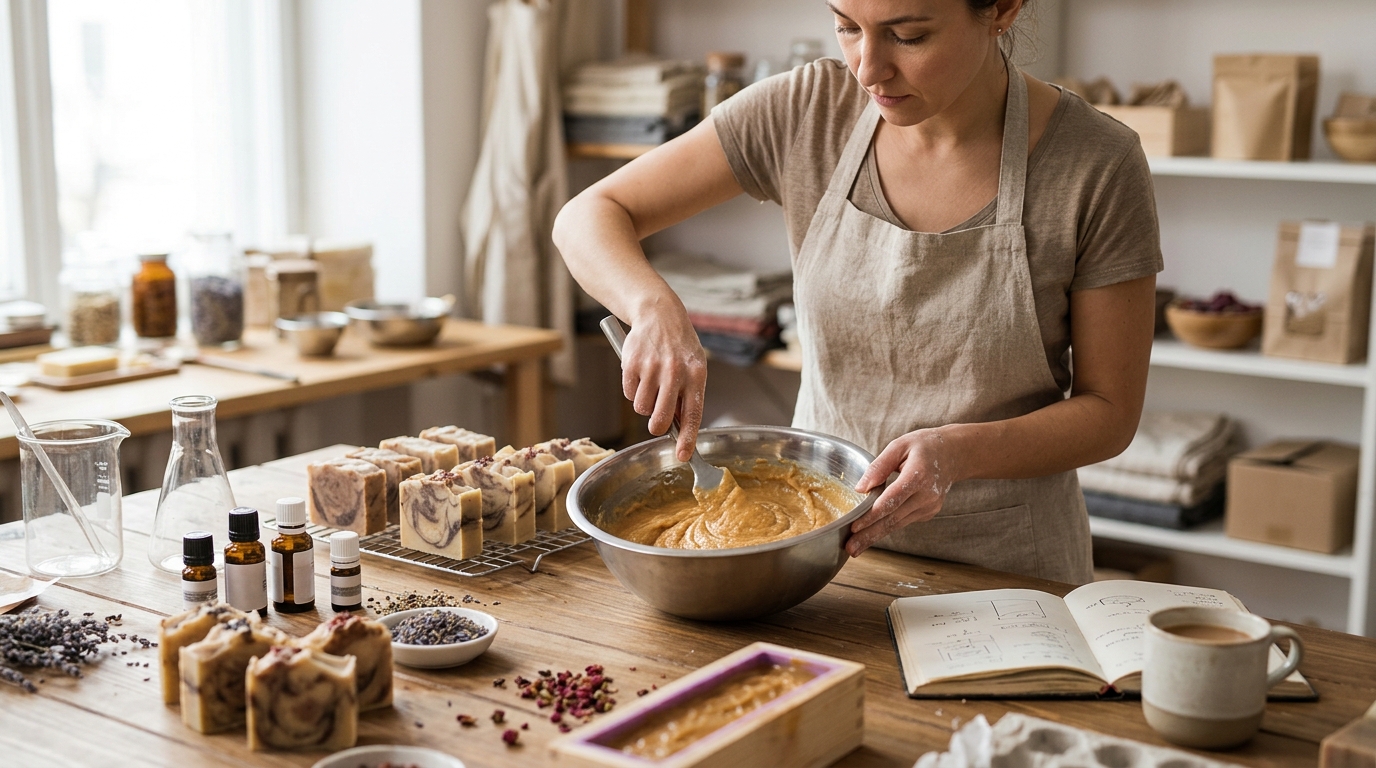
Turning your love of handmade soap into a profitable small business is more achievable than ever. The global handmade soap market was valued at USD 158.79 million in 2024 and is projected to grow at a CAGR of roughly 6% through 2032, fueled by consumer demand for natural, eco-friendly personal care. Whether you plan to sell at local craft fairs or build an online brand, this guide walks you through every essential step, from mastering your craft to marketing your first bars. Below you will find actionable advice, cost benchmarks, and the supplies you need to launch with confidence.
1. Master Your Craft First
Before you sell a single bar, you need to feel completely comfortable with the soap-making process from start to finish. Cold process soap making is a method that combines oils with sodium hydroxide (lye) and water, then allows the mixture to cure into a finished bar. Melt-and-pour soap making is a beginner-friendly technique in which you melt a pre-made soap base, add fragrance and color, then pour it into molds.
Start With a Kit
A comprehensive starter kit removes the guesswork. The Makesy Cold Process Soap Pro Kit includes over 95 tools, ingredients, and enhancers, plus a proprietary oil blend and a premixed 50/50 lye solution that makes cold process soap ready to use and sell in just two days. Starting with a kit lets you learn techniques in small batches before committing to large inventory purchases.
Practice and Document
Keep detailed notes on each batch. Record oil ratios, fragrance loads, temperatures, and cure times. This batch-tracking discipline will pay off when you need to reproduce your best-selling recipe at scale.
2. Research Your Market and Find a Niche
A niche is a focused segment of the market you serve with a tailored product line. Consumer demand is shifting toward natural, organic, and chemical-free products, opening doors to profitable niches like vegan soap, goat milk bars, aromatherapy blends, and soaps for sensitive skin.
Visit local farmers markets and craft fairs to see what sells, note popular scents and price points, and browse top sellers on Etsy for branding and packaging inspiration. Use Google Trends to validate search interest for niche terms like "oatmeal soap" or "charcoal detox bar."
| Niche | Target Customer | Avg. Bar Price |
|---|---|---|
| Vegan / Plant-Based | Eco-conscious millennials | $7 – $12 |
| Luxury / Spa-Grade | Gift buyers, boutique shoppers | $10 – $16 |
| Sensitive Skin / Unscented | Parents, allergy sufferers | $6 – $10 |
| Novelty / Themed Shapes | Kids, party favors | $5 – $9 |
| Men’s Grooming | Male consumers seeking natural care | $8 – $14 |
3. Write a Simple Business Plan
A business plan is a written roadmap that clarifies your vision, sets revenue goals, and helps you anticipate challenges. It does not need to be dozens of pages. Focus on an executive summary, target audience, product line, pricing strategy, and financial projections for the first year.
Pricing for Profit
Calculate your cost of goods sold (COGS), including raw materials, packaging, and overhead. Many soap businesses price bars between $5 and $10 depending on ingredients and branding. The average profit margin for handmade soaps ranges from 30% to 50%, making this an attractive entry point for entrepreneurs.
4. Source Quality Supplies and Equipment
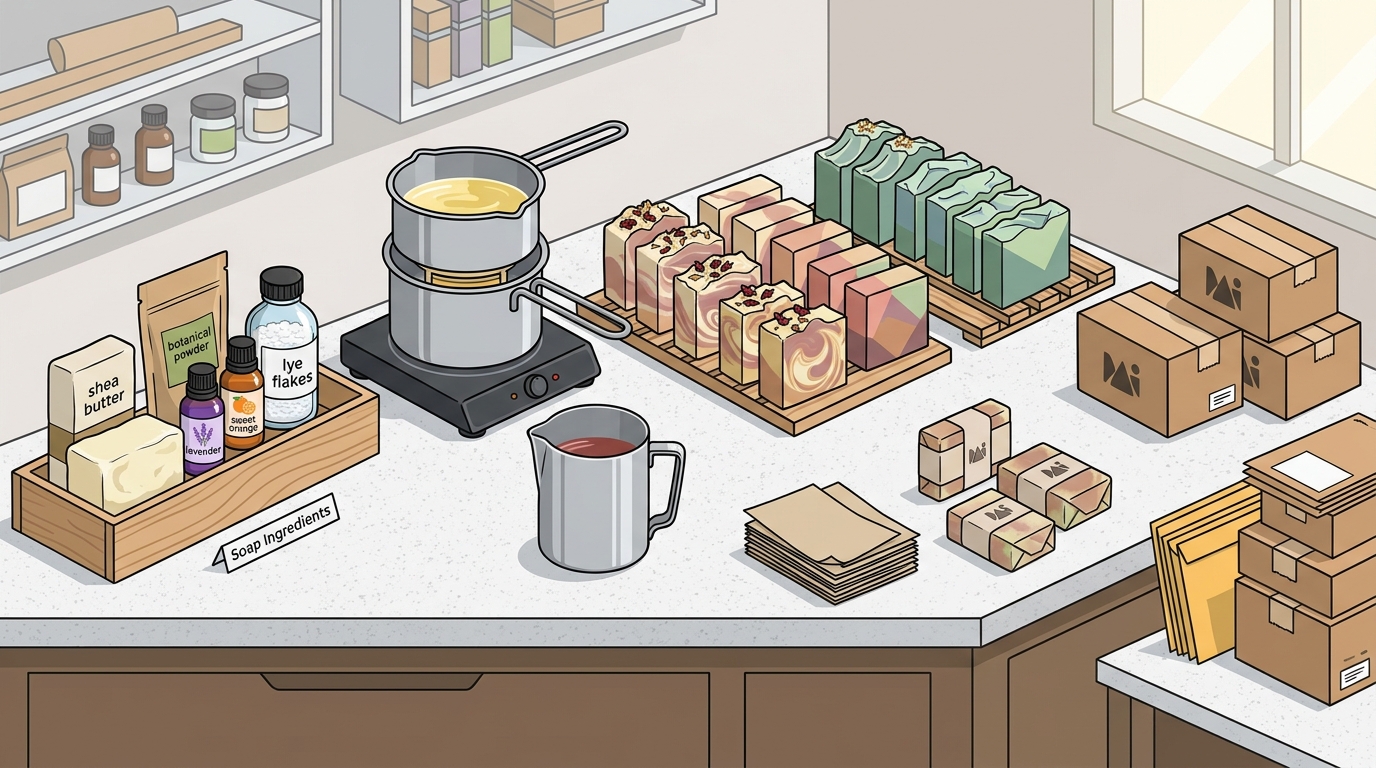
Your ingredients directly affect the look, feel, and safety of your finished product. Core supplies include soap bases or oils, lye (for cold process), fragrance oils, colorants, molds, a digital scale, a stick blender, and safety gear like gloves and goggles.
Choosing a Supplier
Look for a supplier that offers bulk discounts, free shipping thresholds, and an eco-conscious product range. Makesy carries an extensive selection of soap ingredients including natural powders, butters, and oils. Their soap-safe fragrance oils are formulated for both cold process and melt-and-pour methods, and you can sample scents with a cold process fragrance sample pack before committing to larger sizes.
Essential Equipment Checklist
Beyond ingredients, you will need soap-making tools such as pouring pitchers, silicone spatulas, thermometers, and loaf molds. Resist the urge to overspend on decorative molds early on. Perfect your recipe with basic silicone molds first, then expand once you have consistent sales.
5. Understand Regulations and Labeling
In the United States, soap regulation depends on how you market your product. Pure soap made from lye and fatty acids falls under the Consumer Product Safety Commission. However, soaps marketed with health or beauty claims count as cosmetics and require compliance with FDA cosmetic regulations.
Labeling requirements for bath and body products are strict. You must list product ingredients, net weight, and business contact information. Consider consulting the Small Business Administration to learn about licenses and permits required in your state. Liability insurance is also worth securing early; it protects both you and your customers if a product reaction occurs.
6. Build Your Brand and Packaging
Your brand is more than a logo. It encompasses your business name, visual identity, packaging, and the story you tell customers. Strong branding ensures customers recognize your products everywhere, from a farmers market booth to an Instagram ad.
Keep your initial product line small, ideally a maximum of 10 products, with a consistent theme and target audience. Use sustainable packaging materials if you are targeting eco-conscious buyers, a segment that now represents over 52% of handmade soap purchasers according to Global Growth Insights. You can even earn the Makesy made better™ badge to publicly showcase your commitment to clean, earth-conscious ingredients.
7. Launch and Start Selling
With products ready and branding in place, choose your sales channels. Popular platforms include your own e-commerce website, Etsy, local craft fairs, and wholesale to boutique retailers. Diversifying where you sell reduces risk and broadens your customer base.
Marketing Your Soap Business
Build an active social media presence. Share your soap-making process, behind-the-scenes footage, and ingredient stories to connect with potential customers. Over 43% of handmade soap buyers say social media influences their purchasing decisions. Pair organic content with email marketing and detailed product descriptions that target specific search phrases.
Scale Thoughtfully
Most soap businesses take 6 to 18 months to become profitable. Start small, reinvest profits, and explore tested soap recipes to expand your line over time. As demand grows, Makesy's wholesale pricing and soap kits help you scale production without sacrificing quality.
Key Takeaways
- Master the soap-making process through practice and batch documentation before selling.
- Research your niche thoroughly; consumer demand for natural and eco-friendly soaps is growing at roughly 6% annually.
- Write a business plan that includes COGS calculations and realistic profit margins of 30% to 50%.
- Source eco-conscious, high-quality supplies from a trusted partner like Makesy.
- Understand FDA labeling rules and secure liability insurance before your first sale.
- Keep your product line focused and your branding consistent across every channel.
- Diversify sales channels and leverage social media storytelling to build a loyal audience.
Frequently Asked Questions
How much does it cost to start a soap-making business?
Initial costs can range from $500 to $10,000 depending on your scale, equipment choices, and ingredient quality. Starting with a curated kit and small batches keeps upfront investment low.
Do I need FDA approval to sell handmade soap?
In the U.S., basic soap made from lye and fats does not require FDA approval. However, any product marketed with cosmetic or therapeutic claims is regulated as a cosmetic and must meet FDA labeling requirements.
What is the best soap-making method for beginners?
Melt-and-pour is the easiest method because it eliminates the need to handle lye. Cold process offers more creative control and is preferred by most artisan soap businesses.
How long does it take for a soap business to become profitable?
Most soap businesses take 6 to 18 months to turn a profit, depending on marketing efforts, pricing strategy, and operating costs.
Where should I sell my handmade soap?
Popular channels include Etsy, your own website, local farmers markets, craft fairs, and wholesale to boutiques and spas. Selling across multiple channels helps you reach more customers.
What supplies do I need to make soap?
Core supplies include a soap base or oils, sodium hydroxide (for cold process), fragrance oils, colorants, molds, a digital scale, thermometer, stick blender, and safety gear. You can find all of these in Makesy's soap-making collections.
How do I price my handmade soap?
Calculate your total cost of goods sold, add your desired profit margin, and compare against competitors. Most handmade soap bars retail between $5 and $12, with premium and luxury bars reaching $16 or more.
Can I run a soap business from home?
Yes. Many soap businesses start from a home kitchen. Check your local zoning regulations for home-based business rules, maintain a clean dedicated workspace, and follow good manufacturing practices.
Ready to Start Your Soap Business?
Every great soap brand starts with quality ingredients and the right guidance. Explore Makesy's complete soap-making collection to find eco-conscious bases, premium fragrance oils, professional tools, and step-by-step tutorials that make launching your business simple, safe, and scalable. Shop soap supplies now and turn your craft into a thriving brand.