
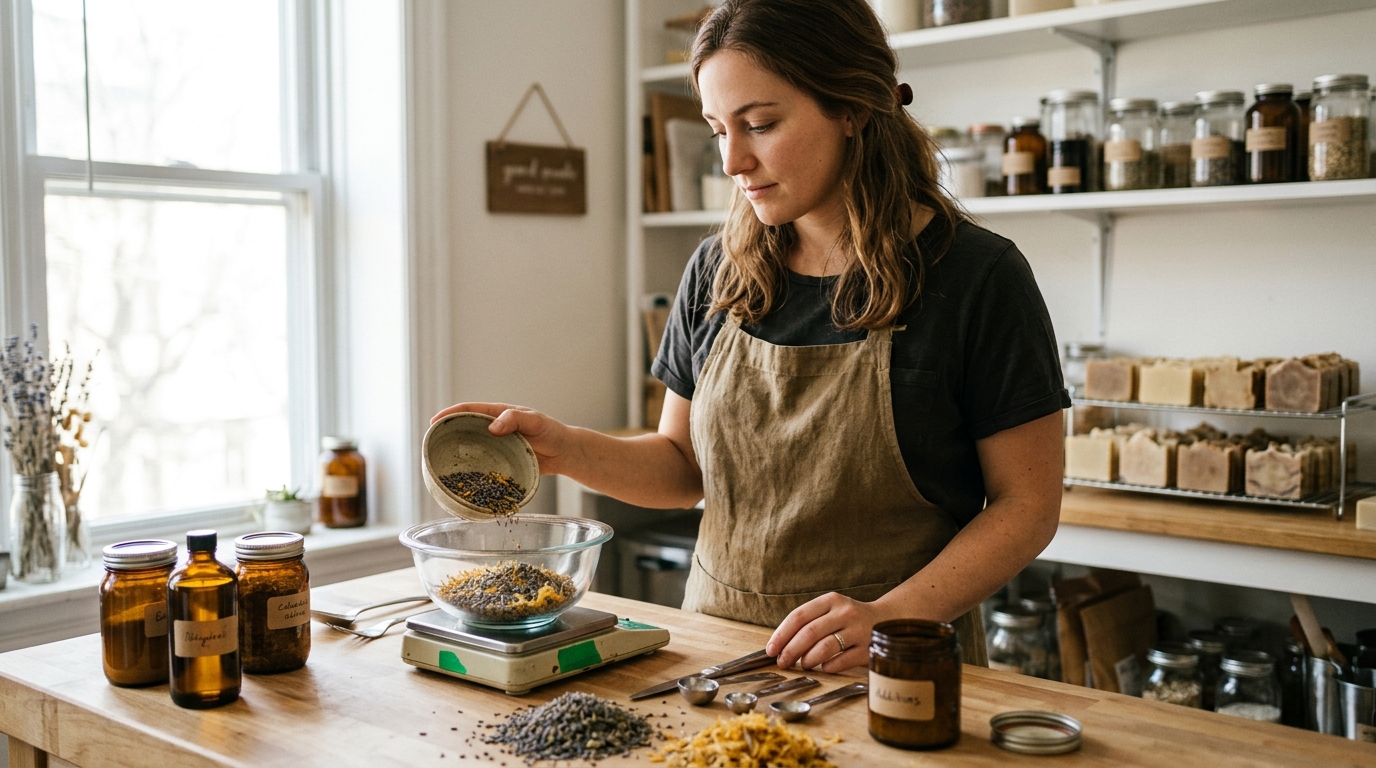
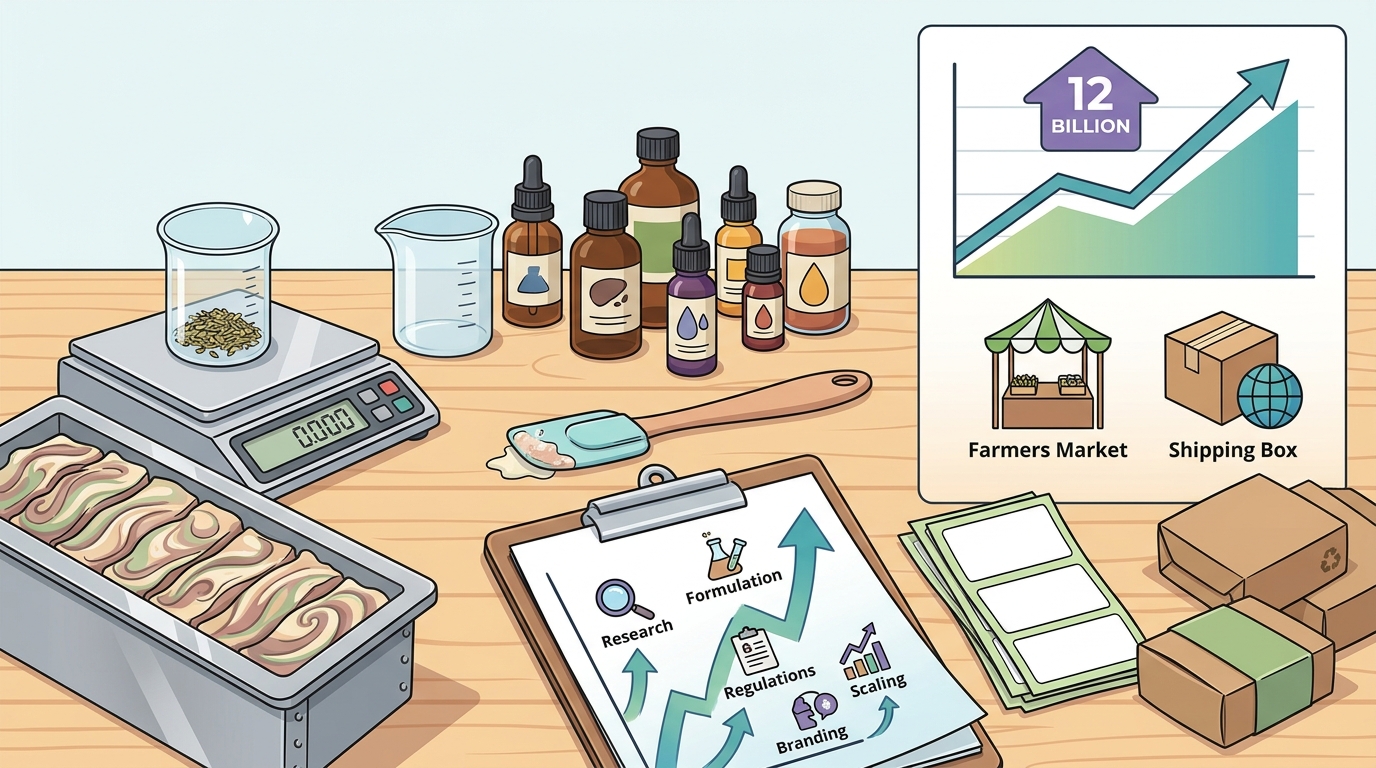
Turning a love of handmade soap into a profitable small business is more achievable than ever. The global handmade soap market is on track to surpass $12 billion, fueled by growing consumer demand for natural, eco-friendly personal care. Whether you want to sell cold process bars at a local farmers market or build an online brand, the path from hobbyist to entrepreneur follows a clear set of steps. Below, you will find a practical roadmap covering everything from market research and formulation to regulations, branding, and scaling, so you can launch with confidence and grow sustainably.
1. Research the Market and Find Your Niche
Before you mix a single oil, spend time studying the soap landscape. Consumer demand is shifting toward natural, organic, and chemical-free products, which has opened the door to profitable niches like vegan soap, aromatherapy blends, and novelty designs. A clear niche helps you stand out in an increasingly crowded handmade soap market.
Identify Your Target Customer
Are you targeting eco-conscious millennials, parents seeking gentle baby soap, or luxury gift buyers? Defining your ideal customer early shapes everything from scent selection to packaging. Visit local craft fairs, browse Etsy trends, and study social media hashtags to see what resonates.
Analyze the Competition
Study established soap brands and note their price points, ingredient lists, and brand positioning. Look for gaps you can fill, whether that is a signature scent, a unique ingredient story, or a sustainability angle backed by certifications like Makesy's made better™ standard.
2. Choose Your Soap-Making Method
Your method determines your workflow, cure time, and product range. A soap-making method is the specific chemical or physical process used to turn oils and other raw materials into a finished bar or liquid soap. The three most common approaches are outlined below.
| Method | Best For | Cure Time | Difficulty |
|---|---|---|---|
| Melt & Pour | Beginners, decorative bars | A few hours | Easy |
| Cold Process | Custom formulations, business scaling | 2 days–6 weeks* | Intermediate |
| Hot Process | Rustic bars, faster turnaround | 1–2 weeks | Intermediate |
*Traditional cold process soap typically needs 4–6 weeks to cure. However, innovative approaches, like Makesy's Cold Process Soap Pro Kit, use a pre-mixed 50/50 lye solution and proprietary trinity oil blend that can produce soap ready to use and sell in as little as two days.
3. Source Quality Ingredients and Supplies
Your ingredients define the quality, feel, and safety of your finished product. At a minimum you will need oils or a soap base, lye (sodium hydroxide) or a pre-mixed lye solution, fragrance or essential oils, colorants, molds, and a reliable digital scale.
Where to Shop
Look for suppliers that offer bulk pricing, eco-friendly sourcing, and formulations tested for soap compatibility. Makesy's soap ingredients collection includes natural butters, oils, and powders, while their soap-safe fragrance oils are specifically tested for cold process and melt-and-pour applications. Buying from a single, reputable supplier simplifies inventory and ensures batch consistency.
Essential Tools
Stock up on an immersion blender, heat-safe mixing containers, a thermometer, safety gear (goggles, gloves, long sleeves), silicone molds, and a curing rack. Explore soap-making tools at Makesy for a curated selection designed for both hobbyists and small-batch producers.
4. Develop and Test Your Recipes
Recipe development is the creative heart of your business. A soap recipe is the precise combination of oils, lye, water, fragrances, and additives that produces a bar with specific lather, hardness, and skin-feel characteristics.
Use a lye calculator to nail your saponification ratios, then batch-test small quantities. Track every variable, including temperatures, pour times, and fragrance loads, in a production log. Makesy's soap recipes and DIY kits provide tested starting formulas that take the guesswork out of early experimentation.
Aim for at least three to five signature products before launching. Consistent quality across batches is what turns first-time buyers into repeat customers.
5. Handle Regulations, Licensing, and Labeling
Soap regulations in the United States depend on how you classify and market your product. Understanding the rules early prevents costly relabeling or legal issues later.
FDA vs. CPSC
"True soap," made primarily from alkali salts of fatty acids and marketed only for cleansing, is regulated by the Consumer Product Safety Commission (CPSC), not the FDA. However, if your soap makes cosmetic claims like "moisturizing" or "exfoliating," it falls under FDA cosmetic regulations. Claims about treating skin conditions (acne, eczema) push the product into drug territory, which requires pre-market approval.
Labeling Basics
At minimum, your label must show the product identity, net weight in both U.S. and metric units, and your business name and address. Cosmetic soaps also require a full ingredient list in INCI format. Check with the Small Business Administration for state-specific licenses and sales tax obligations.
6. Build Your Brand and Online Presence
Branding is the emotional wrapper around your product. Choose a memorable name, design a cohesive visual identity, and craft a brand story that communicates your values, whether that is sustainability, luxury, or community.
Launch a clean, mobile-friendly website with detailed product descriptions optimized for search. Pair it with active social media accounts on Instagram and TikTok, where short-form video of the soap-making process performs exceptionally well. An email list is your most reliable owned channel for promoting new scents and seasonal collections.
7. Set Pricing and Sales Channels
Start by calculating your cost of goods sold (COGS): raw materials, packaging, labels, shipping supplies, and overhead like electricity and website hosting. Then add your desired profit margin. Many handmade soap businesses price bars between $5 and $10 depending on ingredients and branding.
Where to Sell
Diversify across multiple channels: your own e-commerce store, local farmers markets, craft fairs, wholesale to boutiques and spas, and online marketplaces. Wholesale pricing should still leave room for healthy margins after covering all costs. Consider bundles, gift sets, or subscription boxes to boost average order value.
8. Scale Production and Grow Your Business
Once you have steady sales and proven recipes, it is time to think about growth. Invest in larger molds, more efficient equipment, and streamlined packaging workflows. Track every batch with a numbering system for quality control and traceability.
Wholesale can be a powerful growth lever. Local boutiques, spas, and gift shops often seek handmade soaps to stock. For makers ready to go bigger, Makesy's wholesale soap-making supplies offer bulk discounts and free shipping on qualifying orders, helping you protect margins as volume increases.
Reinvest profits wisely, and revisit your business plan every quarter. The most successful soap entrepreneurs treat their craft as both an art and a data-driven operation.
Key Takeaways
- Research your niche thoroughly before investing in supplies; the handmade soap market rewards differentiation.
- Choose a soap-making method that aligns with your skill level and business goals (melt and pour for beginners, cold process for scaling).
- Source high-quality, eco-conscious ingredients from a trusted supplier to ensure consistency and safety.
- Understand U.S. soap regulations: "true soap" falls under the CPSC, while cosmetic or drug claims trigger FDA oversight.
- Label every product correctly with product identity, net weight, and business details at a minimum.
- Price your bars to cover COGS plus a healthy margin; most artisan soaps sell for $5 to $10 per bar.
- Diversify sales channels and reinvest profits to scale sustainably.
Frequently Asked Questions
How much does it cost to start a soap-making business?
Initial costs typically range from $500 to $10,000 depending on the scale of your operation and equipment choices. Starting small with a beginner kit and reinvesting profits is a low-risk way to grow.
Do I need FDA approval to sell handmade soap?
Not necessarily. If your product qualifies as "true soap" under the regulatory definition and is marketed only for cleansing, it is regulated by the CPSC, not the FDA. Soaps with cosmetic or therapeutic claims do fall under FDA jurisdiction.
What is the difference between cold process and melt-and-pour soap?
Cold process soap is made from scratch by combining oils with lye, offering full control over ingredients and formulation. Melt-and-pour soap uses a pre-made base that you melt, scent, color, and pour into molds, making it faster and beginner-friendly.
How long does cold process soap take to cure?
Traditional cold process soap requires 4 to 6 weeks of curing. Some modern formulations, such as those in Makesy's pro soap kits, can be ready in as little as two days thanks to pre-mixed lye solutions and optimized oil blends.
What supplies do I need to start making soap?
At minimum, you need a soap base or oils, lye (or a pre-mixed lye solution), fragrance oils, colorants, silicone molds, a digital scale, an immersion blender, a thermometer, and safety gear including goggles and gloves.
How should I price my handmade soap?
Calculate your total cost of goods sold, including materials, packaging, and overhead. Add your target profit margin. Most artisan soap bars sell between $5 and $10 at retail, though premium or specialty bars can command higher prices.
Where is the best place to sell handmade soap?
Start with a mix of your own website, local farmers markets, and craft fairs. As you grow, expand into wholesale accounts with boutiques and spas, and list on online marketplaces for broader reach.
Do I need business insurance to sell soap?
Yes, product liability insurance is strongly recommended for anyone selling personal care products. It protects you if a customer has an adverse reaction. Many craft fairs and retail partners require proof of insurance before allowing you to sell.
Ready to Launch Your Soap Business?
The best time to start is now. Explore Makesy's complete soap-making supply collection, from starter kits and fragrance oils to molds and packaging, and turn your creative passion into a thriving small business. Browse supplies, grab a kit, and start making today.