
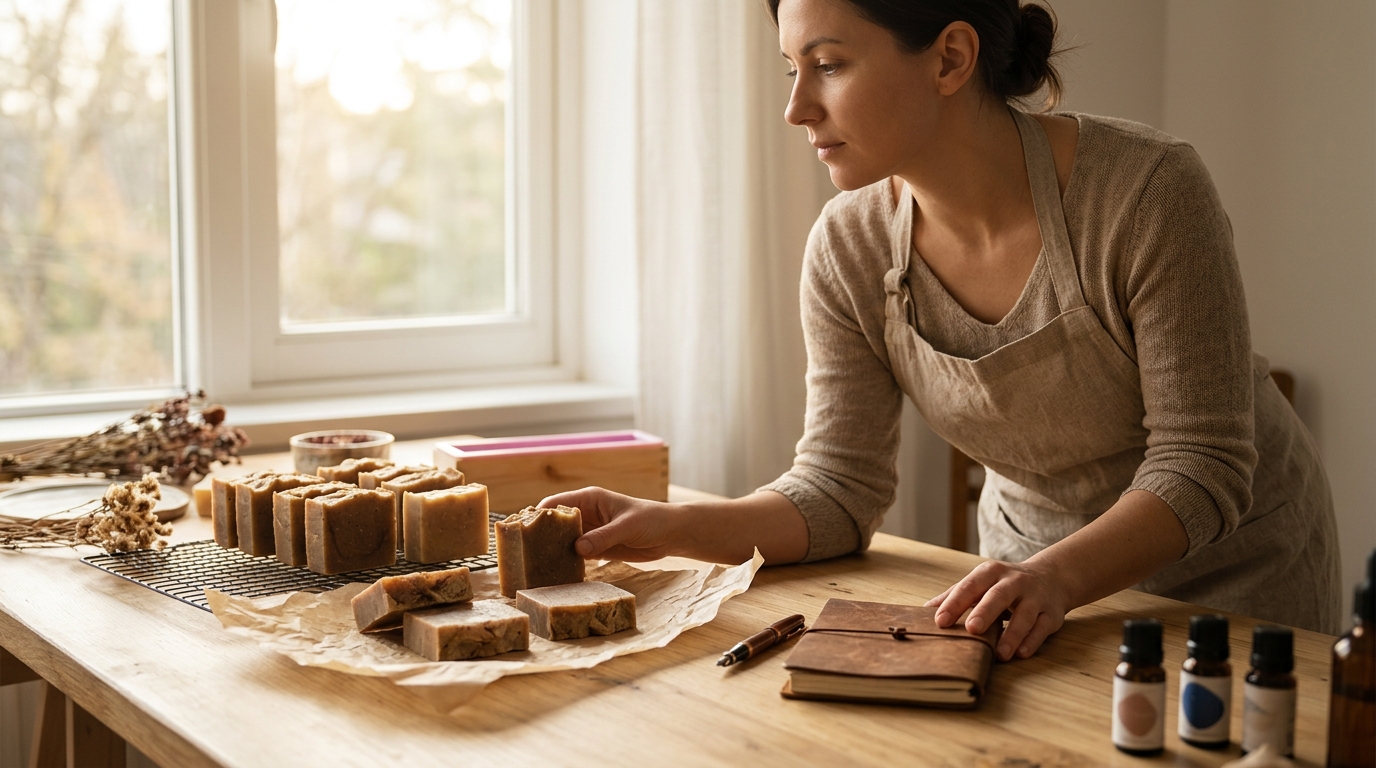
Turning a love for handmade soap into a profitable small business is more achievable than ever. The global handmade soap market is growing at a compound annual growth rate of roughly 5.2%, driven by rising consumer demand for natural, eco-friendly personal care products. But going from your kitchen counter to your first paying customer takes more than a great recipe. It requires smart planning, quality supplies, regulatory awareness, and a brand that stands out. This guide walks you through the seven essential steps to launch your soap making business with confidence and clarity.
1. Find Your Niche and Define Your Market
A niche is a focused segment of the broader market that your products are specifically designed to serve. Before you pour your first batch, decide who you are making soap for and why they will choose yours over the thousands of options already available.
Consumer demand is shifting toward natural, organic, and chemical-free products. Popular niches include vegan soap, aromatherapy blends, sensitive-skin formulas, and novelty designs. Pick one angle that genuinely excites you and research whether there is buying demand for it.
Validate Before You Invest
Browse Etsy, local farmers markets, and social media hashtags to see what is selling. Study reviews to find gaps. A strong soap making category overview can also help you see which product types are trending right now.
2. Choose Your Soap Making Method
Your method determines your workflow, cure time, and the kind of products you can offer. There are three primary methods most small businesses choose from:
| Method | Difficulty | Cure Time | Best For |
|---|---|---|---|
| Melt & Pour | Beginner | A few hours | Quick launch, creative shapes |
| Cold Process | Intermediate | 2 days–6 weeks* | Full customization, premium bars |
| Liquid Soap | Intermediate | Varies | Pump bottles, dispensers |
*Traditional cold process soap requires 4–6 weeks of curing. However, innovative formulations can shorten this dramatically. Makesy's proprietary cold process method, which uses a pre-blended trinity oil blend and a 50/50 lye solution, produces soap that is safe to use and sell in just two days.
3. Source Quality Ingredients and Supplies
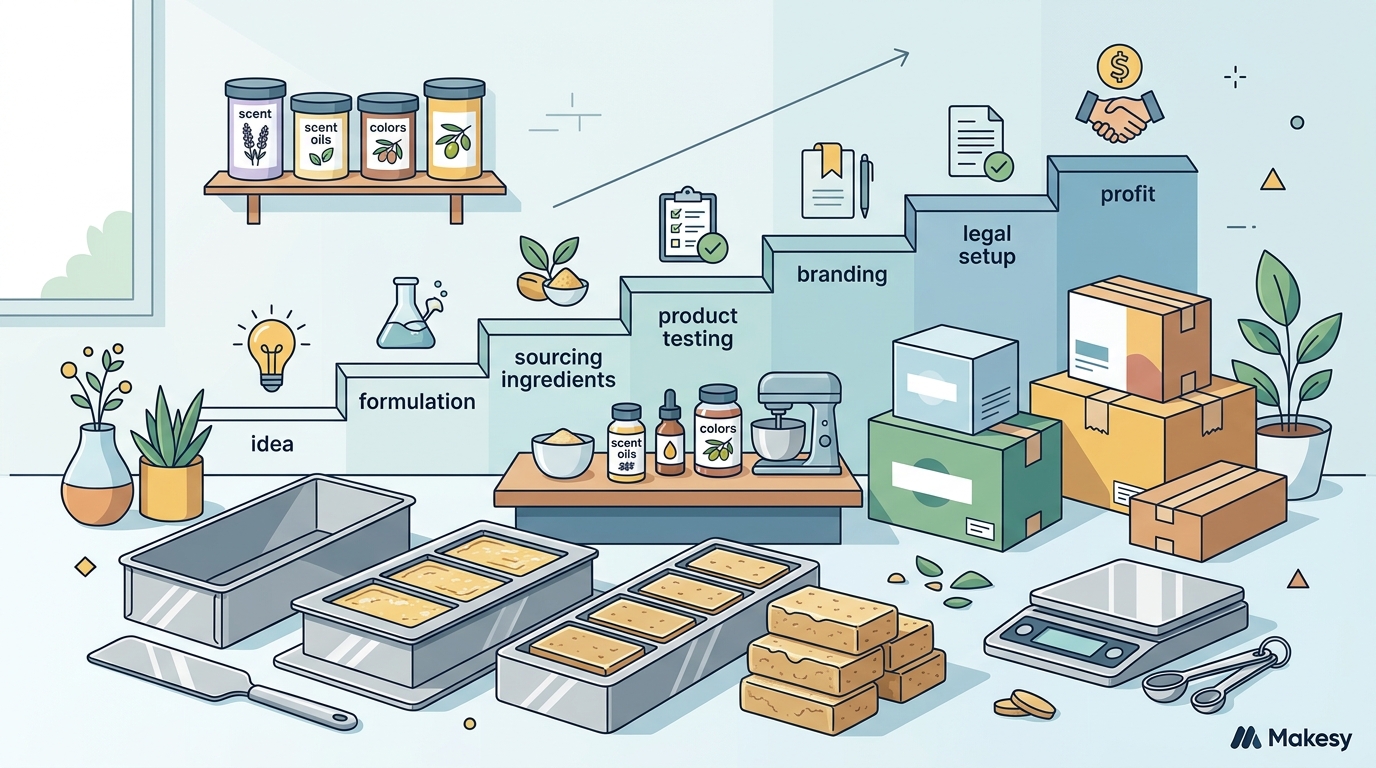
Your ingredients define your product quality and your profit margins. A soap base is the foundational mixture of oils and fats that undergoes saponification to become soap. Common base oils include coconut oil, olive oil, and sustainably sourced palm oil.
Core Supply Checklist
- Soap bases and oils: Start with a proven blend. Explore soap ingredients such as natural butters, powders, and carrier oils.
- Fragrance oils: Scent is often the number-one purchase driver. Browse fragrance oils formulated for soap making to find scents that perform well in cold process and melt-and-pour applications.
- Tools and molds: Molds, thermometers, immersion blenders, scales, and safety gear. A dedicated soap making tools collection simplifies sourcing.
- Additives and enhancers: Colorants, exfoliants, botanicals, and clays add visual and functional appeal.
Starter Kits Save Time
If you want everything in one box, an all-in-one kit is the fastest path. Makesy's Starter Cold Process Soap Making Kit includes over 25 tools, ingredients, and enhancers plus a comprehensive Bubble Book of formulas and expert tips.
4. Understand Regulations and Labeling
Compliance is not optional, even for small home-based operations. In the United States, how your soap is regulated depends on what it is made of and how you market it.
"True Soap" vs. Cosmetic
According to the FDA, soap products consisting primarily of an alkali salt of fatty acid and making no label claim other than cleansing are not classified as cosmetics. They fall under the Consumer Product Safety Commission (CPSC) instead. However, if you market your soap as moisturizing, exfoliating, or deodorizing, the FDA classifies it as a cosmetic, requiring a full ingredient declaration on the label.
Regardless of classification, your label should include the product identity, net weight, and your business name and address, as required by the Fair Packaging and Labeling Act. You may also need a local business license or permit to sell physical goods, and liability insurance is strongly recommended.
5. Set Up Pricing and a Business Plan
Cost of goods sold (COGS) is the total direct cost of producing one unit of your product, including raw materials, packaging, and allocated overhead. Calculate your COGS carefully, then add your desired profit margin.
Many handmade soap businesses price individual bars between $5 and $10 depending on ingredients, size, and brand positioning. Initial startup costs for a home-based soap business typically range from $2,000 to $5,000, covering equipment, ingredients, packaging, and legal fees. Most soap businesses take 6 to 18 months to become profitable.
Simple Pricing Framework
| Cost Component | Example per Bar |
|---|---|
| Raw materials | $0.80–$1.50 |
| Packaging & labels | $0.30–$0.75 |
| Overhead (utilities, tools) | $0.20–$0.50 |
| Total COGS | $1.30–$2.75 |
| Retail price (3–4x markup) | $5.00–$10.00 |
Write a simple business plan covering your niche, target customer, product line, pricing, marketing channels, and a 12-month revenue goal. This does not need to be long, but it forces clarity.
6. Build Your Brand and Sales Channels
Your brand is the story, look, and promise that differentiates your soap from everyone else's. Invest in a memorable name, a clean logo, and consistent packaging.
Where to Sell
- Your own website: Platforms like Shopify give you full control over margins and customer data.
- Online marketplaces: Etsy, Amazon Handmade, and similar platforms offer built-in traffic.
- Local retail: Farmers markets, craft fairs, boutiques, and spas love stocking locally made soaps.
- Wholesale: Selling in bulk to retailers can accelerate growth once your recipes are locked in.
Each channel has trade-offs in reach, margin, and effort. Start with one or two and expand as you gain traction.
7. Scale With Wholesale and Community
Once your recipes and brand are dialed in, scaling means buying in bulk, streamlining production, and possibly outsourcing. Makesy offers wholesale soap making supplies with bulk discounts and free shipping on qualifying orders, helping you protect margins as volume grows.
Joining a maker community accelerates learning and opens collaboration opportunities. Makesy's maker community connects hobbyists, small business owners, and manufacturers worldwide, offering tutorials, masterclasses, and business resources.
Consider Private Label
If you want to scale faster without managing every production detail, private label and contract manufacturing services let you focus on branding and sales while experts handle formulation and fulfillment.
Key Takeaways
- Define a clear niche before you invest in inventory. Consumer demand favors natural, eco-friendly products.
- Choose a soap making method that matches your skill level and business goals.
- Source high-quality, sustainably sourced ingredients to build a product customers trust.
- Understand FDA and CPSC labeling rules. Your marketing claims determine your regulatory category.
- Price your bars at 3 to 4 times your cost of goods sold to maintain healthy margins.
- Start selling on one or two channels, then expand as you build traction and reviews.
- Leverage wholesale pricing and maker communities to scale sustainably.
Frequently Asked Questions
Do I need FDA approval to sell handmade soap?
No. The FDA does not require pre-approval for soap or cosmetics before they go to market. However, you must ensure your product is safe, properly labeled, and compliant with the Fair Packaging and Labeling Act. If your soap makes cosmetic claims like moisturizing or deodorizing, additional FDA cosmetic labeling rules apply.
How much does it cost to start a soap making business?
Most home-based soap businesses require $2,000 to $5,000 in initial startup costs covering equipment, ingredients, packaging, and legal fees. You can start smaller with a beginner kit and scale up as revenue grows.
What is the difference between cold process and melt-and-pour soap?
Cold process soap is made from scratch by combining oils with a lye solution, allowing full control over every ingredient. Melt-and-pour soap uses a pre-made base that you melt, customize with fragrance and color, and pour into molds. Cold process offers more customization; melt-and-pour is faster and beginner-friendly.
How long does cold process soap take to cure?
Traditional cold process soap requires 4 to 6 weeks of curing. Some innovative methods, such as Makesy's proprietary approach using a pre-blended oil base and 50/50 lye solution, can produce soap ready to use and sell in as little as two days.
What supplies do I need to start making soap?
At minimum, you need a soap base or oils, lye (for cold process), fragrance oils, a mold, a digital scale, a thermometer, an immersion blender, and safety gear including goggles and gloves. Starter kits bundle all of these essentials together.
How should I price my handmade soap?
Calculate your total cost of goods sold, including materials, packaging, and overhead. Then apply a 3x to 4x markup. Most artisan soap bars retail between $5 and $10 per bar. Offer bundles and gift sets to increase average order value.
Where is the best place to sell handmade soap?
Popular channels include your own e-commerce website, Etsy, local farmers markets, craft fairs, and wholesale to boutiques or spas. Start with one or two channels to keep operations manageable, then diversify.
Do I need insurance to sell soap?
While not always legally required, product liability insurance is strongly recommended. It protects your business in case a customer has an adverse reaction. Many retail partners and markets require proof of insurance before allowing you to sell.
Ready to Launch Your Soap Business?
Every successful soap brand starts with the first batch. Explore Makesy's complete soap making supplies collection to find everything you need, from premium soap bases and fragrance oils to molds, tools, and starter kits. With bulk discounts, free shipping on qualifying orders, and a community of makers cheering you on, there has never been a better time to turn your craft into a business.