

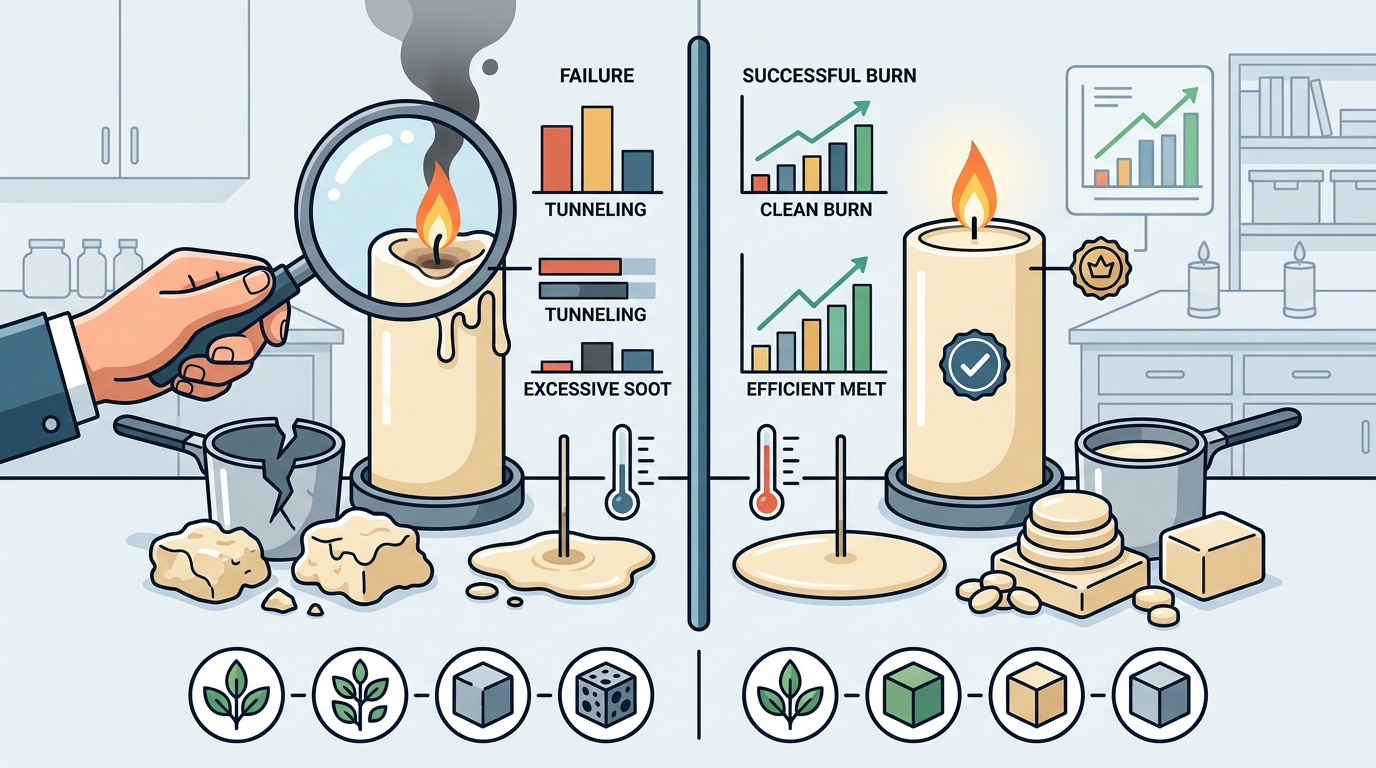
Selecting the correct base material determines whether your candle burns cleanly or produces excessive soot. Industry data shows that approximately 78 percent of amateur candle makers encounter tunneling issues during their first batch. This failure typically stems from mismatched wax density and wick diameter. You must evaluate thermal conductivity before purchasing raw materials. Understanding these physical properties will save you time and raw materials. Visit our collections page to browse our complete inventory of premium candle wax options.
Understanding Base Wax Formulations
Candle wax is a solid lipid compound that melts at a specific temperature range. The most common commercial options include soy, paraffin, and coconut blends. Soy wax is a plant-derived fat extracted from processed soybeans. It offers a slower burn rate and cleaner emission profile. Paraffin wax is a petroleum byproduct refined through industrial distillation. It delivers superior scent throw but requires careful ventilation. Coconut wax is a hybrid blend combining coconut and palm tree derivatives. It provides excellent frosting resistance and smooth container adhesion. You can review our detailed help center to compare these formulations side by side.
Each base material reacts differently to heat cycles. Soy wax shrinks slightly as it cools, requiring careful pouring techniques. Paraffin wax expands during melting and contracts rapidly during solidification. Coconut blends maintain structural integrity across wider temperature fluctuations. You must match your chosen wax to your intended production volume. Bulk buyers often prefer paraffin for its consistent manufacturing behavior. Artisan creators typically select soy for its market appeal.
Matching Burn Performance to Vessel Type
The thermal mass of your container directly influences melt pool formation. Glass vessels retain heat longer than ceramic or metal alternatives. A narrow jar requires a thinner wax blend to prevent overheating. Wide bowls demand a denser formulation to maintain structural integrity. You should always test your wax-to-vessel ratio before scaling production. Our shipping and lead times page outlines how to order sample sizes efficiently.
Vessel geometry dictates heat distribution across the candle surface. Tall cylinders concentrate heat vertically, which accelerates wax consumption. Wide dishes distribute heat horizontally, creating a broader melt pool. You must calculate the diameter-to-height ratio before selecting your wax. A mismatched ratio causes uneven burning or excessive dripping. Always verify your container specifications against manufacturer guidelines.
Evaluating Scent Throw and Load Capacity
Fragrance load capacity defines how much aromatic oil a wax can safely absorb. Most container candles require a 6 to 10 percent fragrance concentration. Soy wax typically holds 8 percent without compromising structural stability. Paraffin wax can safely absorb up to 12 percent fragrance oil. Exceeding these limits causes seepage or poor adhesion. You can explore our best selling supplies to find compatible blends.
Scent throw operates through two distinct mechanisms. Hot throw releases fragrance during active burning. Cold throw releases fragrance when the candle remains unlit. Soy wax excels at cold throw due to its porous molecular structure. Paraffin wax dominates hot throw because of its higher melting point. You must balance both metrics to achieve market-ready products. Testing small batches prevents costly fragrance waste.
Navigating Temperature and Seasonal Constraints
Ambient room temperature affects curing time and final finish quality. Summer production requires slower cooling cycles to prevent cracking. Winter manufacturing benefits from faster setting rates and reduced shrinkage. You must adjust your pouring temperature based on seasonal shifts. Our order management system helps you track seasonal inventory needs.
Environmental humidity interacts directly with wax crystallization patterns. High moisture levels accelerate surface frosting on soy blends. Low humidity environments promote smoother finishes across all wax types. You should maintain a consistent workspace temperature between 65 and 75 degrees Fahrenheit. Sudden temperature drops cause premature solidification and poor adhesion. Climate-controlled storage preserves raw material quality for future batches.
Comparing Eco-Friendly Certification Standards
Sustainable sourcing practices vary significantly across global suppliers. Many manufacturers now pursue Forest Stewardship Council certification. This standard verifies responsible harvesting and land management practices. Consumers increasingly demand transparent supply chain documentation. You can verify our secure checkout portal to see how we prioritize ethical sourcing.
Regulatory compliance differs by region and product category. The European Union enforces strict chemical disclosure requirements. North American markets prioritize transparent ingredient labeling. You must verify your target market regulations before large-scale production. Certification audits require detailed record keeping and batch tracking. Partnering with verified suppliers reduces compliance risks significantly.
Key Takeaways
- Soy wax melts between 120 and 180 degrees Fahrenheit.
- Paraffin wax absorbs up to 12 percent fragrance oil.
- Coconut blends prevent frosting in humid climates.
- Beeswax requires specialized wicking techniques.
- Glass containers demand slower cooling cycles.
- Sample orders reduce material waste by 40 percent.
Frequently Asked Questions
Can I mix different wax types together?
Blending wax types is possible but requires precise temperature control. You must melt each component separately before combining them. Improper mixing causes separation or poor adhesion. Always test small batches before full production.
How do I prevent tunneling in my candles?
Tunneling occurs when the wick diameter is too small for the wax density. You must match the wick size to the container width. A proper melt pool should reach the edges within two hours. Our search catalog details optimal pairings.
What is the ideal pouring temperature for container candles?
Most container candles require pouring between 160 and 185 degrees Fahrenheit. Pouring too hot causes cracking or sinkholes. Pouring too cold creates poor adhesion or frosting. Use a calibrated thermometer for consistent results.
Do I need to add stabilizers to my wax?
Stabilizers are optional additives that improve structural rigidity. Soy wax naturally holds shape without additional chemicals. Paraffin wax often requires vybar or stearic acid. You can purchase these additives through our collections page.
How long should I cure my candles before burning?
Container candles require a 14-day curing period for optimal scent throw. Pillar candles benefit from a 7-day resting phase. Longer curing allows fragrance molecules to bind completely. You can track your production timeline using our order management portal.
Is soy wax safe for children and pets?
Soy wax burns cleaner than petroleum-based alternatives. It produces minimal soot and fewer volatile organic compounds. You should still supervise burning candles around small children. Our safety guidelines outline best practices.
Can I use recycled wax for new projects?
Recycled wax can be reused if it remains structurally sound. You must filter out debris and old wicks before remelting. Repeated heating degrades fragrance capacity over time. Always label your recycled batches clearly. You can manage your inventory through our checkout system.
Start Your Project Today
Ready to begin your candle making journey? Visit our main store to browse premium wax, wicks, and fragrance oils. Complete your order through our secure checkout portal and enjoy free domestic shipping on orders over $199. Our team provides real human support to resolve any production questions. Upgrade to 2-day shipping for just $4.95 with our Ocean membership. Start creating professional-grade candles today.
| Wax Type | Melting Point | Scent Load | Best For | Price Range |
|---|---|---|---|---|
| Soy Wax | 120-180°F | 8% | Glass containers | $2.50/lb |
| Paraffin Wax | 130-190°F | 12% | Pillar candles | $1.80/lb |
| Coconut Blend | 115-175°F | 10% | Wide vessels | $3.20/lb |
| Beeswax | 145-165°F | 5% | Natural markets | $4.50/lb |