

Starting a candle-making business or hobby is often romanticized as a simple, low-barrier entry into creative entrepreneurship. However, the reality of the craft involves precise chemistry and material science that can quickly derail a project if ignored. According to industry data, nearly 60% of beginner candle makers experience significant waste in their first three batches due to improper wick selection or wax-to-fragrance ratios. This statistic highlights a critical truth: success in this industry relies less on artistic flair and more on technical precision. By understanding the fundamental components of candle making, you can avoid costly errors and produce consistent, high-quality products. (Collections 124 makesy)
Wick Selection Errors
The wick is the engine of your candle. It draws the melted wax up to the flame through capillary action. If the wick is too small for the wax diameter, the candle will tunnel, leaving a ring of unmelted wax around the edges. Conversely, a wick that is too large will cause a flame that is too hot, leading to soot and a shortened candle life.
Understanding Wick Types
Wicks are not one-size-fits-all. Wooden wicks offer a crackling aesthetic but require specific sizing for even burning. Cotton wicks are the standard for most soy and paraffin blends, offering a clean burn when properly sized. Paper-core wicks provide rigidity for larger vessels. At Makesy, we categorize wicks by wax type and vessel diameter to ensure you select the correct core for your specific project.
The Test Candle Protocol
Never assume a wick size from a previous batch will work for a new vessel. Always perform a test burn. The ideal burn pool should reach the edges of the container within two to four hours. If it does not, you must move to a larger wick size. This iterative process is the only way to guarantee a clean, efficient burn.
Fragrance Oil Mismanagement
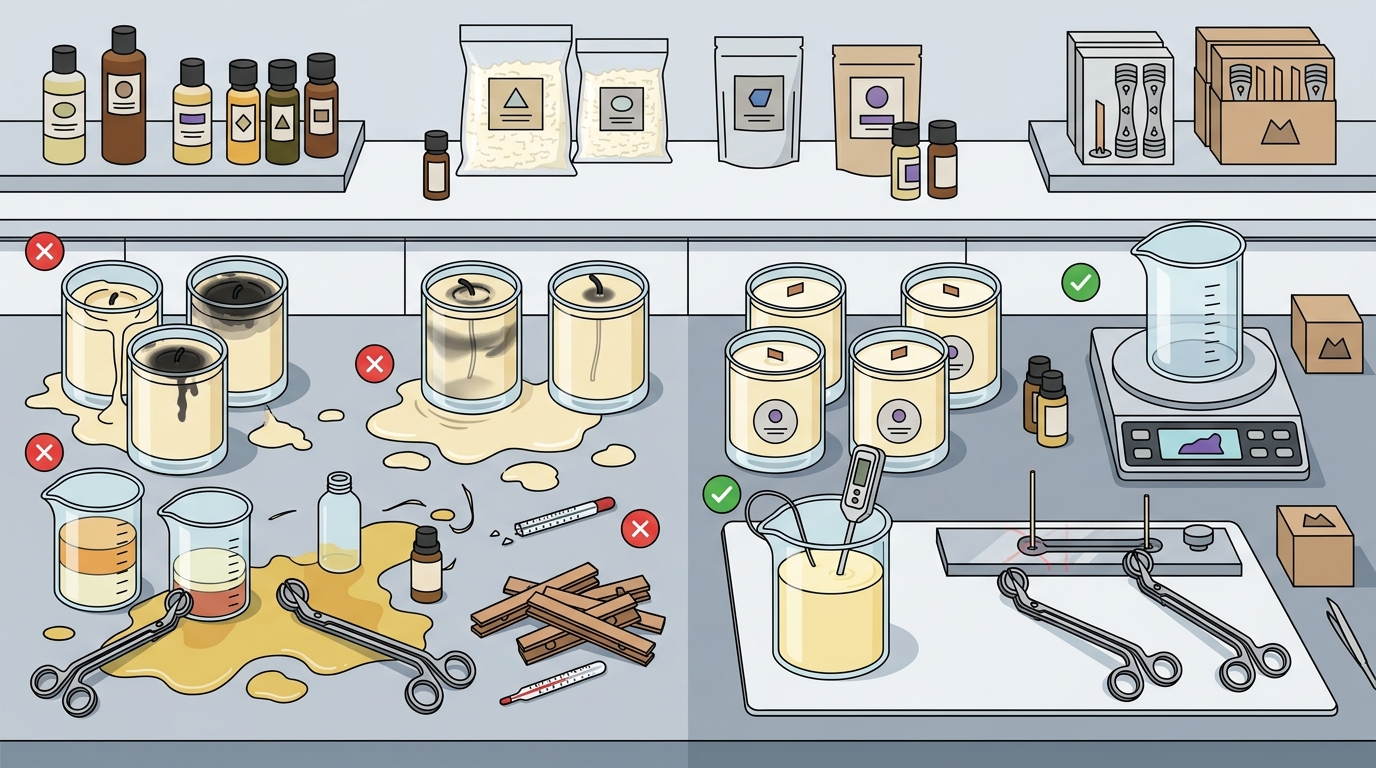
Fragrance is the primary selling point for most consumers, but it is also the most volatile component in candle making. Adding too much fragrance oil can lead to "sweating," where the oil separates from the wax and pools on the surface. This not only looks unappealing but also poses a fire hazard.
Flash Point and Load Limits
Every wax type has a maximum fragrance load, typically ranging from 6% to 12% by weight. Exceeding this limit prevents the wax from binding the oil, resulting in poor throw and potential leakage. Additionally, understanding the flash point of your fragrance oil is crucial. Adding fragrance when the wax is too hot can cause the scent to evaporate before the candle even cools, leaving you with a scentless product.
Proper Mixing Techniques
When adding fragrance, stir gently but thoroughly for at least two minutes. This ensures the oil is fully integrated into the wax matrix. Rushing this step is a common mistake that leads to inconsistent scent throw. For high-quality fragrance oils that meet these standards, explore our fragrance collection.
Choosing the Wrong Wax Type
Not all waxes behave the same way. Soy wax is popular for its natural origin and excellent scent throw, but it can be prone to frosting, a white, crystalline appearance on the surface. Paraffin wax offers a smoother finish and stronger hot throw but is derived from petroleum. Beeswax burns the cleanest and longest but is significantly more expensive and harder to scent.
Wax Characteristics
Soy wax is a renewable resource made from hydrogenated soybean oil. It is biodegradable and burns cooler than paraffin. Paraffin wax is a byproduct of oil refining and is known for its ability to hold both cold and hot fragrance throws. Coconut wax is often blended with soy to improve burn characteristics and scent diffusion.
Matching Wax to Vessel
Some waxes adhere to glass vessels, leaving a messy appearance. Others require specific cooling rates to prevent cracking. Understanding the thermal properties of your chosen wax is essential for a professional finish. For a comprehensive guide on wax properties, visit our wax education center.
Temperature Control Failures
Temperature is the silent killer of candle quality. Pouring wax that is too hot can damage vessel integrity, causing cracks or breaks. Pouring wax that is too cool can result in poor adhesion to the container and visible sinkholes.
The Pouring Window
Each wax type has a specific pouring temperature range. For example, soy wax is typically poured between 120°F and 185°F, depending on the fragrance load. Use a reliable thermometer to monitor the wax temperature at every stage: melting, fragrance addition, and pouring.
Cooling Environment
Candles should cool slowly and evenly. Drafts can cause uneven cooling, leading to surface imperfections like craters or wet spots. Keep your candles in a draft-free area at room temperature for at least 24 to 48 hours before trimming the wick and burning.
Neglecting Safety Protocols
Candle making involves handling molten wax at temperatures exceeding 180°F. This poses a significant burn risk. Additionally, fragrance oils and wicks are flammable materials that require careful storage and handling.
Essential Safety Gear
Always wear heat-resistant gloves and safety glasses when melting wax. Use a double boiler or a dedicated wax melter to prevent direct contact with heat sources. Never leave melting wax unattended. For detailed safety guidelines, review our candle safety resources.
Proper Storage
Store fragrance oils in a cool, dark place to preserve their scent integrity. Keep wicks away from moisture to prevent mold growth. Proper storage extends the shelf life of your supplies and ensures consistent results in your final product.
Key Takeaways
- Wick Testing is Non-Negotiable: Always test wicks with each new vessel and wax combination to prevent tunneling or sooting.
- Respect Fragrance Load Limits: Exceeding the maximum fragrance load for your wax type causes sweating and poor burn performance.
- Monitor Temperatures Precisely: Use a thermometer to ensure wax is poured at the correct temperature for optimal adhesion and finish.
- Choose Wax for Your Goals: Soy offers natural appeal, paraffin offers strong scent throw, and beeswax offers longevity.
- Prioritize Safety: Always use heat-resistant gear and never leave molten wax unattended.
- Allow Proper Curing Time: Let candles cure for at least 48 hours to maximize scent throw.
- Source Quality Supplies: High-quality waxes and fragrance oils from reputable suppliers like Makesy reduce the likelihood of formulation errors.
Frequently Asked Questions
How do I know which wick size to use?
Wick size depends on the wax type, fragrance load, and vessel diameter. Start with the manufacturer's recommendation for your specific wax and vessel size, then adjust based on test burn results. A proper wick creates a full melt pool to the edges within two to four hours.
Can I use any container for candle making?
No. Containers must be heat-resistant and designed for candle use. Glass jars must be labeled as heat-safe. Metal tins and ceramic vessels must also be rated for high temperatures to prevent cracking or shattering during the burn.
Why does my candle sweat?
Sweating occurs when the fragrance oil separates from the wax. This is usually caused by exceeding the maximum fragrance load for the wax type or storing the candle in a warm environment. Using a wax blend or reducing the fragrance load can prevent this.
How long should I let my candle cure?
Soy candles typically benefit from a cure time of 1 to 2 weeks. This allows the fragrance to fully bind with the wax, resulting in a stronger scent throw when burned. Paraffin candles may only need 24 to 48 hours to cure.
What is the difference between cold throw and hot throw?
Cold throw refers to the scent intensity when the candle is unlit. Hot throw is the scent intensity when the candle is burning. Wax type and fragrance oil quality significantly impact both. Paraffin generally offers a stronger hot throw, while soy offers a cleaner burn.
How do I fix a tunneling candle?
If a candle tunnels, you can try to fix it by wrapping aluminum foil around the top of the jar to direct heat to the edges. However, this is a temporary fix. The best solution is to trim the wick to the correct size and burn the candle again until the melt pool reaches the edges.
Where can I find candle making supplies?
You can find high-quality candle making supplies, including waxes, wicks, fragrance oils, and vessels, at Makesy. We offer a comprehensive range of products designed for both beginners and professional candle makers.
Start Your Candle Journey
Avoiding common candle supply mistakes is the key to producing professional-quality candles that customers will love. By focusing on precise wick selection, proper fragrance loading, and strict temperature control, you can minimize waste and maximize your creative potential. Whether you are making candles for personal enjoyment or for a small business, having the right supplies and knowledge is essential. Explore our extensive collection of candle making supplies at Makesy to find everything you need to start your next project with confidence.