
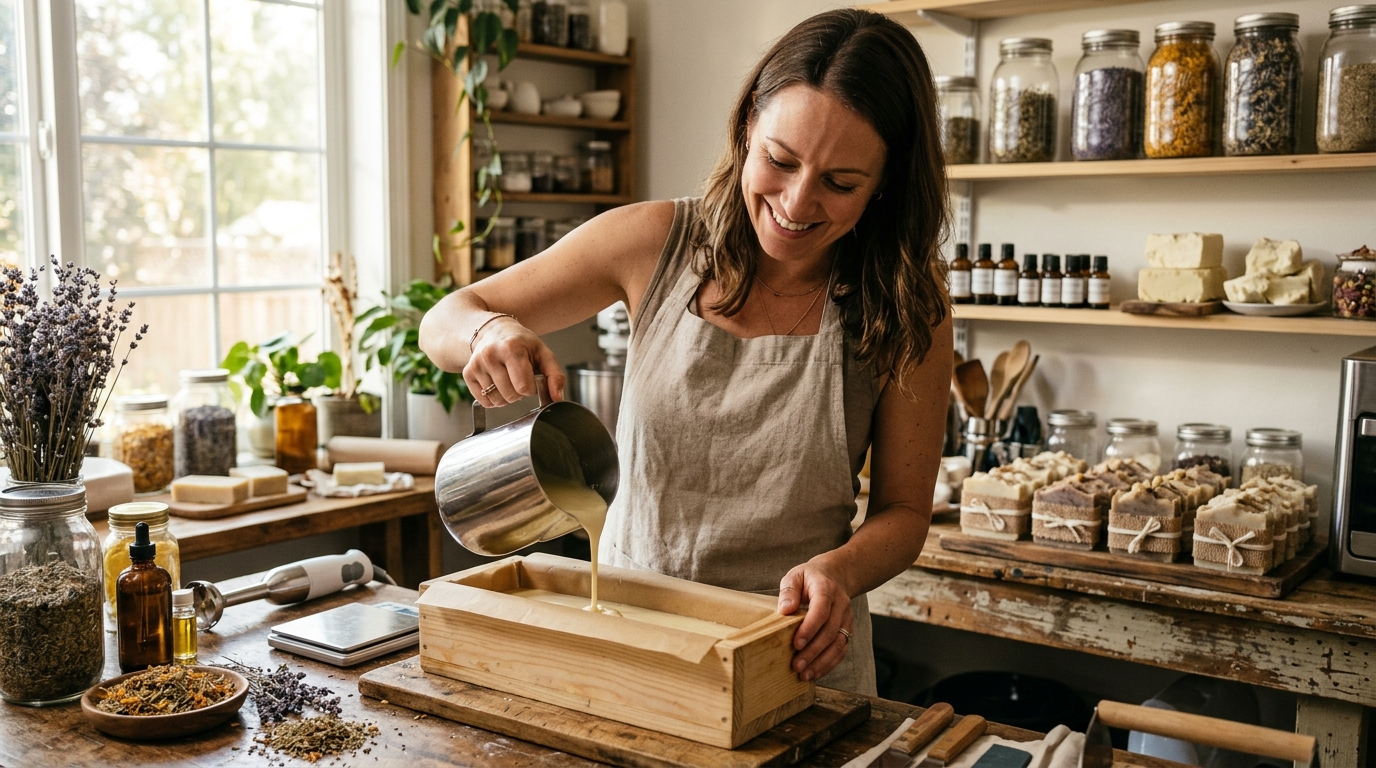
Handmade soap is more than a craft — it is a genuine business opportunity. Consumer demand is shifting toward natural, organic, and chemical-free products, and that shift has unlocked profitable niches for small-batch makers. Whether you dream of selling at local farmers' markets or building an online brand, this ultimate guide walks you through every essential step — from choosing your soap-making method and navigating regulations to pricing, branding, and scaling up.
Why Start a Soap-Making Business Now?
The handmade soap market rewards creativity and authenticity. Customers increasingly value artisan products made with high-quality ingredients and sustainable packaging. One of the key advantages of this business is its low barrier to entry — with a minimal initial investment you can create high-margin products that resonate with buyers. Initial startup costs can range from roughly $500 to $10,000 depending on your scale and equipment choices, making it accessible for hobbyists ready to go pro.
Step 1: Research Your Market and Choose a Niche
Before you purchase a single bar of soap base, invest time in market research. Identify who you are selling to — whether that is beauty enthusiasts, people with sensitive skin, or eco-conscious consumers. Study the competition in your area or online to understand pricing, packaging, and marketing strategies.
Profitable niches include vegan soap, organic bar soap, aromatherapy blends, novelty shapes, and soap for sensitive skin. A focused niche helps you target your marketing and stand out. Start your soap business with a small product line — usually a maximum of 10 products — and have a consistent purpose focused on a single market.
Step 2: Select Your Soap-Making Method
Your production method shapes everything from ingredient sourcing to curing time. Here are the three most common approaches:
- Melt and Pour: Start with a ready-made soap base, melt it, add your desired colors and scents, and pour it into molds. This is the easiest option for beginners and requires a relatively low initial investment.
- Cold Process: Mix oils with lye to trigger saponification. This method requires more skill but offers greater customization options. Your core ingredients will include oils like olive, coconut, or palm, sodium hydroxide (lye), water, essential oils, and natural colorants.
- Hot Process: A faster method where the soap is cooked to speed up the curing process, giving you quicker turnaround.
Suppliers like makesy carry supplies for all three methods — from melt-and-pour bases and proprietary lye cold process ingredients to exclusive soap molds — making it simple to experiment before committing to one technique.
Step 3: Source Quality Ingredients and Equipment
Consistent, high-quality ingredients are the foundation of a reputable soap brand. Essential supplies include:
- Oils and butters (coconut, olive, shea, cocoa)
- Sodium hydroxide (lye) or a premixed lye solution for cold process
- Fragrance oils or essential oils
- Natural colorants and enhancers (clays, botanicals, micas)
- Soap bases for melt-and-pour projects
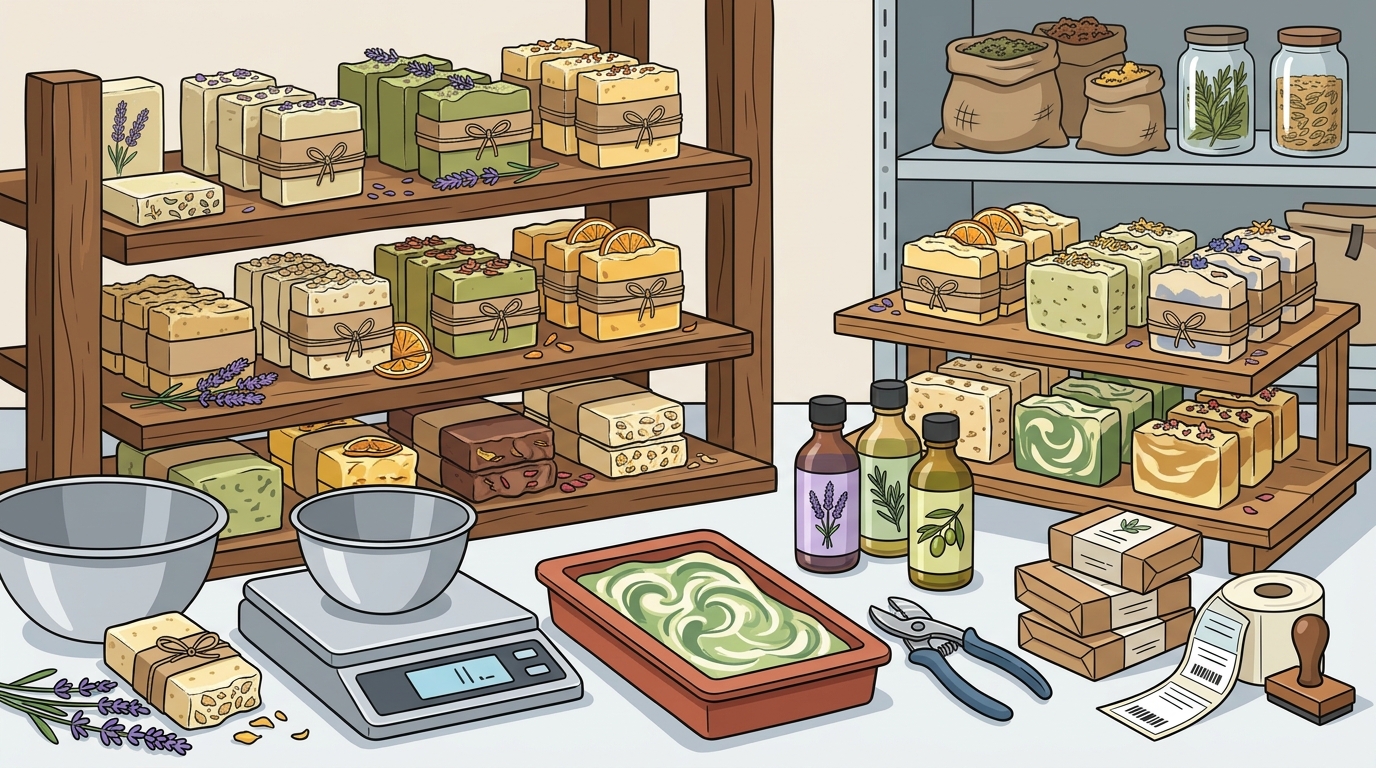
On the equipment side, you will need a digital scale, thermometer, immersion blender, pouring pitchers, molds, and safety gear such as gloves and goggles. Makesy offers comprehensive kits — like their Cold Process Soap Pro Kit that includes over 95 different tools, ingredients, and enhancers plus a proprietary blend of oils and a premixed 50/50 lye solution to get you producing up to 48 bars in two days.
Buying in bulk from a wholesale supplier with free shipping on qualifying orders helps keep your cost of goods low from day one.
Step 4: Understand Legal Requirements and Regulations
Navigating regulations is one of the most important — and most overlooked — steps. In the United States, true soap made primarily from fats and alkalis is regulated by the Consumer Product Safety Commission (CPSC), not the FDA. However, soaps marketed with health or beauty claims count as cosmetics and need to follow FDA cosmetic regulations.
Key Regulatory Points
- True Soap vs. Cosmetic: The FDA defines soap as a product whose non-volatile portion consists principally of an alkali salt of fatty acid, whose cleaning action comes from those compounds, and which is labeled and marketed only as soap. Making claims such as moisturizing or deodorizing could classify the product as a cosmetic.
- Melt and Pour: Note that melt-and-pour soap is generally considered a cosmetic, which means it must comply with FDA cosmetic labeling requirements including an ingredient declaration.
- MoCRA (2022): The Modernization of Cosmetics Regulation Act requires registration and listing of cosmetic product facilities and products with FDA — a newer requirement worth reviewing.
- Labeling: At minimum, true soap labels must include the product identity ("soap"), net weight, and business name and address. Cosmetic soap labels additionally require a full ingredient declaration.
- Business Registration: Depending on your location, you may need a business license or permit to sell physical goods. Choose between a sole proprietorship, LLC, or corporation based on your needs.
- Liability Insurance: It might not seem urgent now, but product liability insurance could save your business if a customer experiences a reaction.
Consider consulting with a lawyer specializing in small businesses or cosmetics regulations to ensure full compliance.
Step 5: Write a Business Plan
A solid business plan is your roadmap to success. It helps you clarify your vision, set goals, and anticipate challenges. Your plan should cover:
- Executive summary and mission statement
- Target market analysis and competitor research
- Product line overview and pricing strategy
- Marketing and sales channel plan
- Financial projections for the first 3–5 years
- Operations plan (workspace, equipment, suppliers)
Treat the business plan as a living document — revisit and revise it regularly as your business grows and market conditions change.
Step 6: Price Your Products for Profit
Getting your pricing right is one of the most crucial steps. Start by calculating the cost of goods sold (COGS), which includes raw materials, packaging, and overhead like electricity or website hosting. Then add your desired profit margin.
Many soap businesses price bars between $5 and $10, depending on ingredients and branding. Handmade, artisanal soaps command premium prices — customers are willing to pay for quality, uniqueness, and the story behind a brand. Make sure your wholesale prices leave room for profit after covering all ingredient costs and time.
Common pricing mistakes include undervaluing your labor and failing to account for shipping materials. Use a dedicated tool or spreadsheet to track every cost component per bar.
Step 7: Build a Memorable Brand
Branding is where your soap business transforms from a hobby into a professional, recognizable company. Start by brainstorming a business name that reflects your niche and values. Your logo, font choices, and color scheme should communicate your message — whether that is rustic simplicity, eco-luxury, or whimsical fun.
Packaging is often the first thing customers notice and can be the difference between making or losing a sale. Use sustainable materials if you are targeting environmentally conscious buyers, or go for elegant wraps and labels for high-end markets. Tell a compelling story through product descriptions and your About page so people connect with the heart behind your brand.
Step 8: Set Up Sales Channels
Diversify where you sell to minimize risk and maximize reach:
- Online Store: A professional website with product listings, an About page, and easy checkout is non-negotiable in 2025. Platforms like Shopify or Etsy are popular starting points.
- Local Markets: Craft fairs, farmers' markets, and pop-up events let you build relationships and gather face-to-face feedback.
- Wholesale: Local boutiques, spas, and gift shops often love to stock handmade soaps. Ensure your margins support wholesale pricing.
- Social Media: Platforms like Instagram and Pinterest are ideal for showcasing stunning visuals and behind-the-scenes content. TikTok can help you build a loyal following by sharing your soap-making process.
Begin by selling at local markets or online platforms before expanding to retail stores. This helps you test your product line, gather customer feedback, and adjust accordingly before scaling up.
Step 9: Market and Grow Your Business
Marketing is the lifeblood of any soap business. Key strategies include:
- SEO-optimized product descriptions targeting specific phrases rather than generic keywords
- Email marketing to nurture repeat customers
- Collaborations with influencers or bloggers in the skincare niche
- Behind-the-scenes content that humanizes your brand
- Limited-time promotions and seasonal collections
As demand grows, consider offering bundles, gift sets, or subscription boxes. Track your numbers carefully and reinvest profits wisely. Plan early for how you will scale operations, including equipment upgrades and staffing needs.
Key Takeaways
- Start with thorough market research and a focused niche — avoid trying to appeal to everyone.
- Choose a soap-making method that fits your skill level and business goals; melt and pour is easiest for beginners while cold process offers maximum customization.
- Source quality supplies from a reliable wholesale partner like makesy to keep costs manageable.
- Understand the difference between true soap and cosmetics under U.S. regulations — your labeling and compliance obligations depend on it.
- Write a living business plan and price products to cover all costs plus a healthy profit margin.
- Build a brand that tells a story, then diversify your sales channels across online, local, and wholesale.
- Most soap businesses take 6–18 months to become profitable — stay patient and reinvest wisely.
Frequently Asked Questions
How much does it cost to start a soap-making business?
Initial costs can range from $500 to $10,000 depending on your scale and equipment choices. Melt-and-pour setups are the most affordable entry point, while cold process operations with professional-grade equipment cost more. Starting small and reinvesting profits is a proven growth strategy.
Do I need FDA approval to sell handmade soap?
In the U.S., basic true soap does not require FDA approval — it is regulated by the CPSC. However, if your soap makes cosmetic claims (like moisturizing or deodorizing) or uses synthetic detergents, it falls under FDA cosmetic regulations. Products claiming to treat skin conditions are classified as drugs and face even stricter requirements.
What is the easiest soap-making method for beginners?
Melt and pour is the easiest option for beginners. It uses a premade soap base, allowing you to focus on customizing colors, scents, and decorations without handling lye. It also requires less equipment and has no curing wait time.
How long until a soap business becomes profitable?
Most soap businesses take 6 to 18 months to become profitable. The timeline varies based on your marketing efforts, pricing strategy, and operating costs. Starting from home and keeping overhead low accelerates the path to profitability.
Where is the best place to sell handmade soap?
Popular channels include Etsy, your own e-commerce website, local craft fairs, and wholesale to boutique retailers. Diversifying across multiple channels reduces risk and helps you reach different customer segments.
What supplies do I need from makesy to start a soap business?
Makesy offers everything from soap bases (melt and pour and cold process), fragrance oils, butters, natural colorants, molds, and tools to complete starter and pro kits. Their Cold Process Soap Pro Kit includes over 95 tools, ingredients, and enhancers — enough to produce 48 bars. They also offer wholesale pricing with bulk discounts and free shipping on qualifying orders.