
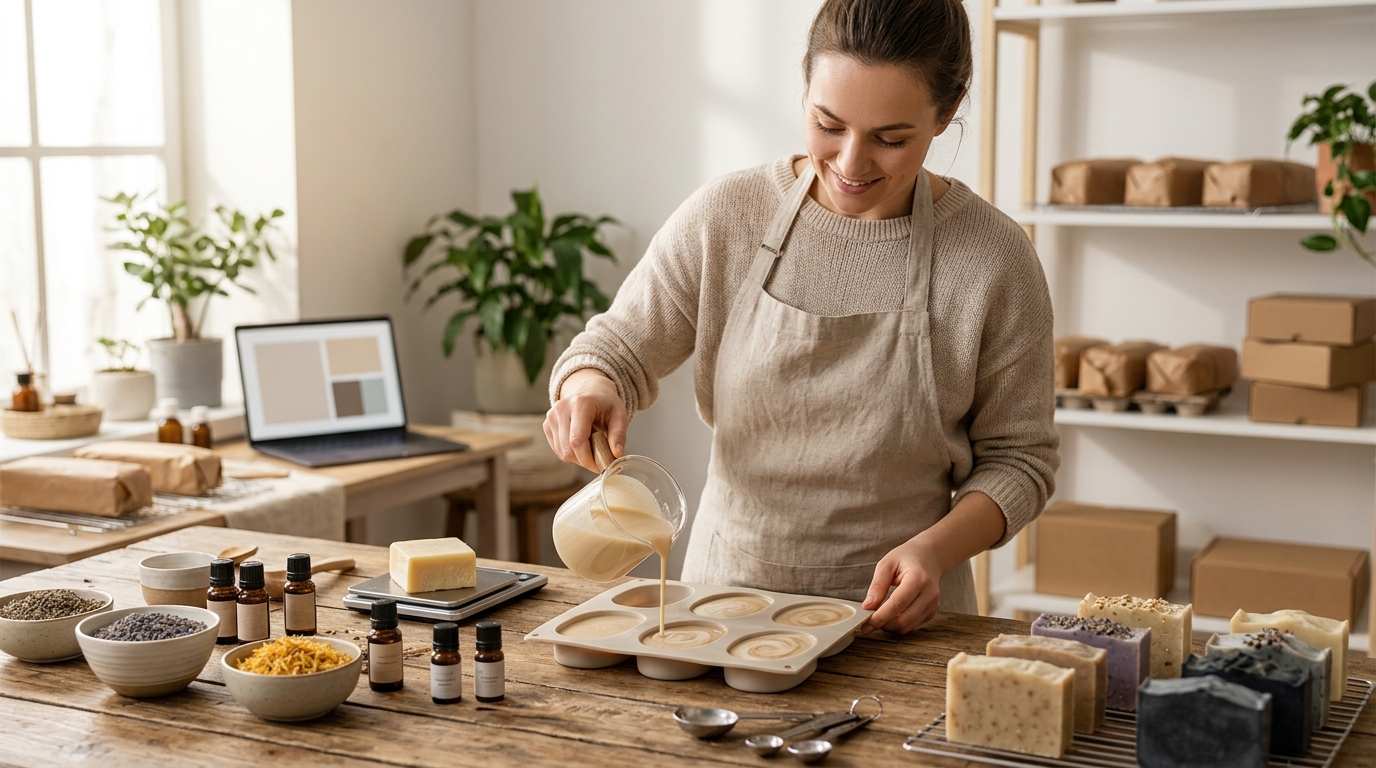
Turning a love for handmade soap into a real business is more achievable than most people think. The handmade soap market was valued at roughly USD 4.6 billion in 2024 and is projected to grow at a CAGR of 7.5% through 2033. Consumers increasingly want natural, eco-friendly alternatives to mass-produced bars, and that demand creates a genuine opening for small-batch makers. Whether you plan to sell at local markets, through your own online store, or wholesale to boutiques, this step-by-step guide covers everything you need to launch with confidence.
1. Research the Market and Find Your Niche
A niche is a focused segment of a larger market that you serve better than anyone else. Before you mix a single batch, spend time understanding what customers actually want. According to Global Growth Insights, roughly 64% of consumers now prefer skincare products made with natural and organic ingredients. That preference opens doors for specialty soaps like vegan bars, activated-charcoal detox bars, and oat-milk formulations for sensitive skin.
Identify Your Ideal Customer
Think about who will buy your soap and why. Are they eco-conscious millennials? Parents shopping for gentle baby bars? Gift buyers seeking luxury sets? Defining a target audience early shapes every decision that follows, from ingredients to price point.
Study the Competition
Browse farmer's markets, Etsy, and local boutiques to see what other soap makers offer. Note their pricing, packaging, and scent profiles. Your goal is to find a gap you can fill with a unique value proposition.
2. Write a Simple Business Plan
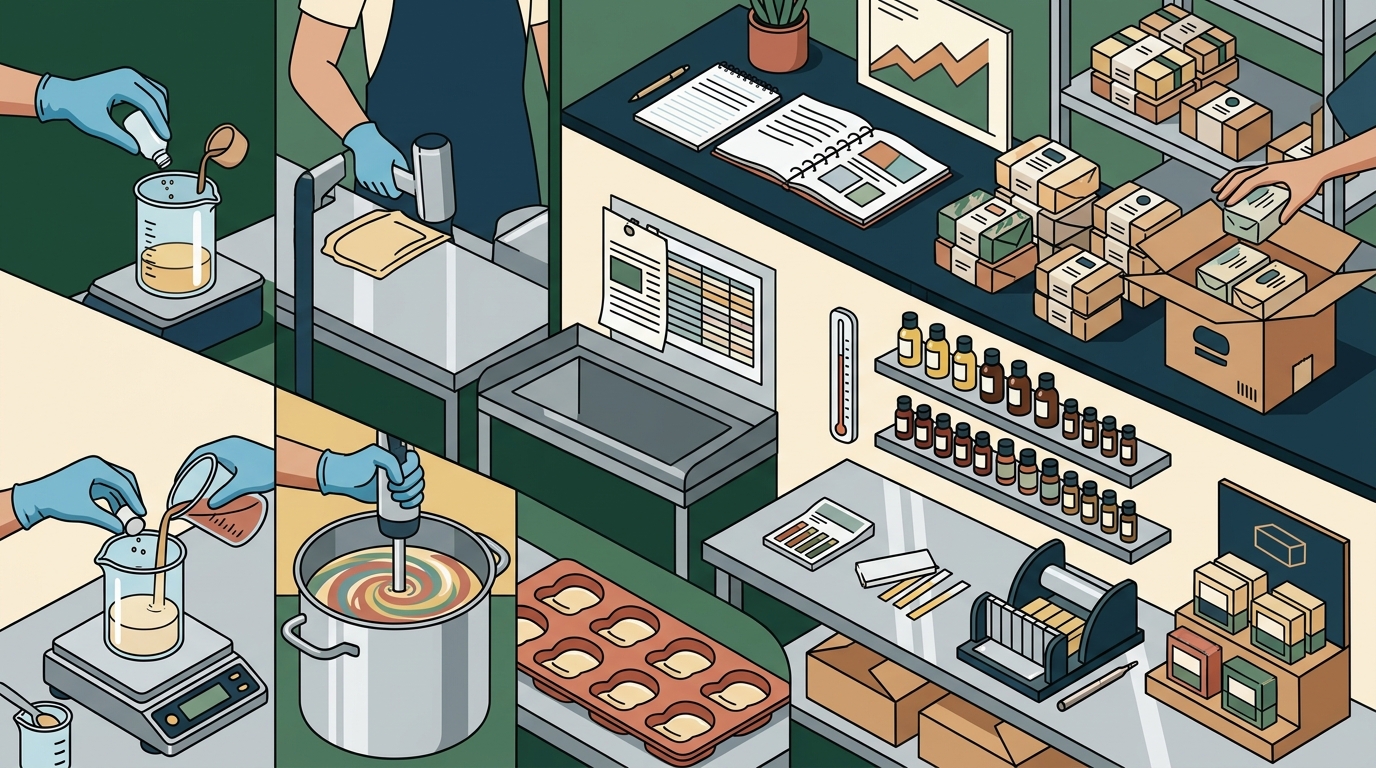
A business plan is a written document that outlines your goals, strategies, and financial projections. It does not need to be 50 pages long. Focus on your mission statement, target market, product lineup, pricing strategy, and startup budget. Initial costs for a soap business can range from $500 to $10,000 depending on your scale and equipment choices.
Include realistic financial projections for at least your first year. Track cost of goods sold (COGS), which covers raw materials, packaging, and overhead. Many soap businesses price bars between $5 and $10, and average profit margins for handmade soap range from 30% to 50%.
3. Handle Legal Requirements and Labeling
Compliance is non-negotiable when you sell products that touch skin. In the United States, pure soap made from lye and fatty acids falls under the Consumer Product Safety Commission. However, if you market your soap with moisturizing, anti-aging, or other beauty claims, it is classified as a cosmetic and must meet FDA labeling guidelines.
Key Legal Steps
- Register your business structure (sole proprietorship, LLC, or corporation).
- Obtain any state or local business licenses required in your area.
- Follow FDA cosmetic labeling rules: list ingredients, net weight, and your business address.
- Consider liability insurance to protect yourself if a customer has a reaction.
| Category | Regulator | Label Requirements |
|---|---|---|
| True Soap (lye + fats, no claims) | CPSC | Basic (name, net weight) |
| Cosmetic Soap (beauty claims) | FDA | Full ingredient list, weight, business info |
| Drug Soap (therapeutic claims) | FDA | Drug Facts panel required |
4. Source Quality Supplies and Equipment
Great soap starts with great ingredients. You will need a reliable supplier for soap bases, oils, butters, fragrance oils, colorants, and molds. Makesy's soap making collection covers cold process, melt and pour, and liquid soap supplies, making it easy to find everything in one place.
Essential Equipment Checklist
- Digital scale and thermometer
- Immersion (stick) blender
- Pouring pitchers and silicone spatulas
- Silicone or wooden molds
- Safety gear: gloves, goggles, long sleeves
If you are new to cold process soap, the Cold Process Soap Pro Kit includes over 95 tools, ingredients, and enhancers plus a guidebook with tested formulas. It produces 48 bars and is designed so finished soap is ready to use and sell in just two days.
5. Develop and Test Your Product Line
Saponification is the chemical reaction between fats and an alkali (lye) that produces soap. Understanding it is fundamental whether you choose cold process or melt and pour methods. Start with small test batches, take detailed notes, and refine your recipes before scaling up.
Choosing a Method
| Factor | Cold Process | Melt & Pour |
|---|---|---|
| Skill Level | Intermediate to advanced | Beginner-friendly |
| Customization | Full control over oils and additives | Limited to base selection |
| Cure Time | Traditional: 4-6 weeks; Makesy method: ~2 days | Hours |
| Startup Cost | Higher (lye, oils, safety gear) | Lower (pre-made base) |
Experiment with different soap fragrance oils and soap ingredients like clays, botanicals, and exfoliants to create a signature product line. Keep your initial lineup focused. Experts recommend starting with a maximum of about 10 products so you can maintain quality and brand consistency.
6. Build Your Brand and Packaging
Branding is the complete identity your business presents to the world, from your logo and color palette to your tone of voice and packaging. Strong branding turns a hobbyist into a professional. Pick a memorable business name, design a cohesive visual identity, and invest in packaging that reflects your values.
If sustainability matters to your audience, use recyclable or biodegradable wrapping. Makesy's soap additives and enhancers can help you create visually striking bars that photograph well for social media. Pair eye-catching product design with a compelling brand story on your website's About page.
7. Launch Sales Channels and Market Your Soap
Most soap businesses take 6 to 18 months to become profitable. Start selling through a mix of channels: your own e-commerce website, Etsy, local craft fairs, and wholesale to boutique retailers. Diversifying where you sell reduces risk and helps you reach different customer segments.
Marketing Tactics That Work
- Social media: Share behind-the-scenes videos of your soap-making process on Instagram and TikTok.
- Email marketing: Build a subscriber list early and send product launches, tips, and promotions.
- SEO: Write detailed product descriptions targeting specific phrases rather than generic terms.
- Wholesale: Partner with local spas, gift shops, and boutiques. Explore soap kits to streamline production for larger orders.
Browse Makesy's soap recipes for creative inspiration that can spark your next product idea or seasonal limited edition.
Key Takeaways
- The handmade soap market is growing at roughly 7.5% CAGR, offering a strong tailwind for new entrants.
- You can start for as little as $500 if you begin small and reinvest profits.
- Understand FDA vs. CPSC classification before you write a single label.
- Choose between cold process and melt and pour based on your skill level and desired customization.
- Keep your initial product line tight (under 10 SKUs) to maintain quality and focus.
- Diversify sales channels: e-commerce, craft fairs, and wholesale all serve different audiences.
- Invest in branding and packaging early because they are often the first thing a customer notices.
Frequently Asked Questions
How much does it cost to start a soap making business?
Startup costs typically range from $500 to $10,000. A basic melt and pour setup sits at the low end, while a fully equipped cold process workshop with premium ingredients and molds costs more. Kits like the Makesy Cold Process Soap Pro Kit bundle supplies at a discount to reduce initial outlay.
Do I need FDA approval to sell handmade soap?
Not always. In the US, true soap (made from lye and fats with no cosmetic or drug claims) is regulated by the CPSC, not the FDA. However, if you market your soap with beauty or health claims, it is considered a cosmetic and must comply with FDA labeling regulations.
What is the easiest soap making method for beginners?
Melt and pour is the most beginner-friendly method. You start with a pre-made soap base, melt it, add color and fragrance, and pour into molds. No lye handling is required, and bars are ready within hours.
How long before my soap business becomes profitable?
Most small soap businesses reach profitability within 6 to 18 months. The timeline depends on your pricing strategy, marketing investment, and operating costs. Starting small and reinvesting profits is a proven path to sustainable growth.
What profit margins can I expect?
Average profit margins for handmade soap fall between 30% and 50%. Premium ingredients, strong branding, and direct-to-consumer sales channels push margins toward the higher end.
Where should I sell my handmade soap?
Popular channels include your own online store, Etsy, local craft fairs, and wholesale accounts with boutiques and spas. Diversifying across multiple channels reduces reliance on any single revenue stream.
What supplies do I need to get started?
At a minimum, you need a soap base or oils, lye (for cold process), fragrance oils, colorants, molds, a digital scale, a thermometer, a stick blender, and safety gear. Makesy offers comprehensive soap kits that include all of these items in one package.
How do I price my soap for profit?
Calculate your total cost of goods sold, including materials, packaging, labels, and shipping. Add your labor cost per bar, then apply a markup that covers overhead and desired profit. Most artisan bars retail between $5 and $10, with wholesale priced at roughly 50% of retail.
Ready to Start Your Soap Business?
The best time to begin is now. Explore Makesy's complete soap making collection to find eco-conscious bases, fragrance oils, molds, and all-in-one kits designed for makers at every level. Whether you start with a beginner-friendly melt and pour kit or dive into cold process with the Pro Kit, Makesy has the supplies and community support to help you turn your craft into a thriving business.