
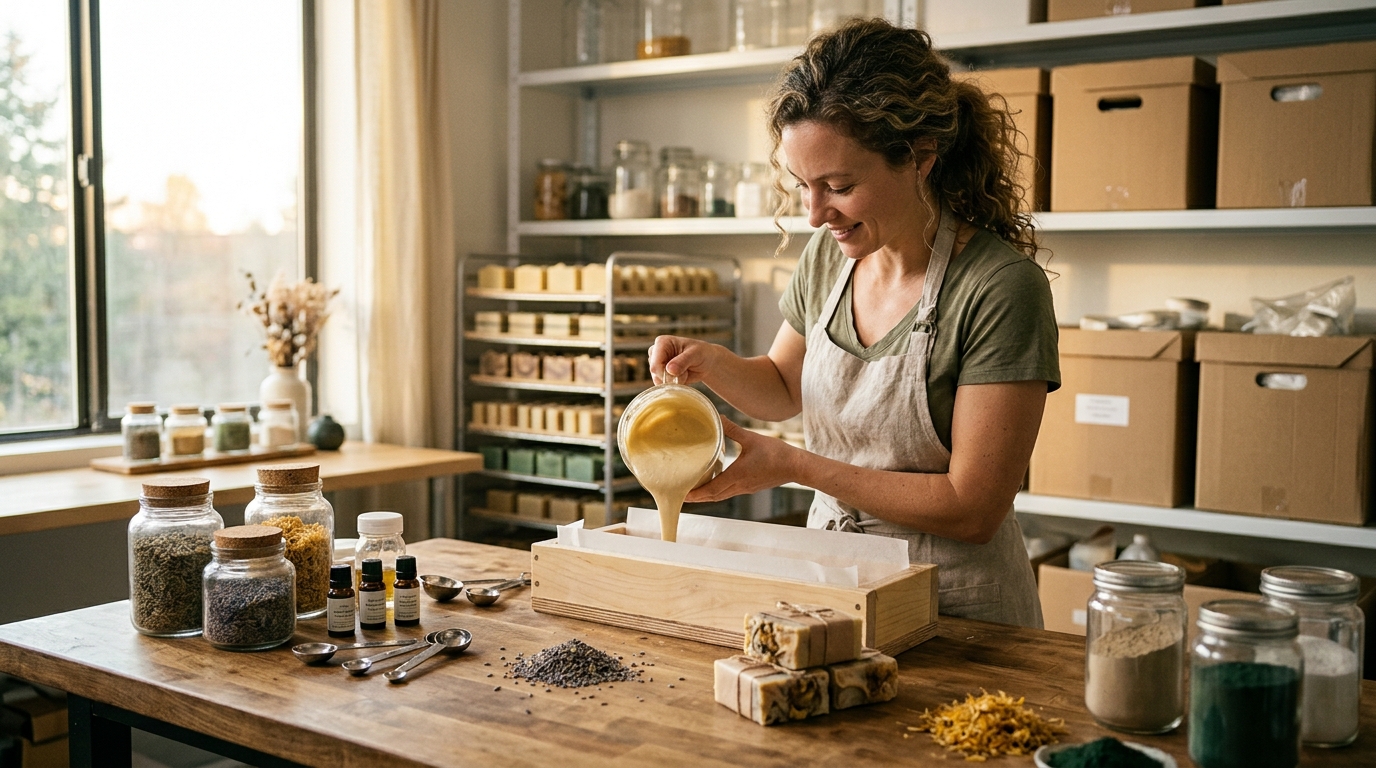
How to Start a Soap Making Business: Essential Steps for Success
Turning your love of soap making into a profitable small business is more achievable than ever. The handmade soap market continues to grow as consumers shift toward natural, artisan products they can trust. But going from hobbyist to business owner takes more than a great recipe. You need a clear niche, reliable supplies, compliant labeling, smart branding, and a plan for scaling production. In this step-by-step guide, we walk you through every essential phase of launching a soap making business, from perfecting your formulas to getting your first sales, so you can build a brand customers love.
1. Find Your Niche and Target Market
A niche is a focused segment of the market that your products are specifically designed to serve. Before you mix a single batch, take time to research what customers actually want. Consumer demand is trending toward natural, vegan, organic, and eco-friendly soap products, which opens the door to profitable specialty markets.
Think about who you want to sell to. Are you targeting parents looking for gentle baby soap, wellness enthusiasts who love aromatherapy blends, or eco-conscious shoppers who insist on sustainable ingredients? Defining your audience makes every downstream decision easier, from formulation to marketing.
Avoid the "Make What You Like" Trap
One common mistake new soap makers commit is building a product line around personal preferences instead of market demand. Focus on a small, cohesive line of no more than 10 products that speaks to a single customer profile. You can always expand later once you have traction.
2. Choose Your Soap Making Method
Your production method shapes your startup cost, timeline, and product style. There are three primary methods to consider:
| Method | Difficulty | Cure Time | Best For |
|---|---|---|---|
| Melt and Pour | Beginner-friendly | Ready when cooled | Creative designs, quick launch |
| Cold Process | Intermediate | 48 hours to 4-6 weeks* | Custom formulas, artisan bars |
| Hot Process | Intermediate | Hours to days | Rustic bars, faster saponification |
*Makesy's innovative cold process method using a 50/50 lye solution and their proprietary Trinity Blend produces soap that is safe to use and sell in just 48 hours, significantly cutting traditional cure times.
Cold process soap making is the chemical reaction between oils and lye (sodium hydroxide) that produces a solid bar through saponification. If you want to sell artisan bars at scale, cold process offers the most creative freedom. Beginners may prefer to start with melt and pour soap, which skips lye handling entirely.
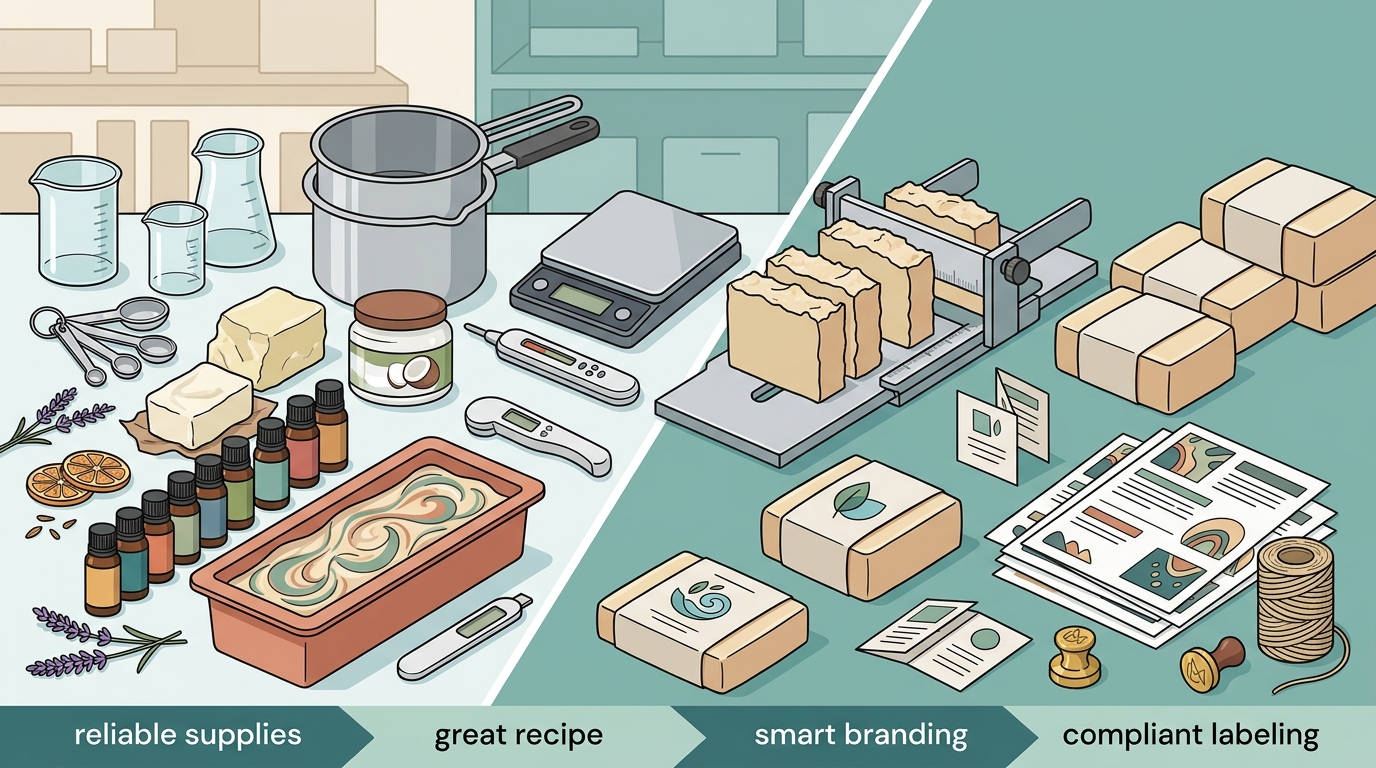
3. Source Quality Ingredients and Equipment
Your ingredients directly determine the quality of your finished product. Core soap making supplies include oils (olive, coconut, palm), sodium hydroxide (lye), water, fragrance oils or essential oils, colorants like micas, and natural additives such as botanicals or clays.
Essential Equipment Checklist
You will need a digital scale, immersion blender, heat-safe pouring pitchers, silicone or wooden molds, a thermometer, and personal protective equipment such as gloves and safety glasses. Dedicated soap-making tools should never be used for food preparation.
Where to Buy Soap Making Supplies
Choosing a supplier with high-quality, eco-conscious products matters for both your brand story and product consistency. Makesy offers an extensive collection of soap making ingredients including butters, oils, and natural powders, along with professional-grade soap making tools. Their fragrance oil library includes scents specifically tested and rated for soap applications.
If you want an all-in-one start, the Cold Process Soap Pro Kit includes over 95 tools, ingredients, and enhancers, plus the Bubble Book filled with decades of soap making expertise. It produces 48 bars in just two days.
4. Understand Legal Requirements and Labeling
Soap labeling law depends entirely on how you classify and market your product. In the United States, "true soap" is a product whose cleaning action comes primarily from alkali salts of fatty acids and is labeled only for cleansing. True soap falls under the Consumer Product Safety Commission (CPSC), not the FDA.
However, the moment you add cosmetic claims like "moisturizing" or "exfoliating" to your label, your product is reclassified as a cosmetic and must comply with FDA cosmetic labeling regulations, including full INCI ingredient declaration. The Modernization of Cosmetics Regulation Act of 2022 (MoCRA) further requires facility registration and product listing for cosmetic manufacturers.
Key Compliance Steps
- Register your business and obtain any required local or state permits.
- Determine whether your product is true soap, a cosmetic, or a drug based on ingredients and label claims.
- Include the product identity, net weight, and business name and address on every label.
- Consider liability insurance to protect your business from product-related claims.
5. Build Your Brand and Packaging
Branding is the complete visual and emotional identity that differentiates your soap business from competitors. It goes far beyond a logo. Your brand name, color palette, packaging materials, and product descriptions should all communicate a unified message to your target customer.
Packaging often makes the first impression. If you are targeting eco-conscious buyers, choose sustainable wrapping materials. For a luxury line, invest in elegant labels and boxes. Makesy provides a range of packaging and label solutions designed for soap, candle, and beauty products that help your brand look polished and professional from day one.
Write a compelling brand story for your About page. Let customers connect with the person and purpose behind the product. Transparency about your ingredients and process builds lasting trust.
6. Price Your Products for Profit
Cost of goods sold (COGS) is the total direct cost of producing each unit, including raw materials, packaging, and allocated overhead. Calculate your COGS per bar before setting retail prices. Many handmade soap businesses price bars between $5 and $10, depending on ingredients, branding, and perceived value.
Make sure your price covers materials, your time, and leaves room for growth. If you plan to sell wholesale to boutiques or spas, your wholesale price must still generate a healthy margin after the retailer takes their cut. As you scale, consider offering bundles, gift sets, or subscription boxes to increase average order value.
| Cost Category | Example Items | Typical Range (per bar) |
|---|---|---|
| Raw Materials | Oils, lye, fragrance, colorants | $0.75 - $2.50 |
| Packaging | Labels, wraps, boxes | $0.30 - $1.00 |
| Overhead | Utilities, website, insurance | $0.20 - $0.75 |
| Total COGS | $1.25 - $4.25 |
7. Set Up Sales Channels and Start Marketing
Having multiple sales channels reduces your risk and expands your reach. Popular options include your own e-commerce website, Etsy, local craft fairs, and wholesale accounts with boutiques and gift shops.
Build a Strong Online Presence
A professional website with clear product photography, detailed descriptions, and an easy checkout process is non-negotiable. Pair it with active social media accounts where you share behind-the-scenes content of your soap making process. Platforms like Instagram and TikTok reward makers who show their craft authentically.
Leverage Community and Education
Joining a maker community accelerates your learning curve and opens collaboration opportunities. Makesy hosts active soap making communities along with tutorials, guides, and a masterclass series that help you sharpen your skills and grow your business. Their soap recipes collection provides tested formulas you can use as a foundation for your own product line.
Key Takeaways
- Define a clear niche and target customer before developing your product line.
- Choose a soap making method that matches your skill level and business goals.
- Invest in high-quality, eco-conscious ingredients from a trusted supplier like Makesy.
- Understand whether your soap is classified as true soap, a cosmetic, or a drug, and label it accordingly.
- Build a cohesive brand identity and professional packaging that resonates with your audience.
- Price strategically by calculating your full COGS and leaving room for wholesale margins.
- Diversify sales channels and build community to sustain long-term growth.
Frequently Asked Questions
How much does it cost to start a soap making business?
Initial costs typically range from $500 to $5,000 depending on your method and scale. Starting with melt and pour at home can keep costs under $500, while a cold process setup with professional-grade kits and branding may run into the low thousands.
Do I need FDA approval to sell handmade soap?
Not if your product qualifies as "true soap" under the FDA definition. True soap made from alkali salts of fatty acids and marketed only for cleansing is regulated by the CPSC, not the FDA. However, any cosmetic or therapeutic claims on your label trigger FDA oversight.
What is the best soap making method for beginners?
Melt and pour is the easiest entry point because it requires no lye handling and produces finished bars as soon as they cool. For those ready to invest more time, Makesy's cold process method with a premixed 50/50 lye solution simplifies the traditional process significantly.
How long does it take to become profitable?
Most soap businesses take 6 to 18 months to reach profitability. Your timeline depends on pricing strategy, marketing effort, and how efficiently you manage production costs.
Where can I sell my handmade soap?
Common channels include your own website, Etsy, local farmers markets and craft fairs, boutique retail shops, and spas. Diversifying across online and in-person channels maximizes your customer reach.
What should be on my soap label?
At minimum, include the product identity ("soap"), net weight in both U.S. and metric units, and your business name and address. If your soap makes cosmetic claims, you must also include a full ingredient list in INCI order per FDA regulations.
Can I make soap at home and sell it legally?
Yes, in most U.S. states you can produce soap at home for sale. Check your local and state regulations for any home-based business permits, cottage food laws, or zoning restrictions that may apply.
How do I choose a soap fragrance that sells well?
Test a variety of scent profiles with your target audience before committing to a full line. Lavender, citrus, and vanilla consistently rank among top sellers. Makesy's fragrance oil sample packs let you trial multiple scents affordably before scaling up.
Ready to Launch Your Soap Business?
The best time to start is now. Browse Makesy's complete collection of soap making supplies, grab a starter or pro kit, and begin crafting products your customers will love. Join thousands of makers who have turned their passion into thriving businesses with Makesy's eco-conscious ingredients, expert tutorials, and supportive community.