
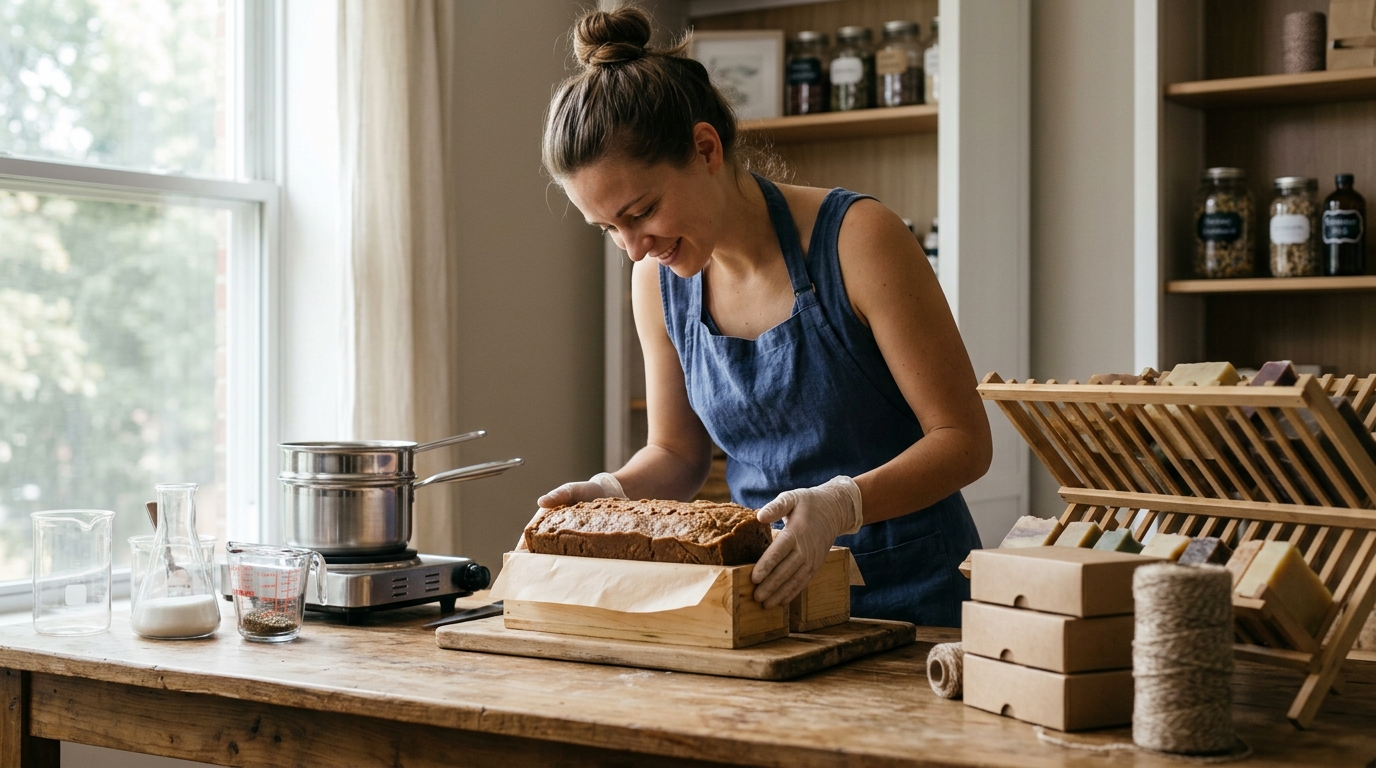
The handmade soap market is booming. Consumers are moving away from mass-produced bars and toward artisan soaps made with natural, eco-conscious ingredients. Whether you want a profitable side hustle or a full-time brand, starting a soap making business is surprisingly accessible. Startup costs can range from just a few hundred dollars to around $10,000 depending on your scale. With the right supplies, a clear niche, and smart branding, you can turn your craft into a thriving small business. This guide walks you through seven essential steps to get started, from learning the basics to scaling your production.
1. Understand the Market Opportunity
Before investing time and money, understand why the numbers favor handmade soap. The global handmade soap market was valued at roughly USD 3.96 billion in 2024 and is growing at a CAGR of nearly 6.8%. Consumer demand is shifting heavily toward natural, organic, and chemical-free personal care products.
North America leads this trend. According to Business Research Insights, nearly 58% of consumers globally prefer natural and organic skincare, while 46% actively seek eco-friendly and cruelty-free alternatives. This creates a massive opening for small-batch makers who prioritize quality ingredients.
2. Learn the Soap Making Process
A soap making process is the series of steps used to combine oils, lye, and additives into a finished bar. Before selling a single bar, you need to be fully comfortable with your chosen method from start to finish.
Choose Your Method
There are three primary soap making methods to consider:
| Method | Difficulty | Cure Time | Best For |
|---|---|---|---|
| Melt and Pour | Beginner | Hours | Quick launch, creative designs |
| Cold Process | Intermediate | 2 days to 6 weeks | Custom formulas, premium bars |
| Hot Process | Intermediate | 1 to 2 weeks | Rustic look, faster cure |
Cold process soap making is the most popular method among professional soap makers because it allows complete control over ingredients and formulation. With Makesy's innovative cold process ingredients, including a pre-blended trinity oil blend and a 50/50 lye solution, you can produce soap that is ready to sell in just two days rather than the traditional six-week cure.
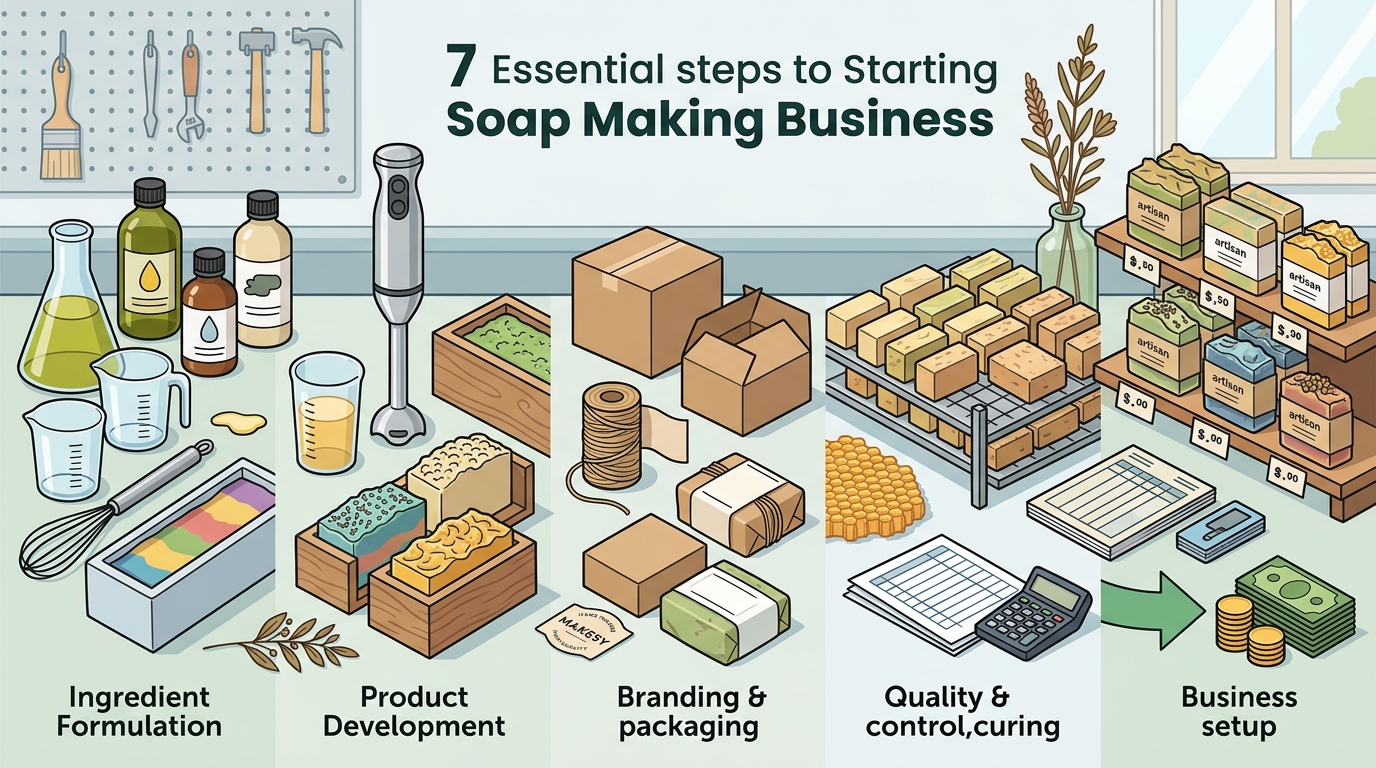
Practice Before You Sell
Start by mastering small batches. Experiment with different oil blends, scent combinations, and colorants. Take detailed notes so you can replicate your best results consistently. A cold process soap starter kit is an efficient way to learn the fundamentals without sourcing every ingredient individually.
3. Source Quality Supplies and Ingredients
Your finished product is only as good as what goes into it. Soap making supplies are the raw materials, tools, and equipment required to produce handmade soap at any scale.
Core Ingredients
Every soap recipe starts with oils (such as coconut, olive, and palm), sodium hydroxide (lye), water, fragrance oils or essential oils, and colorants. You will also need a digital scale, immersion blender, thermometer, molds, and safety gear like gloves and goggles.
Makesy offers a comprehensive soap ingredients collection featuring natural powders, butters, and oils designed for soap making. Their soap making fragrance oils are specifically tested for cold process and melt-and-pour applications, so you can trust scent performance in your finished bars.
Buy Smart From Day One
Look for suppliers who offer bulk pricing and free shipping thresholds. Makesy provides bulk discounts and free domestic shipping on orders over $199, which helps keep your cost of goods sold manageable as you scale up production.
4. Find Your Niche and Build a Product Line
A niche is a focused segment of the market that your brand specifically serves. Trying to appeal to everyone is one of the most common mistakes new soap makers commit. Instead, zero in on a target audience and build your product line around their needs.
Popular niches include vegan soap, sensitive-skin formulas, luxury spa bars, aromatherapy blends, and novelty or decorative soaps. Over 49% of new handmade soap launches now highlight vegan or organic claims, according to industry research.
Keep It Focused
Start with a small product line of no more than 10 products. Having a consistent purpose and focusing on a single market makes branding, marketing, and inventory management far simpler. You can always expand later once you understand what your customers want most.
5. Handle Legal Requirements and Labeling
Before you sell your first bar, make sure your business is legally compliant. In the United States, pure soap made from lye and fatty acids falls under the Consumer Product Safety Commission. However, if you market your soap with any health or beauty claims, it is classified as a cosmetic and requires FDA compliance.
Key Legal Steps
- Register your business as an LLC or sole proprietorship
- Obtain a business license and any required local permits
- Review FDA cosmetic labeling guidelines for ingredient lists, product weight, and business information
- Secure product liability insurance to protect against customer reactions
- Understand sales tax obligations, especially for online and cross-state sales
Liability insurance is not optional. It protects your personal assets and your business if a customer has an adverse reaction. Many craft fairs and retail partners require proof of insurance before accepting your products.
6. Brand Your Business and Start Marketing
Branding is more than a logo and color palette. It is the complete identity of your business, from packaging and product names to your story and values. Strong branding is what transforms a hobbyist into a recognizable company.
Build Your Online Presence
Start with a professional website, active social media accounts, and an email list. Share your soap making process on platforms like Instagram and TikTok to connect with potential customers. Content that shows your creative process builds trust and community.
Packaging Matters
Packaging is often the first thing customers notice. Use sustainable materials if your target audience values eco-consciousness. Makesy's soap making hub offers resources alongside packaging and label options to help you present a polished, professional product from the start.
Consider selling through multiple channels: your own website, Etsy, local craft fairs, and wholesale to boutiques and spas. Diversifying your sales channels reduces risk and increases reach.
7. Scale Your Operations for Growth
Once orders are consistent, it is time to think about growth. Scaling means increasing production capacity while maintaining product quality and profitability.
Invest in Efficiency
Upgrade to larger molds, faster mixers, and streamlined production workflows. The Makesy Cold Process Soap Pro Kit includes over 95 tools, ingredients, and enhancers, and produces 48 bars per batch. It is designed to save time and money while maintaining consistent quality.
Price for Profit
Calculate your cost of goods sold carefully. Include raw materials, packaging, labor time, and overhead. Many successful soap businesses price bars between $5 and $10 depending on ingredients and branding. The average profit margin for handmade soaps ranges from 30% to 50%, making it an attractive small business opportunity.
As demand grows, explore wholesale partnerships and consider Makesy's wholesale soap making supplies with built-in bulk discounts to keep margins healthy at higher volumes.
Key Takeaways
- The handmade soap market is growing at a CAGR of nearly 6.8%, driven by consumer demand for natural products.
- Master your soap making method before you start selling. Cold process offers the most creative control.
- Source high-quality, eco-conscious ingredients from a trusted supplier like Makesy.
- Focus on a specific niche rather than trying to sell to everyone.
- Handle legal requirements, FDA labeling, and liability insurance before your first sale.
- Build a strong brand identity and diversify your sales channels from day one.
- Price your products to cover all costs and deliver a 30% to 50% profit margin.
Frequently Asked Questions
How much does it cost to start a soap making business?
Startup costs typically range from $500 to $10,000 depending on your scale and equipment choices. Starting with a complete soap making kit can reduce initial investment while giving you everything needed to produce your first batches.
Do I need FDA approval to sell soap?
In the US, basic soap made from lye and fatty acids does not require FDA approval. However, any soap marketed with cosmetic or therapeutic claims is classified as a cosmetic and must comply with FDA labeling regulations.
How long does it take to become profitable?
Most soap businesses take 6 to 18 months to become profitable. Your timeline depends on marketing efforts, pricing strategy, and how quickly you build a customer base.
What is the best soap making method for beginners?
Melt and pour is the easiest method for complete beginners. However, cold process soap making offers more customization and is preferred by most professional soap businesses. Makesy's pre-blended lye solution makes cold process significantly easier and safer.
Where should I sell my handmade soap?
Popular channels include your own e-commerce website, Etsy, local craft fairs, farmers markets, and wholesale to boutiques and spas. Diversifying across multiple channels is the safest strategy.
What profit margin should I target?
Aim for a 30% to 50% profit margin after accounting for all costs including ingredients, packaging, labor, and overhead. Many soap businesses price bars between $5 and $10 at retail.
What supplies do I need to make soap?
Core supplies include oils (coconut, olive, palm), sodium hydroxide, fragrance oils, colorants, a digital scale, immersion blender, molds, and safety equipment. Makesy's soap kits bundle everything into one purchase for convenience.
Can I run a soap business from home?
Yes. Most soap businesses start from a home kitchen or dedicated room. Ensure you have proper ventilation, a clean workspace, and compliance with any local zoning or home business regulations.
Ready to Start Your Soap Business?
Everything you need to create, launch, and scale a soap brand is available in one place. Explore Makesy's complete soap making collection for premium bases, fragrance oils, tools, and kits designed to take you from first batch to full business. Start making today.