
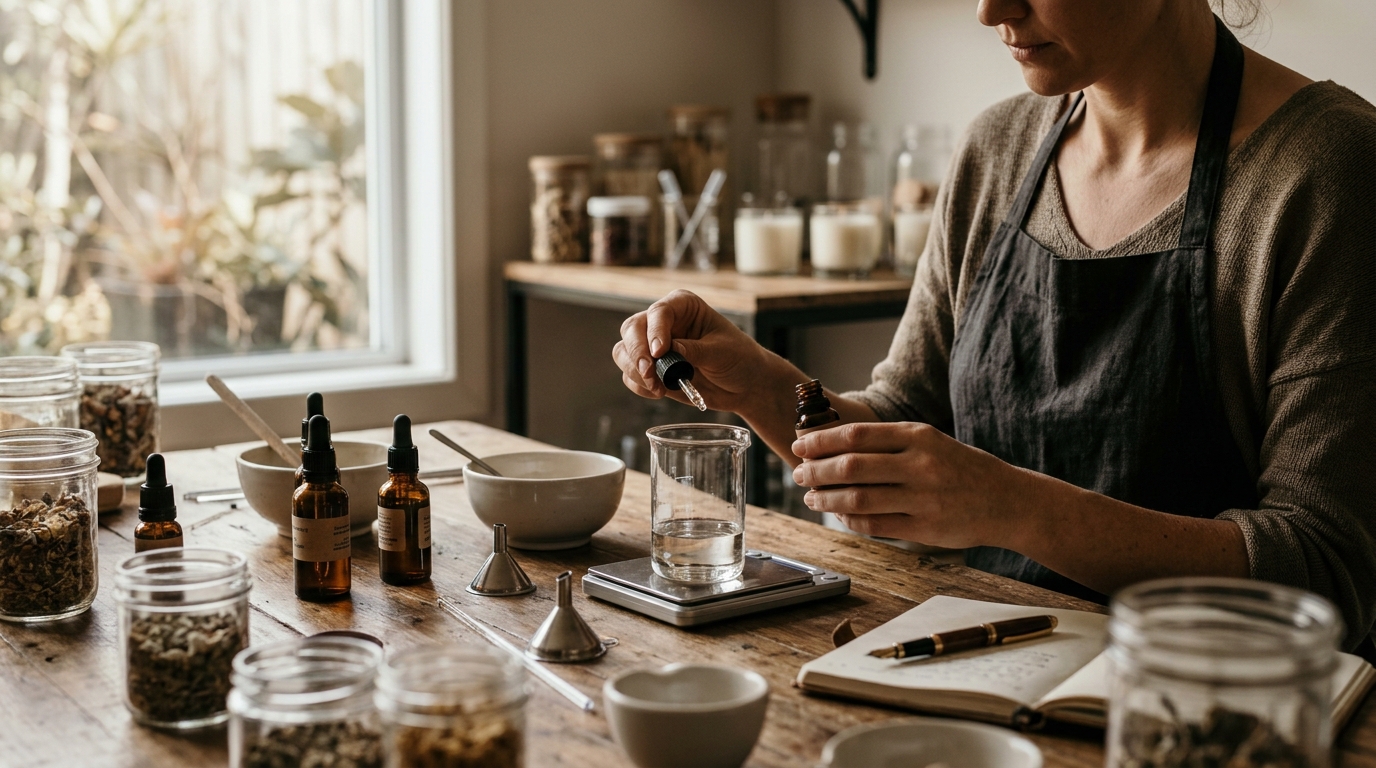
According to recent industry reports, the global handmade candle market now exceeds 4.2 billion dollars annually, with custom scent formulation driving 68 percent of new product launches. Market data confirms that consumers actively seek personalized aromatic experiences. This surge in demand has pushed makers to master the art of blending. You can replicate professional perfumery techniques using accessible materials. The process requires precise measurement, temperature control, and patience. This guide breaks down the exact workflow for creating stable, long-lasting custom blends. (Collections 124 makesy)
Understand Fragrance Bases
Fragrance oils are synthetic or semi-synthetic compounds engineered for consistent scent projection and stability. Functional fragrances offer specialized performance metrics for specific applications. You must distinguish between essential oils and synthetic blends before mixing. Essential oils are concentrated plant extracts that provide natural aromatic profiles. Synthetic blends deliver consistent batch-to-batch results and often cost less. Understanding this distinction prevents formulation failures. (Makesy shop fragrance oils)
Start by mapping your desired scent profile. Top notes provide the initial impression. Middle notes form the core character. Base notes anchor the composition and extend longevity. Professional perfumers use a 30 percent top, 50 percent middle, and 20 percent base ratio as a baseline. Adjust these percentages based on your target product type. Keep a dedicated blending journal to track every adjustment. (Cart)
Calculate Burn Rates
Usage rate refers to the exact percentage of fragrance oil added to your base material. Wax compatibility dictates the maximum safe concentration for your specific blend. Most soy and paraffin blends support 6 to 10 percent fragrance loading. Exceeding manufacturer limits causes seepage, poor burn quality, or fire hazards. Always calculate your total batch weight before adding any aromatic compounds.
Use a digital scale accurate to 0.1 grams. Weigh your base material first. Multiply the total weight by your target percentage. Add the resulting fragrance weight. Stir gently but thoroughly to ensure molecular integration. Rushing this step creates uneven scent distribution. Proper calculation prevents wasted materials and ensures consistent performance across every batch.
Select Compatible Waxes
Wax compatibility determines how well your chosen base holds and releases aromatic compounds. Custom fragrance formulations require specific melting points and crystalline structures. Soy wax offers a clean burn and excellent scent throw for medium-heavy blends. Paraffin wax provides superior throw but requires careful ventilation. Beeswax delivers a natural honeyed undertone but competes with delicate top notes.
Match your wax type to your fragrance concentration. High-load blends perform best in paraffin or specialized soy blends. Lighter aromatic profiles shine in pure soy or coconut blends. Always verify the flash point of your chosen wax against your fragrance oil. Mismatched thermal properties cause premature evaporation or poor cold throw. Consult the MakerPro resources for detailed compatibility charts.
Execute the Blending Process
Heating your base material to the correct temperature ensures proper molecular bonding. Subscription box supplies often include pre-measured starter kits for beginners. Heat your wax slowly using a double boiler or dedicated melting pot. Monitor the temperature with a calibrated thermometer. Most waxes require 185 to 195 degrees Fahrenheit for optimal fragrance integration.
Remove the base from heat once the target temperature is reached. Pour your pre-weighed fragrance oil slowly into the melted base. Stir continuously for two full minutes using a slow, figure-eight motion. This technique minimizes air bubbles and ensures uniform distribution. Pour the mixture into your prepared vessels immediately. Allow the product to cure for 48 to 72 hours before testing. Proper curing allows the aromatic molecules to fully bond with the base matrix.
Test and Refine Formulas
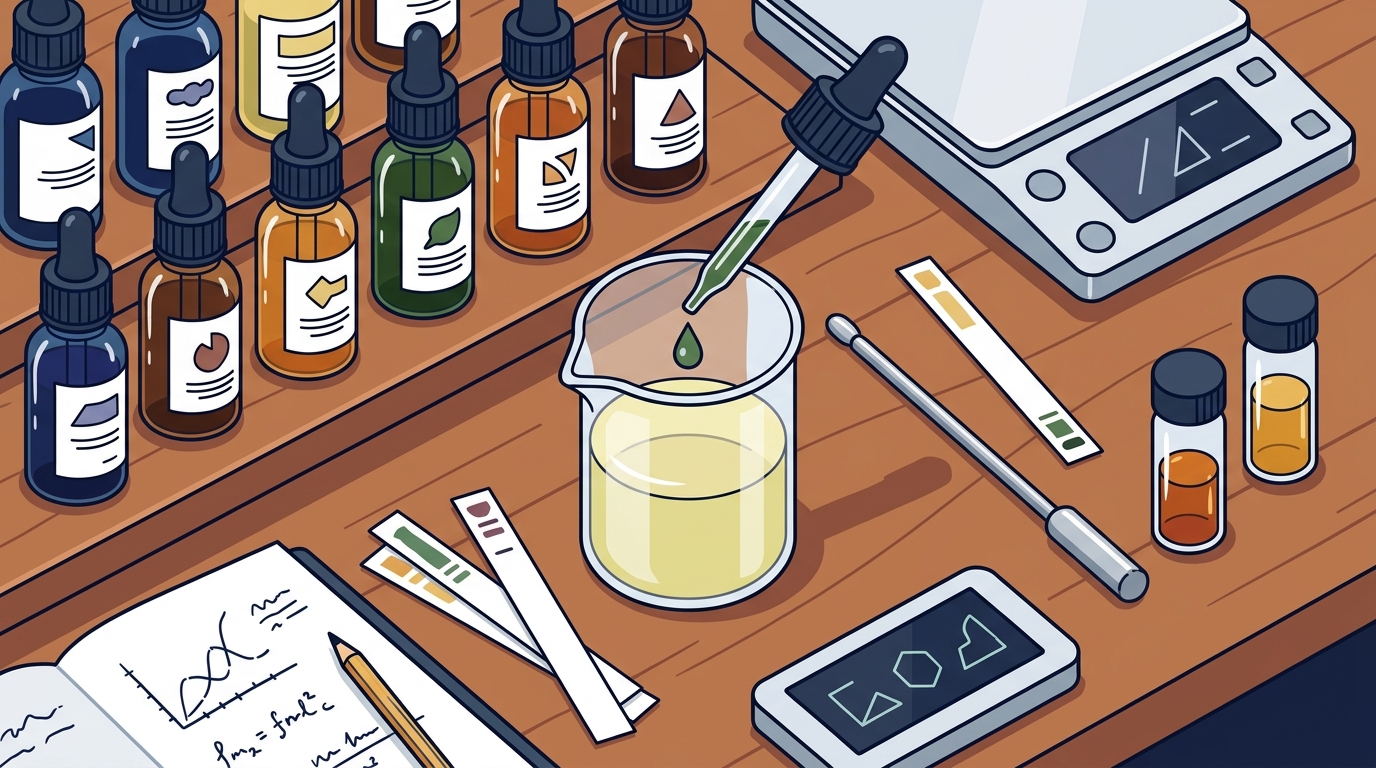
Testing validates your blend before committing to large production runs. Wax compatibility charts provide baseline expectations, but real-world testing reveals hidden variables. Burn your test product in a draft-free room. Measure the melt pool diameter and height after two hours. A complete melt pool indicates proper fragrance loading and wick sizing.
Document your observations meticulously. Note the cold throw, hot throw, soot production, and flame stability. Adjust your formula based on the data. Increase your fragrance loading by 1 percent if the hot throw feels weak. Decrease the loading by 1 percent if you observe mushrooming or excessive soot. Repeat the testing cycle until the formula meets your quality standards. Consistent refinement separates amateur batches from professional-grade products.
| Fragrance Type | Recommended Usage Rate | Best Application | Key Characteristic |
|---|---|---|---|
| Synthetic Blend | 6% to 10% | Soy and Paraffin Waxes | Consistent batch projection |
| Essential Oil Mix | 3% to 6% | Pure Soy and Beeswax | Natural aromatic complexity |
| Functional Fragrance | 8% to 12% | Specialty Blends | Enhanced throw and stability |
| Custom Blend | Variable | Multi-Wax Compositions | Tailored scent architecture |
Key Takeaways
- Custom fragrance blends require precise measurement and temperature control for optimal performance.
- Usage rates typically range between 6 and 10 percent depending on the base material.
- Proper curing allows aromatic molecules to fully bond with the base matrix.
- Testing validates your blend before committing to large production runs.
- Adjusting fragrance loading by 1 percent resolves most throw and soot issues.
- Matching wax types to fragrance concentration prevents seepage and burn failures.
- Documentation ensures consistent replication across every production batch.
Frequently Asked Questions
Can I mix essential oils with synthetic fragrance oils?
Yes, you can combine essential oils with synthetic blends to create complex aromatic profiles. Always calculate the total percentage against your base material limits. Essential oils often have lower flash points and may evaporate faster during heating. Add them after removing the base from heat to preserve volatile compounds. (Blending Essential Oils)
Why does my custom blend seep through the container?
Seepage occurs when the fragrance loading exceeds the wax capacity. Wax compatibility dictates the maximum safe concentration for your specific blend. Reduce your fragrance percentage by 2 percent and retest. Ensure your curing period meets the 48 to 72 hour minimum before evaluating seepage.
How do I fix a weak cold throw?
Weak cold throw usually indicates insufficient fragrance loading or improper curing. Increase your total fragrance percentage by 1 percent in your next batch. Allow the product to cure for a full 72 hours before testing the cold throw. Verify that your wax type supports the specific aromatic compounds you selected.
What temperature should I use when adding fragrance?
Most waxes require 185 to 195 degrees Fahrenheit for optimal fragrance integration. Heating beyond this range causes premature evaporation and weak scent projection. Remove the base from heat once the target temperature is reached. Pour your pre-weighed fragrance oil slowly into the melted base.
Can I use custom blends in soap making?
Custom blends designed for candles often perform poorly in soap formulations. Soap requires specialized functional fragrances that resist acceleration and discoloration. Always verify the manufacturer recommendations before transferring a candle blend to soap. Testing a small batch prevents costly production errors.
Start Crafting Your Signature Scents Today
Mastering custom fragrance blends transforms your hobby into a professional-grade craft. You now possess the exact workflow for calculating ratios, selecting compatible bases, and executing precise blending techniques. Visit makesy.com to explore our complete inventory of functional fragrances, premium waxes, and precision tools. Our team provides expert guidance for every formulation challenge. Order your starter kit today and begin creating signature aromatic experiences that captivate your audience.