
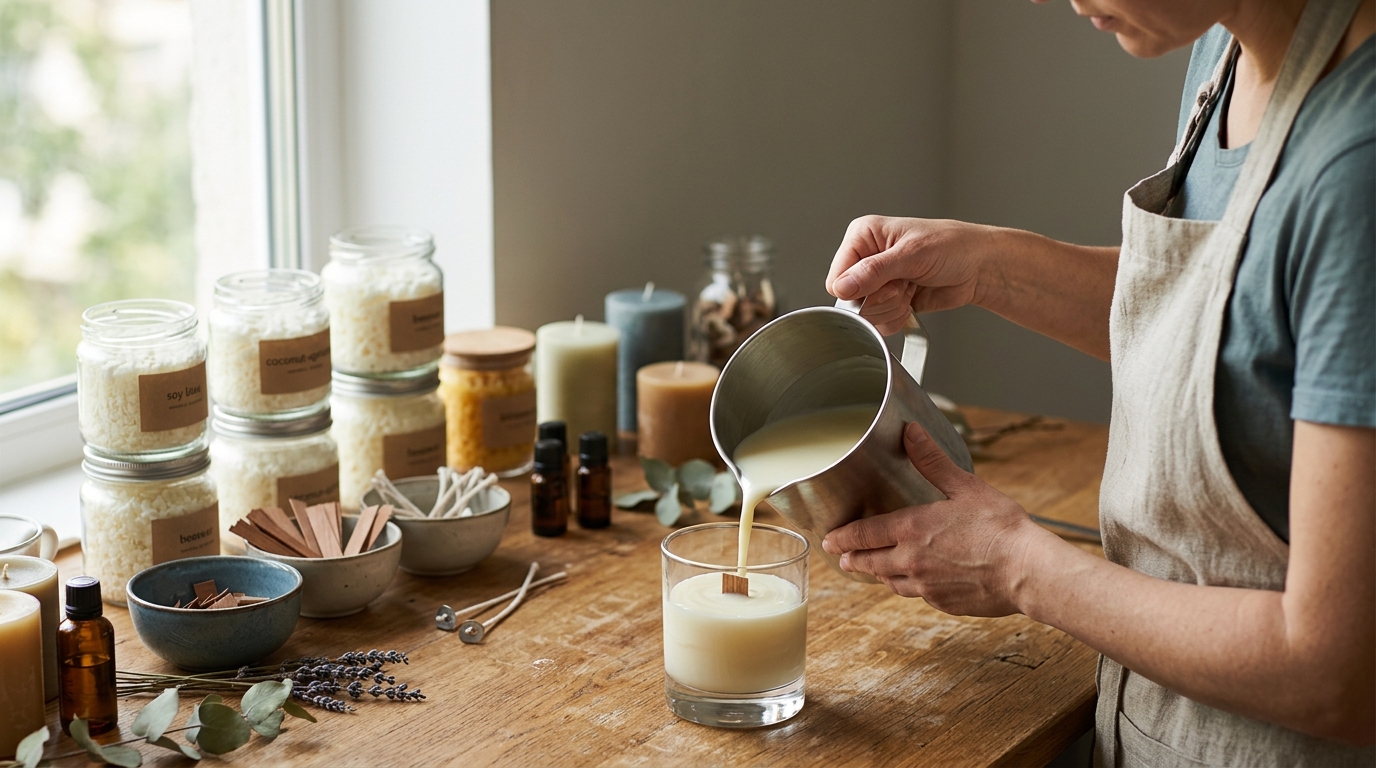
Selecting the correct candle wax is the foundational step in creating a safe, long-burning, and highly aromatic DIY candle. According to recent industry data, the global candle market has experienced consistent annual growth, with soy-based blends capturing over thirty percent of total retail sales in recent years. This shift reflects a clear consumer preference for cleaner burning materials and sustainable sourcing. Understanding the chemical composition and melt properties of each base material will directly impact your final product quality. You must evaluate burn time, fragrance throw, and environmental impact before purchasing raw materials. Proper material selection prevents tunneling and ensures consistent heat distribution throughout the vessel. (Food Safety Myths) (Collections 124 makesy)
Understand Core Wax Bases
Choosing the right material starts with identifying the primary base composition. Soy wax is a plant-derived lipid extracted from processed soybean oil. This renewable material burns cooler and slower than traditional petroleum alternatives. Paraffin wax is a refined petroleum byproduct that offers exceptional scent retention and a smooth finish. Beeswax is a natural secretion produced by honeybee hives that burns cleanly with a subtle honey aroma. Each base requires specific wick sizing and pouring temperatures to achieve optimal results.
Soy Wax Properties
Soy wax delivers a creamy texture and excellent color retention. It requires wider wicks to maintain a proper melt pool across the container diameter. Many makers prefer soy for its eco-friendly profile and biodegradable nature. You can source high-quality soy blends directly from our candle wax collection to experiment with different pour temperatures.
Paraffin Wax Properties
Paraffin remains the industry standard for commercial candle production. It holds fragrance oils at higher concentrations without sinking or weeping. The higher melting point ensures a faster, hotter burn that pushes scent across larger rooms. Testing confirms that paraffin consistently outperforms plant-based alternatives in cold throw metrics. You can review detailed safety guidelines on our candle safety page before scaling production.
Evaluate Burn Performance Metrics
Burn performance dictates the overall user experience and product longevity. The melt pool refers to the liquid wax layer that forms across the top surface during combustion. A complete melt pool must reach the container edges within two hours of lighting. Incomplete pooling leads to tunneling, which wastes material and shortens the candle lifespan. You can track your burn data using our maker tools and guides to refine your testing process.
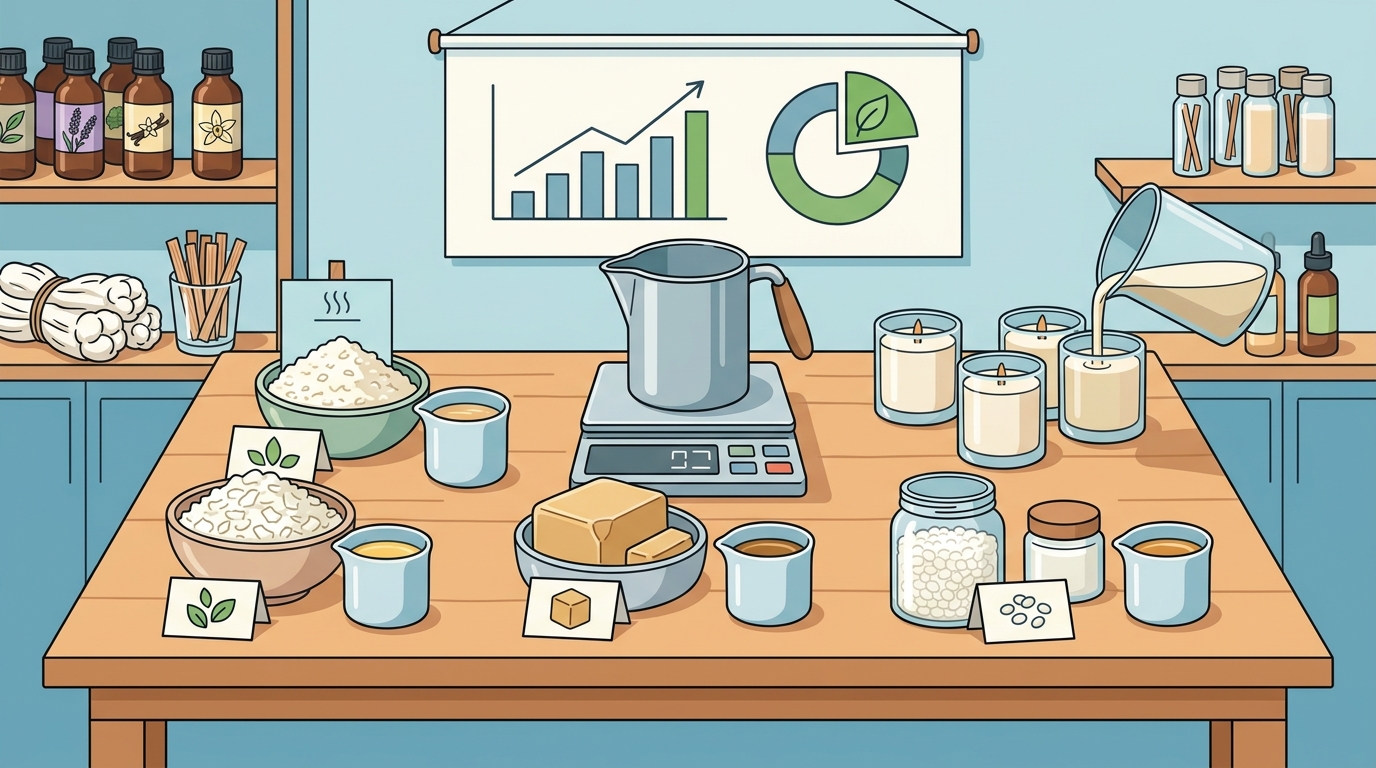
Wick Sizing Requirements
Wick diameter directly correlates with the wax melting point and container width. A wick that is too small will create a narrow flame and poor heat distribution. A wick that is too large will produce excessive soot and an unstable flame. Proper sizing prevents mushrooming and ensures a steady, vertical burn pattern. Always test multiple wick sizes when switching between different wax formulations.
Match Wax Formulations to Vessel Types
Container material affects heat retention and cooling rates. Glass jars retain heat efficiently, making them ideal for softer soy blends. Metal tins conduct heat rapidly, requiring harder paraffin or coconut blends to prevent warping. Ceramic vessels vary widely in thickness, which demands precise wax-to-vessel ratio calculations. You can explore compatible containers and accessories through our vessel collection to streamline your workflow.
Coconut Blend Advantages
Coconut wax blends combine the best properties of soy and paraffin. These hybrid formulations offer superior fragrance throw while maintaining a clean burn profile. They pour smoothly and resist cracking during the cooling phase. Many professional makers utilize coconut blends for premium gift sets and seasonal collections. Our maker pro program provides bulk pricing and priority support for high-volume orders.
Optimize Fragrance Throw Ratios
Fragrance throw determines how effectively a candle releases scent into the surrounding environment. Cold throw measures the intensity of the aroma when the candle remains unlit. Hot throw evaluates the scent dispersion during active combustion. Most commercial formulations require a six to ten percent fragrance load by total weight. Exceeding recommended percentages causes sweating, poor adhesion, and unstable flames. You can access professional-grade fragrance oils through our fragrance catalog to achieve balanced diffusion.
Testing Methodologies
Accurate testing requires controlled environmental conditions and standardized measurement tools. You must weigh fragrance oils precisely using digital scales calibrated to the tenth of a gram. Proper mixing temperatures prevent thermal degradation of volatile aromatic compounds. Allow candles to cure for at least forty-eight hours before conducting throw evaluations. Consistent testing protocols guarantee repeatable results across every production batch.
Compare Commercial Blend Options
Commercial blends simplify the formulation process by pre-mixing multiple wax types. These ready-to-use formulations eliminate guesswork regarding melting points and shrinkage rates. They deliver consistent results for beginners and experienced makers alike. Most commercial blends require minimal additives and standard wick configurations. You can streamline your ordering process by visiting our account dashboard for cost-effective purchasing.
Sustainability Impact
Modern consumers prioritize environmentally responsible manufacturing practices. Plant-based waxes regenerate annually and require minimal processing energy. Petroleum-derived waxes rely on finite fossil fuel reserves and complex refining processes. Regulatory agencies increasingly mandate transparent labeling for all combustion products. You can verify compliance standards by reviewing resources from the American Society for Testing and Materials to ensure your products meet current safety benchmarks.
Key Takeaways
- Soy wax captures over thirty percent of retail candle sales due to its renewable profile.
- Complete melt pool formation must reach container edges within two hours of lighting.
- Paraffin wax consistently outperforms plant alternatives in cold throw metrics.
- Coconut blends offer superior fragrance diffusion with minimal cracking during cooling.
- Commercial blends eliminate formulation guesswork and ensure consistent production results.
- Proper wick sizing prevents mushrooming and maintains stable vertical flames.
- Forty-eight hour curing periods guarantee optimal hot throw performance.
Frequently Asked Questions
What is the ideal fragrance load percentage for container candles?
Most container candles perform best with a six to ten percent fragrance load by total weight. Exceeding this range causes sweating, poor adhesion, and unstable flames. Always consult the specific wax manufacturer guidelines before adjusting ratios.
How do I prevent tunneling in my finished candles?
Tunneling occurs when the wick diameter is too small for the container width. Ensure the melt pool reaches the edges within two hours of lighting. Increase wick size or trim the wick to one quarter inch before each use.
Is soy wax safer than paraffin wax for indoor use?
Soy wax burns cooler and produces significantly less soot than petroleum-based alternatives. Both materials are safe when used with proper ventilation and approved wicks. Plant-based options align better with eco-conscious consumer preferences.
What temperature should I use when pouring melted wax?
Pouring temperature varies by wax type but typically ranges between one hundred forty and one hundred sixty degrees Fahrenheit. Adding fragrance oils requires slightly lower temperatures to preserve volatile compounds. Use a calibrated thermometer to prevent cracking and sinking.
How long should candles cure before testing fragrance throw?
Most soy and coconut blends require a minimum forty-eight hour curing period. Harder paraffin formulations may benefit from a seven day curing window. Extended curing allows fragrance molecules to bind securely with the wax matrix.
Can I mix different wax types in a single candle?
Blending waxes is possible but requires precise temperature control and testing. Commercial blends already optimize these ratios for consistent results. DIY mixing often leads to uneven burning and poor adhesion.
Next Steps
Ready to transform your workspace into a professional candle studio? Start by selecting your preferred wax base and matching it with the appropriate vessel type. Our comprehensive supply kits include everything required for your first production run. Visit our complete candle making collection to browse premium waxes, fragrances, and accessories. Join thousands of makers who trust Makesy for consistent, high-quality results. Complete your order today and begin crafting candles that burn cleanly and smell exceptional.
| Wax Type | Burn Temperature | Fragrance Load | Best Vessel Match | Primary Use Case |
|---|---|---|---|---|
| Soy Wax | 120 to 135 degrees F | 6 to 10 percent | Glass jars | Eco-friendly home decor |
| Paraffin Wax | 145 to 165 degrees F | 8 to 12 percent | Metal tins | Commercial retail sales |
| Beeswax | 140 to 150 degrees F | 3 to 5 percent | Ceramic vessels | Premium artisanal gifts |
| Coconut Blend | 130 to 145 degrees F | 7 to 10 percent | Clear glass containers | High-end fragrance diffusion |