
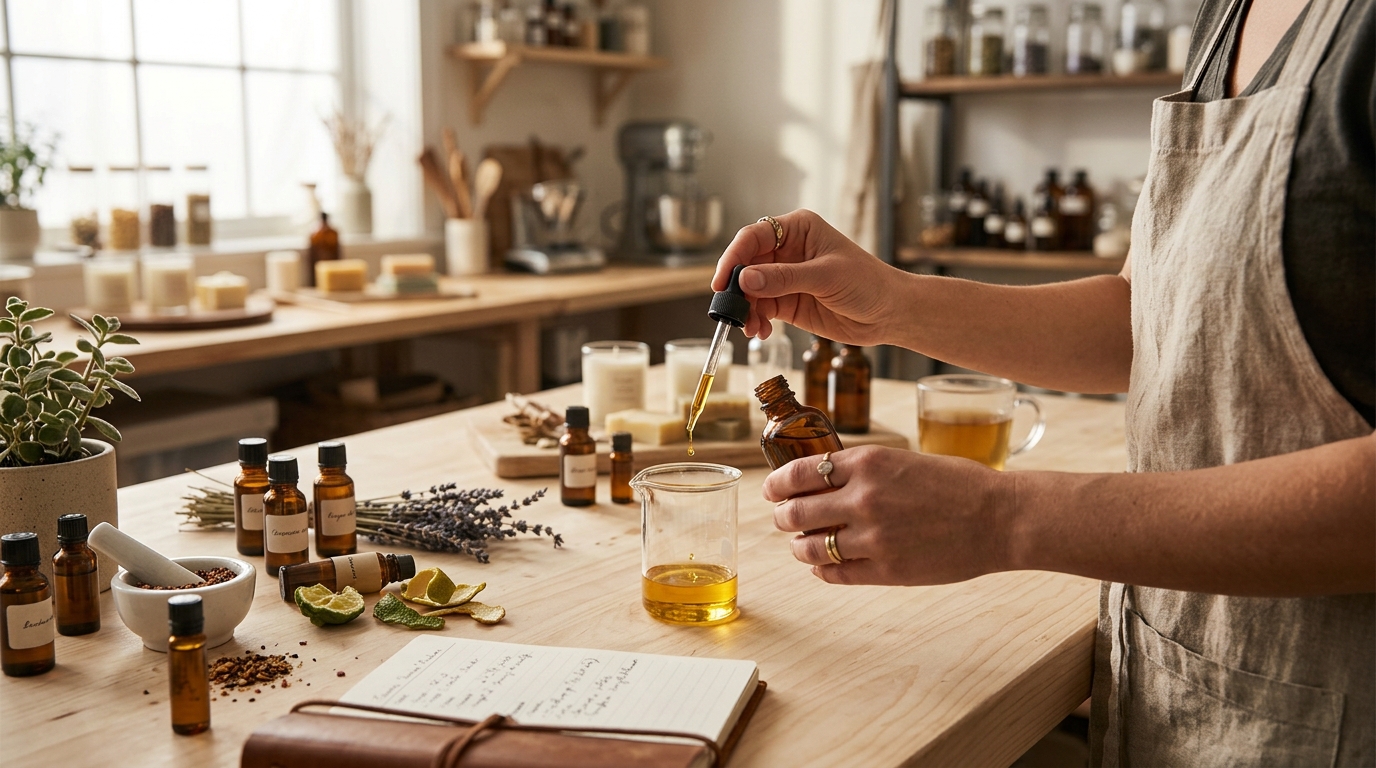
According to recent industry reports, the custom fragrance market now accounts for nearly twenty percent of all artisanal product sales worldwide. This rapid expansion means that makers must understand precise blending ratios and safety compliance before launching new inventory. You will learn how to formulate professional-grade scent profiles while maintaining strict regulatory standards. This guide covers everything from base note selection to final product testing.
Understand Fragrance Notes
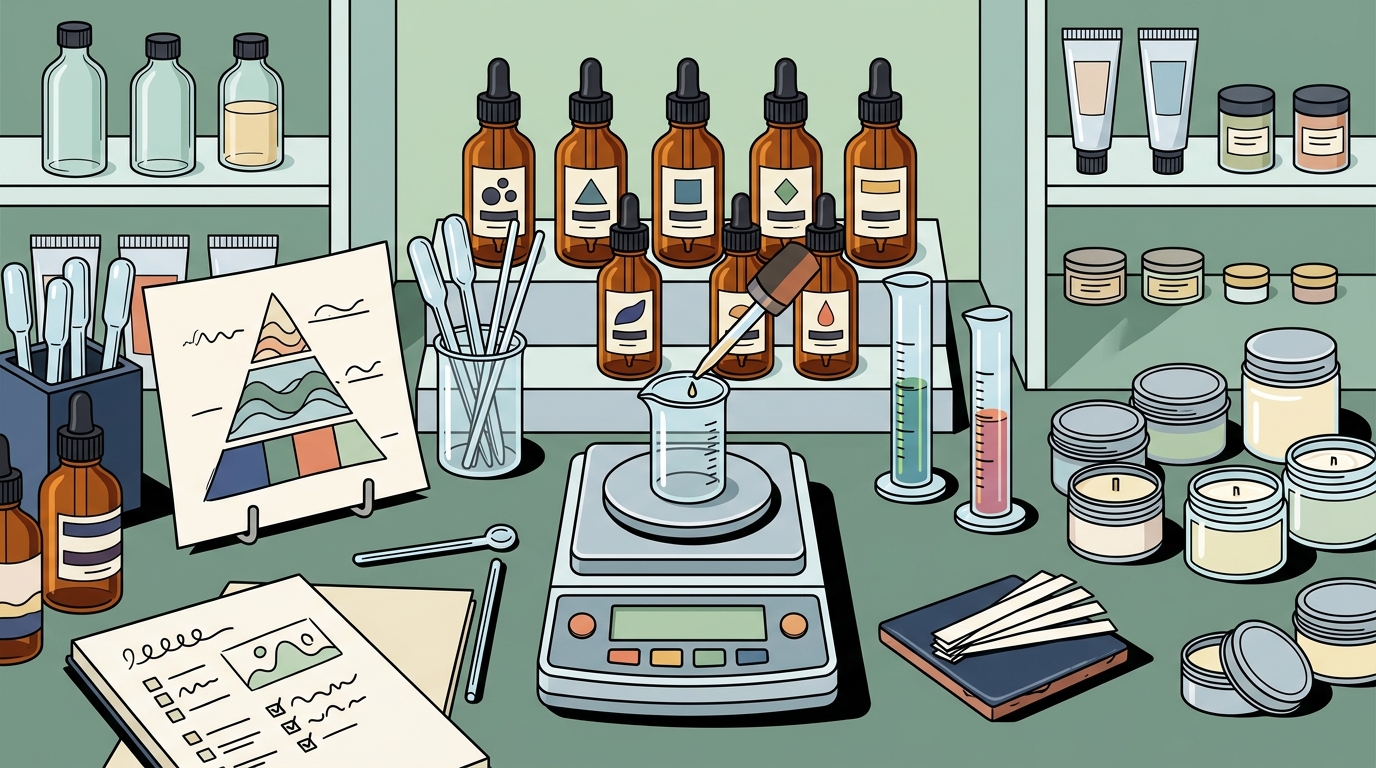
Every successful scent profile relies on a structured hierarchy of aromatic compounds. Top notes are the initial volatile compounds that evaporate quickly to create the first impression. These light molecules typically include citrus extracts, fresh herbs, and light florals. Heart notes are the core aromatic compounds that emerge after the top layer dissipates. This middle tier establishes the primary character of your blend and usually features floral, spicy, or fruity accords. Base notes are the heavy, long-lasting compounds that anchor the entire composition. These deep molecules provide longevity and typically include woods, resins, and earthy extracts. Understanding this three-tier structure allows you to balance volatility and persistence effectively.
Select Your Blending Base
Choosing the correct carrier medium determines how your custom fragrance performs across different product types. You must match the solubility properties of your chosen oils to the final application. Water-based products require specialized solubilizers to prevent separation and ensure consistent dispersion. Oil-based formulations naturally integrate with essential oils and fragrance concentrates without additional emulsifiers. Browse our curated fragrance oils to find concentrations optimized for your specific project. Always verify the flash point of your selected materials to guarantee safe handling during production. Proper base selection directly impacts shelf life and scent throw.
Calculate Safe Dilution Ratios
Regulatory compliance requires precise mathematical calculations before scaling any production run. The International Fragrance Association establishes strict maximum usage rates for every single aromatic compound. You must multiply your total batch weight by the approved percentage to determine the exact grams required. Exceeding these limits can trigger adverse skin reactions or violate consumer safety regulations. Review our candle safety guidelines to ensure your final product meets industry standards. Always document your exact measurements in a dedicated formulation log. Consistent tracking prevents costly batch failures and ensures repeatable results.
Test and Refine Formulations
Laboratory testing reveals how your custom blend behaves under real-world conditions. You must evaluate scent throw, diffusion rate, and stability across varying temperature ranges. Small batch testing allows you to adjust ratios before committing to full-scale manufacturing. Explore our essential oil collection to experiment with complementary aromatic profiles. Record how the scent evolves over a fourteen-day observation period. This patience prevents premature product launches and protects your brand reputation. Refinement is a continuous process that demands meticulous attention to detail.
Integrate Into Homemade Products
Final integration requires careful temperature management and thorough mixing techniques. You must add your custom fragrance at the precise cooling stage to preserve volatile compounds. Stirring slowly prevents air bubble formation and ensures uniform distribution throughout the matrix. Purchase premium candle wax to create a stable foundation for your aromatic blend. Allow adequate curing time so the scent molecules fully bond with the base material. Proper integration maximizes performance and delivers a consistent user experience. Always label your finished products with complete ingredient disclosures.
Formulation Comparison Matrix
| Product Category | Recommended Fragrance Type | Maximum Usage Rate | Integration Method |
|---|---|---|---|
| Soy Candles | Fragrance Oils | Six percent to ten percent | Add at 185 degrees Fahrenheit with continuous stirring |
| Handcrafted Soaps | Essential Oils | Three percent to five percent | Trace stage incorporation |
| Body Lotions | Skin-Safe Concentrates | One percent to three percent | Emulsifier blending phase |
| Room Sprays | Alcohol-Based Blends | Five percent to fifteen percent | Shake thoroughly before use |
Key Takeaways
- Custom fragrance blends require precise top, heart, and base note balancing for optimal performance.
- Maximum usage rates are strictly regulated by the International Fragrance Association to ensure consumer safety.
- Proper temperature management during integration preserves volatile aromatic compounds.
- Small batch testing prevents costly production errors and protects brand reputation.
- Complete ingredient disclosure is mandatory for all commercially distributed homemade products.
- Consistent formulation logging enables repeatable results and scalable manufacturing.
Frequently Asked Questions
What is the difference between fragrance oils and essential oils?
Fragrance oils are synthetically formulated compounds designed for consistent scent profiles and extended longevity. Essential oils are naturally extracted plant materials that offer therapeutic properties but vary in batch consistency.
How do I calculate the exact amount of fragrance needed for a batch?
Multiply your total batch weight by the approved usage percentage to determine the precise grams required for safe integration.
Can I mix multiple fragrance concentrates together?
Yes, blending multiple concentrates allows you to create unique scent profiles while staying within the maximum combined usage rate.
What temperature should I add fragrance to candle wax?
You should incorporate fragrance oils when the wax reaches approximately 185 degrees Fahrenheit to ensure proper binding without evaporation.
How long does a custom blended product typically last?
Properly formulated homemade products maintain their aromatic integrity for twelve to twenty-four months when stored in cool, dark conditions.
Start Your Custom Blending Journey Today
Transform your creative vision into market-ready products with professional-grade materials and expert guidance. Visit makesy.com to explore our complete inventory of fragrance concentrates, wicks, and blending supplies. Our dedicated support team provides personalized formulation assistance for every project scale. Begin sourcing your materials today and elevate your homemade product line.