
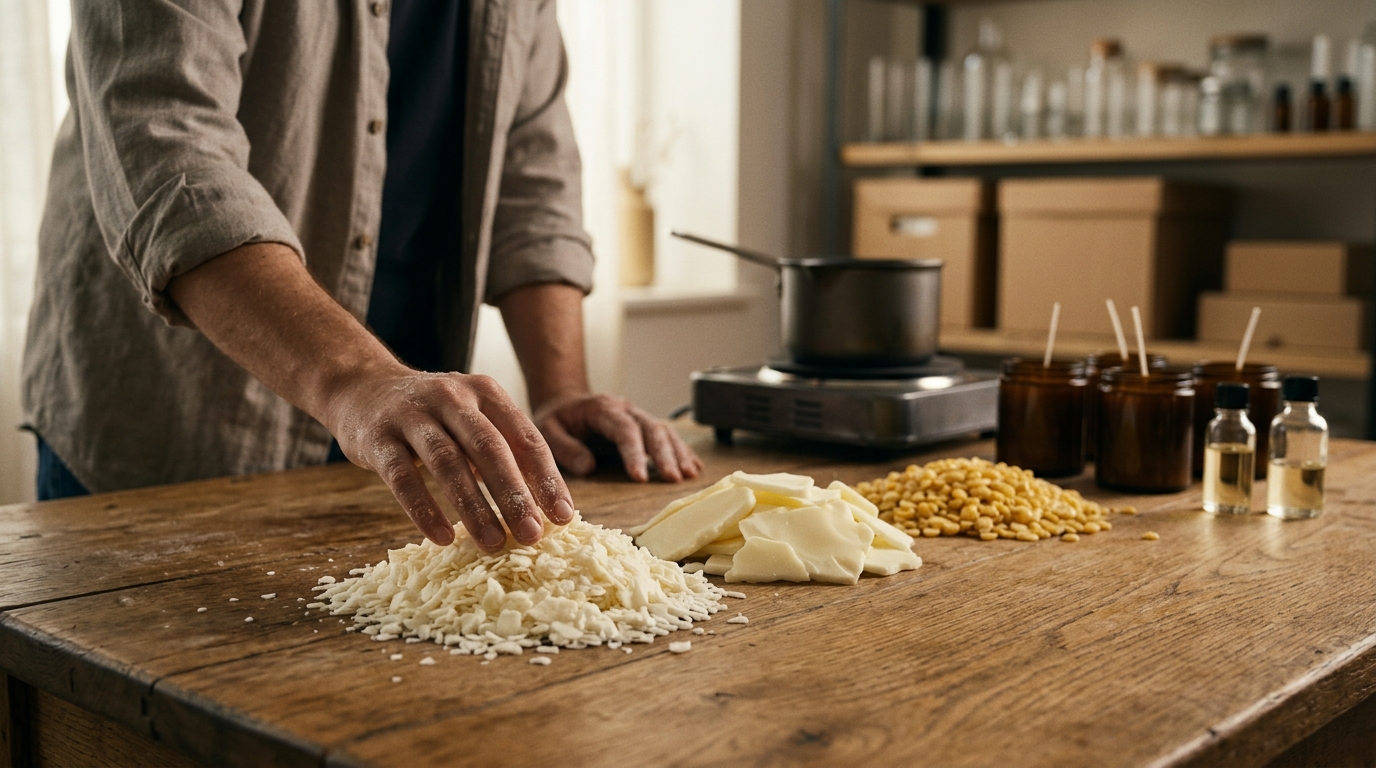
Choosing the correct base material determines whether your DIY candle burns cleanly or produces excessive soot. Industry data shows that the global candle market now exceeds 14 billion dollars annually, with soy and coconut blends capturing over sixty percent of new artisan sales market report. Selecting the proper formulation requires understanding melting points, fragrance retention rates, and container compatibility. This guide breaks down the essential variables so you can manufacture professional-grade candles without costly trial and error. (Collections 124 makesy)
Understanding Base Wax Formulations
Soy wax is a plant-based lipid extracted from processed soybean oil that melts between 120 and 180 degrees Fahrenheit. This natural composition creates a slower burn rate compared to petroleum derivatives. Many beginners prefer soy wax because it cleans easily with warm water and soap. Always verify the purity percentage before purchasing bulk quantities to avoid filler additives.
Paraffin wax is a refined petroleum byproduct that holds fragrance molecules exceptionally well. Manufacturers process crude oil through hydrogenation to create a stable, opaque solid. This material delivers maximum scent throw but requires careful ventilation during the pouring phase. EPA guidelines recommend dedicated ventilation zones for petroleum-based melting stations.
Coconut blend wax combines soy and coconut oils to optimize both burn speed and fragrance capacity. This hybrid formulation reduces the common frosting issues seen in pure soy candles. You can purchase these specialized blends directly through our candle wax collection to test performance in your studio.
Matching Wax to Container Type
Thermal expansion dictates how different waxes interact with glass, metal, or ceramic vessels. Harder waxes like pure paraffin contract significantly as they cool, which can cause separation from container walls. Softer soy blends expand less, reducing the risk of cracks during temperature fluctuations.
Glass jars require medium-hardness formulations that adhere properly without shrinking away from the sides. Metal tins conduct heat rapidly, so you must select a wax with a lower melting threshold to prevent overheating. Our bulk wax supplies include pre-measured portions optimized for standard vessel sizes.
Ceramic vessels retain heat longer, demanding a slower-burning formula to prevent the exterior from becoming dangerously hot. Testing your chosen wax in a sample container before committing to a full production run saves both time and raw materials.
Evaluating Burn Performance and Throw
Cold throw refers to the intensity of the fragrance released when the candle remains unlit. Hot throw describes the aromatic diffusion that occurs once the wax pool reaches the container edges. Soy formulations typically exhibit moderate cold throw but develop exceptional hot throw after the first burn. ASTM testing confirms that extended melt pools correlate with higher consumer satisfaction ratings.
Paraffin variants consistently rank higher for immediate scent dispersion during the initial lighting phase. Coconut blends strike a middle ground by balancing rapid diffusion with extended burn longevity. You can track these metrics by recording the exact minutes required to reach a full melt pool across different wax types.
Wick selection directly influences throw efficiency. A wick that is too small creates a tunneling effect, while an oversized wick produces excessive smoke. Our precision wick kits provide standardized testing options to match your specific wax density.
Navigating Safety Standards and Regulations
ASTM International establishes mandatory testing protocols for consumer candle safety across North America. These guidelines mandate maximum container temperatures and mandatory warning labels on all retail packaging. Compliance ensures your products meet baseline fire safety thresholds before reaching customers. Industry standards require burn testing for at least four consecutive hours. (Understanding Safety Standards)
Proper ventilation remains critical during the melting process to avoid inhaling concentrated volatile organic compounds. Using a dedicated double boiler setup prevents direct flame contact with flammable materials. Always maintain a fire extinguisher within three feet of your melting station.
Labeling requirements vary by state, but most jurisdictions mandate burn warnings and ingredient disclosures. Keeping detailed production logs helps you track batch consistency and troubleshoot performance anomalies. Our candle safety guidelines outline the exact documentation needed for commercial distribution.
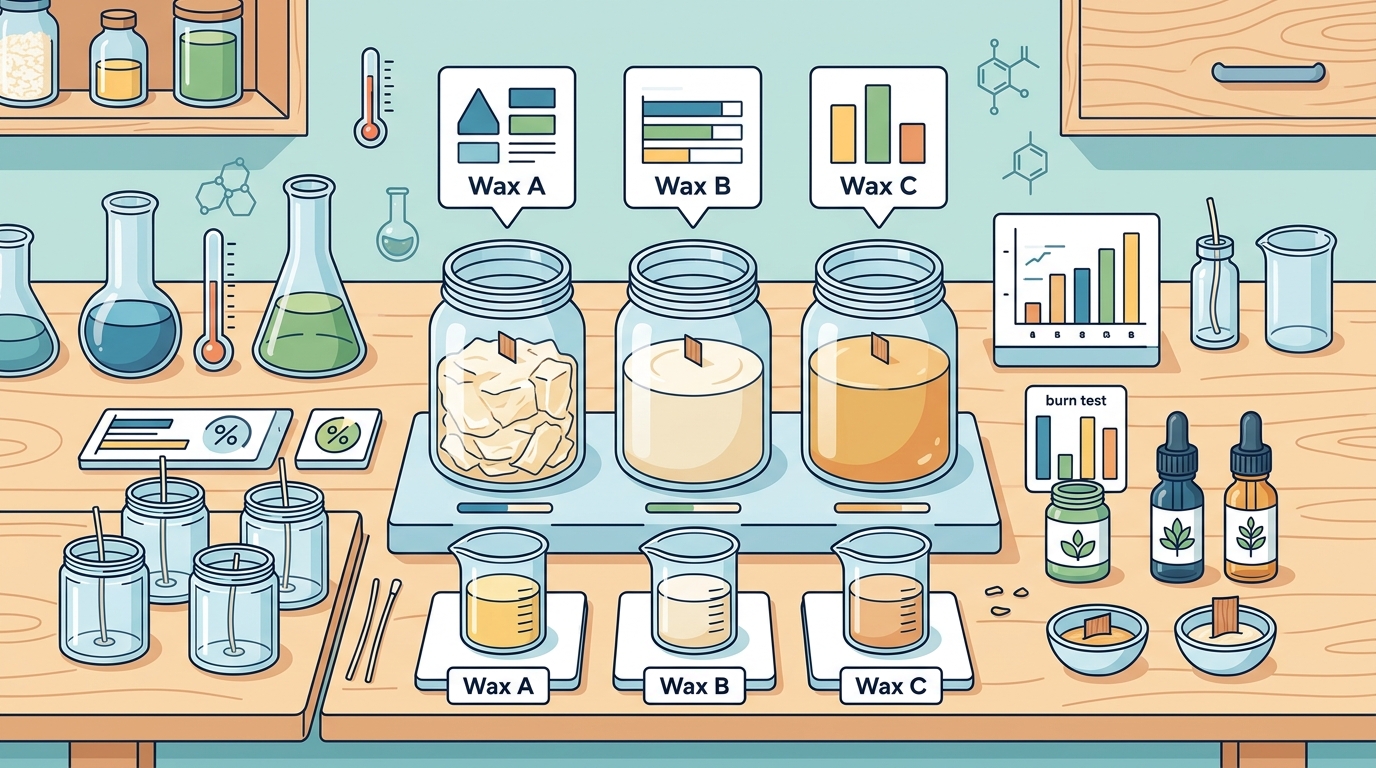
Sourcing Quality Materials and Supplies
Consistent raw material quality directly impacts your final product reputation. Reputable suppliers provide third-party lab reports verifying purity levels and flash points. Purchasing in bulk reduces per-unit costs and minimizes supply chain interruptions.
MakerPro membership unlocks tiered pricing structures for high-volume artisans and small businesses. This program reduces shipping overhead and provides priority access to limited-edition fragrance oils. You can explore these commercial benefits by visiting our MakerPro program page to compare subscription tiers.
Storage conditions also dictate material longevity. Keep all wax blocks in a cool, dry environment away from direct sunlight. Exposure to UV radiation degrades fragrance compounds and alters melting characteristics over time.
Comparative Wax Performance Matrix
| Wax Type | Melting Point (°F) | Fragrance Load Capacity | Best Container Match | Primary Use Case |
|---|---|---|---|---|
| Soy Wax | 120 to 180 | 6 to 10 percent | Glass Jars | Artisan retail candles |
| Paraffin Wax | 140 to 165 | 8 to 12 percent | Metal Tins | High-scent throw products |
| Coconut Blend | 115 to 145 | 7 to 11 percent | Ceramic Vessels | Long-burn decorative candles |
| Beeswax | 144 to 147 | 2 to 4 percent | Pillar Molds | Natural air purification |
Key Takeaways
- Soy wax melts between 120 and 180 degrees Fahrenheit, making it ideal for glass containers.
- Paraffin wax holds up to 12 percent fragrance load, delivering maximum scent dispersion.
- Coconut blends reduce frosting issues while maintaining strong hot throw performance.
- ASTM safety standards require maximum container temperature testing before commercial sale.
- MakerPro membership reduces bulk shipping costs and unlocks tiered pricing structures.
- Proper wick sizing prevents tunneling and ensures an even melt pool across the surface.
- UV exposure degrades raw wax quality, requiring cool, dark storage conditions.
Frequently Asked Questions
Can I mix different wax types together?
Blending waxes is possible but requires precise temperature control to prevent separation. You must melt each component to its specific threshold before combining them in a single batch. Testing small samples ensures the final mixture maintains structural integrity.
Why does my soy candle develop white frost on the surface?
Soy frosting occurs when temperature fluctuations cause rapid crystallization during the cooling phase. This cosmetic issue does not affect burn quality or fragrance output. Adding a small percentage of coconut oil to your soy blend minimizes visible crystallization.
How much fragrance oil should I add to my wax?
Most commercial waxes accept between 6 and 12 percent fragrance oil by total weight. Exceeding the maximum load capacity causes seepage and unstable burning. Always calculate your exact wax weight before adding fragrance compounds.
Is beeswax safe for indoor use?
Beeswax burns cleanly and naturally releases negative ions that help neutralize airborne pollutants. This natural composition makes it highly suitable for allergy-prone environments. You must purchase food-grade or cosmetic-grade beeswax to ensure purity.
What temperature should I pour my wax?
Pouring temperature varies by formulation but typically ranges between 135 and 185 degrees Fahrenheit. Pouring too hot causes cracking, while pouring too cold creates poor adhesion. Use a calibrated thermometer to monitor the exact drop point before transferring to containers.
Do I need to pre-treat glass containers before pouring?
Pre-treating glass surfaces improves wax adhesion and prevents premature separation. A light spray of candle adhesive or a thin layer of melted wax acts as a bonding agent. This step is especially critical for soy and coconut blends.
Start Your Candle Making Journey Today
Mastering wax selection transforms amateur experiments into consistent, market-ready products. You now possess the technical framework to evaluate melting points, fragrance loads, and safety compliance. Visit our main storefront to browse our complete inventory of premium waxes, precision wicks, and artisan fragrance oils. Order your starter kit today and begin crafting professional candles with confidence.