
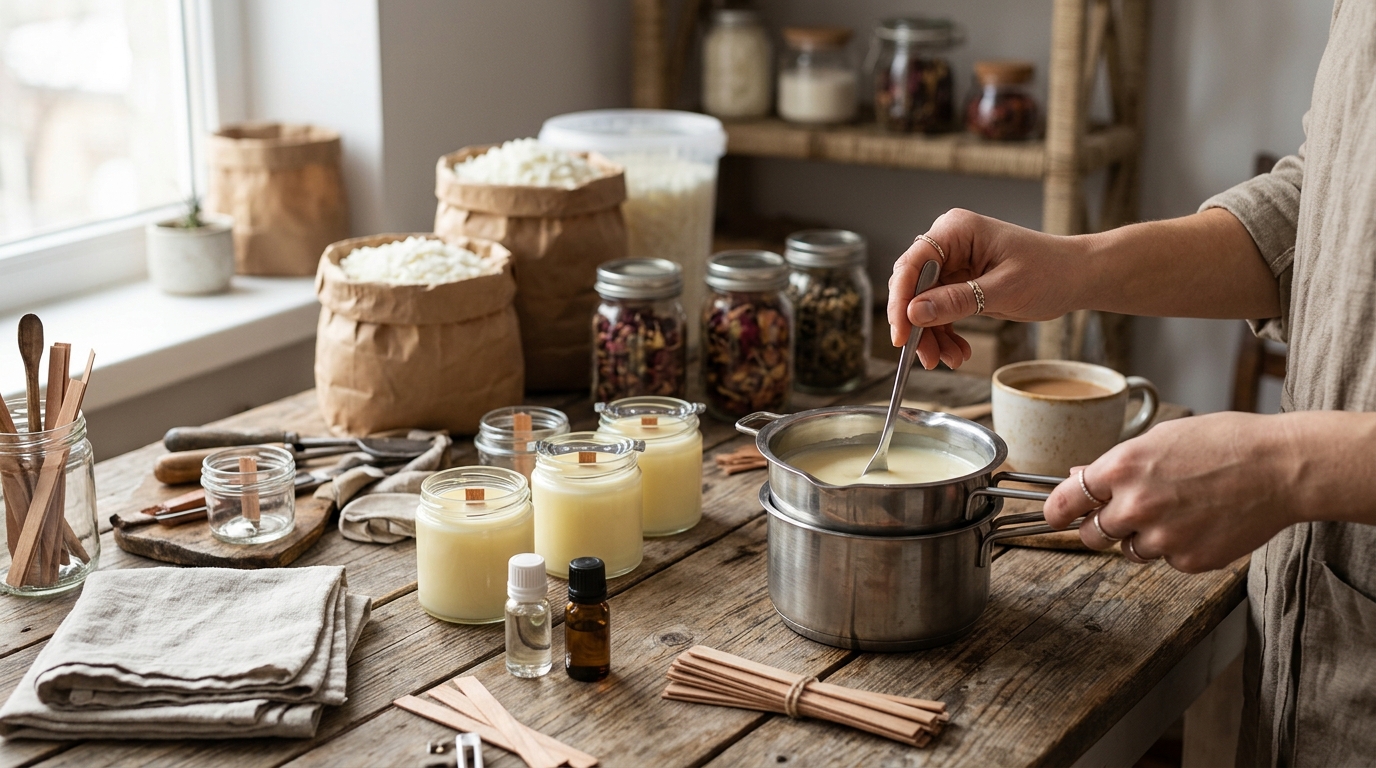
The Complete Guide to Sourcing Candle Making Supplies for Beginners
Starting a candle making business or hobby requires more than just wax and a wick. The global candle market is projected to reach significant heights, with industry reports indicating that consumer demand for artisanal and scented candles has surged by over 20% in recent years. This growth is driven by a desire for home wellness and aesthetic decor. However, sourcing the right materials is the foundation of quality. Without reliable suppliers, even the best fragrance blends will fail to perform. This guide breaks down exactly what you need to start making candles safely and profitably. (Products 124 makesy)
Understanding Wax Types and Their Properties
Wax is the primary fuel for your candle. Choosing the wrong wax can lead to poor throw, uneven burning, or safety hazards. For beginners, it is crucial to understand the three most common types of wax used in the industry.
Soy Wax
Soy wax is derived from hydrogenated soybean oil. It is a natural, renewable resource that burns cleaner than paraffin. Soy wax has a lower melting point, which makes it easier to work with for beginners. It holds fragrance well, providing a strong scent throw. However, it can be prone to frosting, which is a natural crystallization process that affects appearance but not performance.
Palm Wax
Palm wax creates a unique, crystalline, or feathered pattern on the surface of the candle. It is harder than soy wax and has a higher melting point. This makes it ideal for warmer climates. Palm wax burns brighter and longer than soy. However, sourcing sustainable palm wax is critical to avoid environmental concerns associated with deforestation.
Paraffin Wax
Paraffin is a byproduct of petroleum refining. It is the most widely used wax in the commercial industry because it holds fragrance exceptionally well and has a high melting point. It provides a bright flame and a smooth finish. While some consumers avoid paraffin due to environmental concerns, it remains a staple for professional candle makers seeking maximum scent throw.
Wax is a solid hydrocarbon mixture derived from petroleum, coal, or oil shale, used primarily as a fuel source in candles and other applications.
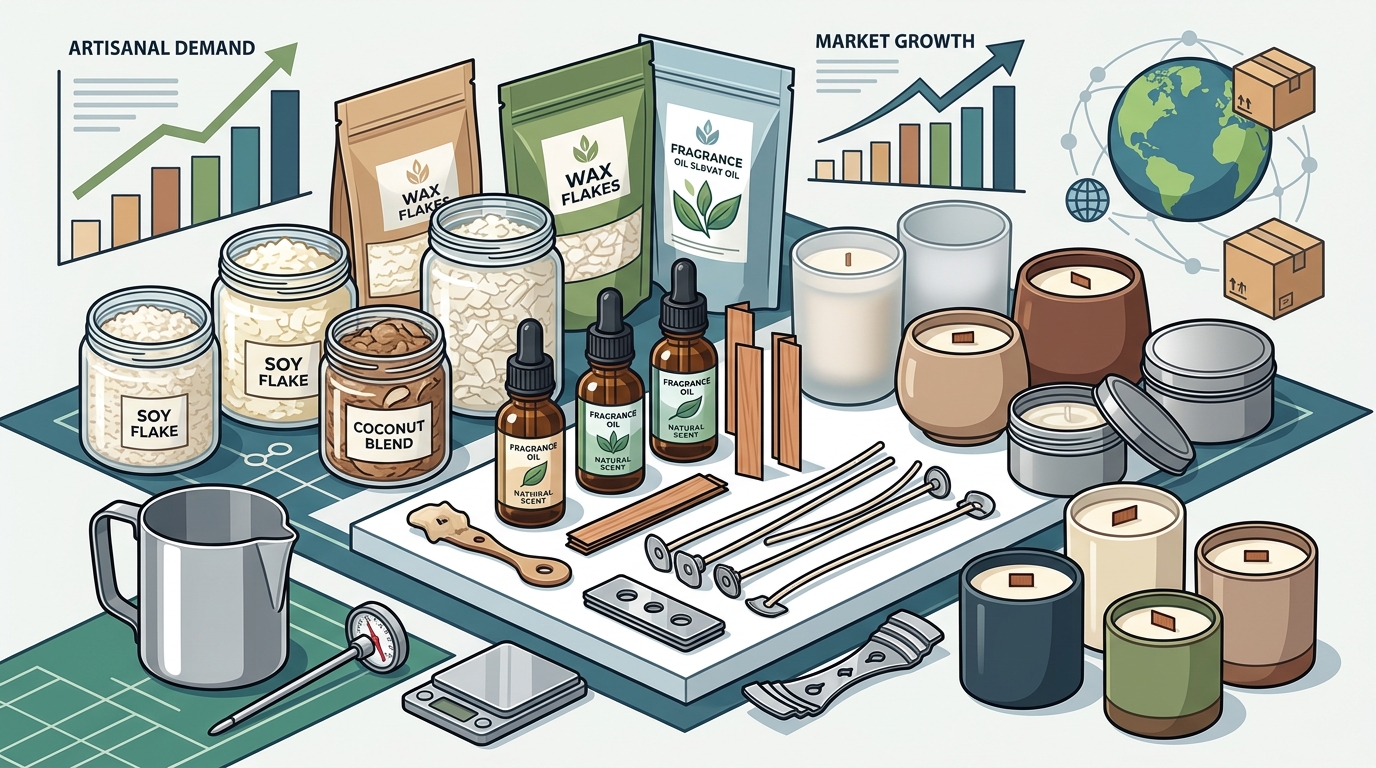
Selecting the Right Wicks for Your Vessel
The wick is the heart of the candle. It draws the melted wax up to the flame through capillary action. If the wick is too small, the candle will tunnel. If it is too large, it will create a dangerous flame and produce excessive soot.
Wick Types
- Wooden Wicks: These provide a crackling sound and a rustic aesthetic. They require larger vessels and specific wax blends to burn correctly.
- Cotton Wicks: The standard choice for most beginners. They are consistent, affordable, and come in various braids and sizes.
- Paper-Core Wicks: These have a flat paper strip inside the cotton braid. They are excellent for container candles because they stay upright and burn evenly.
Wick Sizing
Wick sizing is not one-size-fits-all. It depends on the wax type, fragrance load, and container diameter. A general rule is to start with a medium-sized wick and test upwards or downwards based on the burn pool. Makesy offers a comprehensive wick guide to help you navigate these variables.
A wick is a cord or braided material that draws fuel upward through capillary action to sustain a flame in a candle or oil lamp.
Fragrance Oils vs. Essential Oils
The scent profile defines the user experience. You have two main categories of fragrance to choose from: synthetic fragrance oils and natural essential oils.
Fragrance Oils
Fragrance oils are chemically formulated scents. They offer an almost infinite variety of aromas, from complex gourmands to fresh florals. They typically have a stronger hot and cold throw than essential oils. They are also generally more affordable. However, they are not natural products.
Essential Oils
Essential oils are extracted directly from plants. They are popular in the wellness and natural candle market. They offer therapeutic benefits and appeal to eco-conscious consumers. However, they are more expensive and can be difficult to blend. Some essential oils are also volatile and may not hold up well in high-heat wax.
Fragrance oil is a synthetic or semi-synthetic mixture of aromatic compounds designed to mimic natural scents or create new, unique aromas for use in candles and cosmetics.
Choosing Vessels and Packaging
The vessel must be heat-resistant to prevent cracking or shattering. Glass jars are the most common choice. You must also consider the aesthetic of your brand. Makesy provides a wide range of Aura candle vessels and lids that cater to modern minimalist designs.
Packaging Essentials
- Lids: A secure lid prevents dust accumulation and protects the wax surface during shipping.
- Labels: Safety labels are legally required in many jurisdictions. They must include burn instructions and warnings.
- Boxes: Protective packaging ensures your product arrives in perfect condition.
Sourcing Strategies for Beginners
Where you buy your supplies impacts your profit margin and product quality. Here are three strategies for sourcing.
1. Use a Dedicated Candle Supply Store
Stores like Makesy specialize in candle making. They offer curated collections, reliable stock, and educational resources. This is the best option for beginners who need guidance and consistency. You can explore their full collection of supplies to find everything in one place.
2. Bulk Wholesale
Once you have scaled, buying in bulk reduces costs. Look for wholesalers who offer volume discounts on wax and fragrance. Ensure they have a robust customer support system to handle large orders efficiently.
3. Local Hardware Stores
For very small batches, local stores may carry basic wicks and jars. However, the variety and quality are often limited. This is not recommended for serious production.
Wholesale is a business practice where goods are sold in large quantities at a reduced price, typically to retailers who then sell them to individual consumers.
Key Takeaways
- Wax Choice Matters: Soy wax is beginner-friendly, while paraffin offers maximum scent throw.
- Wick Testing is Critical: Always test wicks for your specific vessel and wax combination.
- Fragrance Load: Most waxes hold between 6% and 10% fragrance oil by weight.
- Heat Resistance: Ensure all vessels are rated for high temperatures to prevent breakage.
- Reliable Suppliers: Partner with dedicated candle supply stores for consistent quality and support.
- Safety First: Always use proper safety gear and follow burn test protocols.
- Brand Aesthetics: Choose vessels and packaging that align with your target market.
Frequently Asked Questions
What is the best wax for beginners?
Soy wax is widely considered the best wax for beginners because it is easy to pour, cleans up easily with soap and water, and burns cleanly.
How much fragrance oil should I use?
Most candle waxes can hold between 6% and 10% fragrance oil by weight. Exceeding this limit can cause the wax to weep or fail to burn properly.
Do I need a special scale?
Yes, precision is key. You need a digital scale that measures in grams to ensure accurate wax and fragrance ratios.
Can I use essential oils in candles?
Yes, but they require specific techniques. Essential oils have lower flash points and may not hold scent as well as fragrance oils in certain waxes.
How do I choose the right wick size?
Wick size depends on the diameter of your container and the type of wax. Start with a medium wick and test for a full melt pool within 2-4 hours.
What is a melt pool?
A melt pool is the layer of liquid wax that forms on the surface of a burning candle. A full melt pool indicates the wick is the correct size.
Where can I buy candle supplies online?
You can buy supplies from dedicated candle supply stores like Makesy, which offer a wide range of waxes, wicks, and fragrances.
Start Making Today
Now that you understand the fundamentals of sourcing, it is time to build your inventory. Makesy provides everything you need to launch your candle making journey. From high-quality soy wax to curated fragrance oils, we have the tools to help you succeed. Visit our collections page to start shopping. Join our maker community for tips and support. Your first candle is waiting to be made.