

Starting a candle making business or hobby has never been more accessible, yet the market remains highly competitive. According to recent industry reports, the global candle market is projected to grow significantly, driven by consumer demand for sustainable and artisanal home goods. This growth presents a unique opportunity for new makers to enter the space with high-quality, handcrafted products. However, success requires more than just melting wax; it demands a deep understanding of materials, safety protocols, and creative formulation. This guide provides the foundational knowledge you need to launch your first batch with confidence.
Essential Supplies for Beginners
Before you melt a single ounce of wax, you must curate a professional-grade toolkit. The difference between a hobbyist and a pro often lies in the quality of their equipment. At Makesy, we emphasize that starting with the right tools prevents costly mistakes and ensures consistent burn quality.
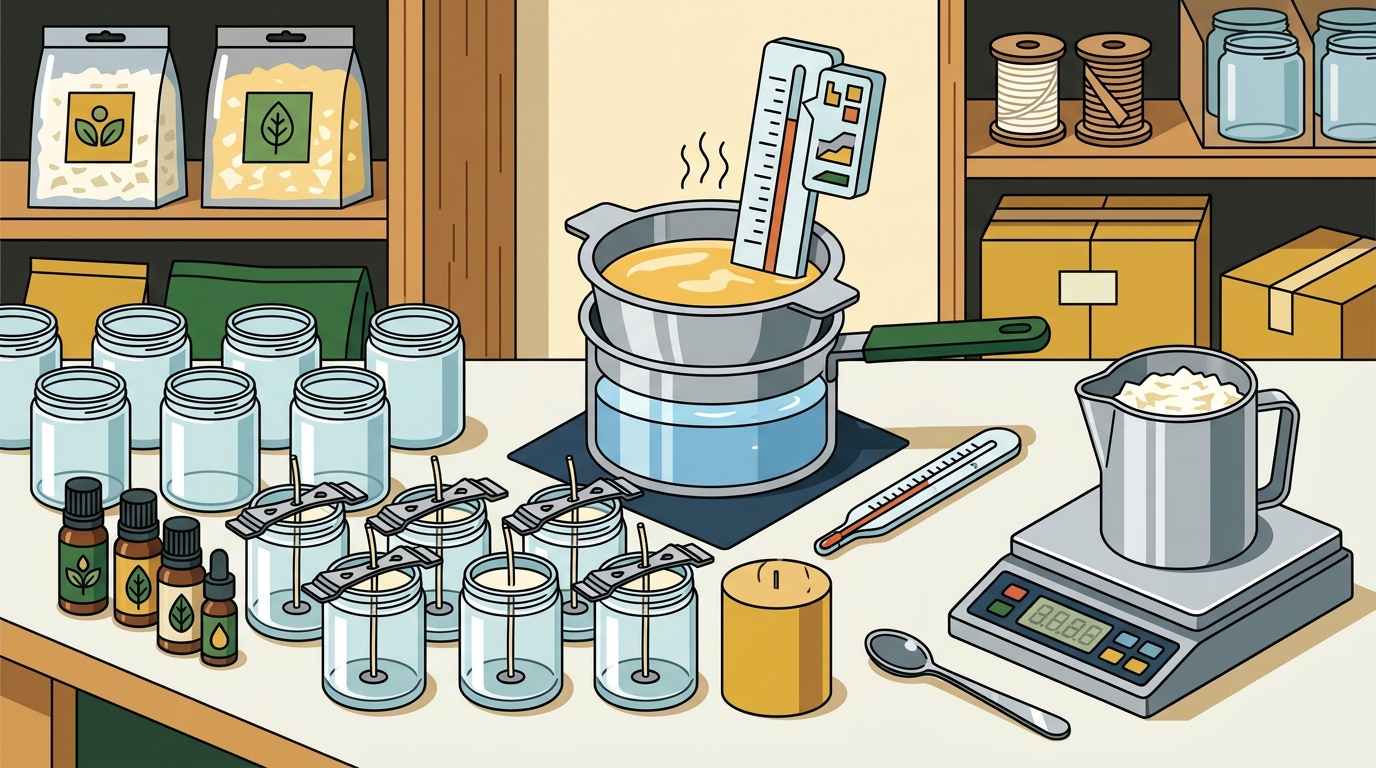
Your initial kit should include a dedicated melting pitcher, a precision thermometer, and a reliable scale. Accuracy is paramount in candle making because even a slight deviation in wax-to-fragrance ratios can lead to poor throw or safety hazards. Additionally, you will need wicks that match your vessel diameter and wax type. Browse our complete collection of starter supplies to ensure you have everything needed for your first project.
Understanding Wax Types
Wax is the foundation of your candle. Choosing the wrong type can result in sinking, wet spots, or weak scent throw. Here is a breakdown of the most common options for beginners.
Soy Wax
Soy wax is a natural, renewable resource derived from soybean oil. It is highly popular among beginners because it has a lower melting point, making it easier to work with and less prone to burning your hands. Soy wax also offers a clean burn and excellent fragrance retention. For more details on wax properties, visit our help center.
Palm Wax
Palm wax creates a unique crystalline, opaque finish that resembles marble or feathers. It is harder than soy wax and holds wicks very well. However, it requires higher pouring temperatures and can be more challenging for absolute beginners to master without cracking.
Paraffin Wax
Paraffin is a byproduct of petroleum refining. It is known for its superior scent throw and long burn time. While it is not natural, it remains a staple in the industry for commercial candles. If you are interested in natural alternatives, check out our natural wax options.
Choosing the Right Fragrance Oils
Fragrance is what draws customers back to your brand. Not all scents behave the same way in different waxes. A fragrance that smells amazing in a soap may perform poorly in a candle. This is where understanding flash points and cold throw becomes critical.
When selecting oils, look for those specifically formulated for candle making. These oils are tested for stability and safety. Explore our curated fragrance oils to find scents that complement your chosen wax type. Remember, the fragrance load percentage typically ranges from 6% to 10%, depending on the wax's capacity to hold scent.
The Science of Wicking
Wicking is the most technical aspect of candle making. A wick acts as the fuel delivery system, drawing melted wax up to the flame. If the wick is too small, the candle may tunnel or drown. If it is too large, it can create a dangerous flame or produce excessive soot.
Wick selection depends on three factors: wax type, fragrance load, and container diameter. Consult our wicking guide to understand how these variables interact. Testing is non-negotiable. Always burn test your candles to ensure a clean, even melt pool across the entire surface.
Critical Safety Protocols
Safety is the cornerstone of responsible candle making. Working with hot wax and open flames requires strict adherence to safety guidelines. Never leave melting wax unattended. Always use a double boiler or a dedicated wax melter to prevent direct heat exposure.
Additionally, ensure your workspace is well-ventilated. Fragrance oils can release volatile organic compounds when heated. Review our safety articles for detailed protocols on handling materials and storing finished products. Proper labeling is also required by law in many jurisdictions to warn consumers of potential hazards.
Creating Your First Batch
Now that you understand the theory, it is time to create. Follow these steps for your first successful candle:
- Melt the Wax: Heat your wax to the recommended pouring temperature. Monitor with a thermometer.
- Add Fragrance: Once melted, stir in your fragrance oil at the correct temperature. Stir gently but thoroughly for two minutes.
- Prepare the Vessel: Secure your wick to the bottom of your container using a wick sticker or adhesive.
- Pour: Slowly pour the wax into the vessel, leaving a small headspace at the top.
- Cool: Allow the candle to cool slowly at room temperature. Avoid moving it or exposing it to drafts.
- Trim: Once fully cured, trim the wick to about 1/4 inch above the wax surface.
For more detailed instructions, check our maker tips section.
Key Takeaways
- Quality Tools Matter: Invest in a precision scale and thermometer for consistent results.
- Wax Compatibility: Always match your fragrance oil to your specific wax type.
- Wick Testing: Never skip burn tests; they are essential for safety and performance.
- Safety First: Always work in a ventilated area and never leave hot wax unattended.
- Curing Time: Allow soy candles to cure for at least one week for optimal scent throw.
- Community Support: Join forums and groups to share experiences and troubleshoot issues.
- Brand Identity: Develop a unique label and packaging to stand out in a crowded market.
Frequently Asked Questions
What is the best wax for beginners?
Soy wax is widely considered the best for beginners due to its ease of use, low melting point, and clean burn characteristics.
How much fragrance oil should I use?
Most waxes can hold between 6% and 10% fragrance oil by weight. Always check the specific datasheet for your wax type.
Why is my candle tunneling?
Tunneling usually occurs when the wick is too small for the candle diameter, preventing the heat from reaching the edges of the container.
Can I use essential oils in candles?
While possible, essential oils often have poor throw and stability in candles compared to synthetic fragrance oils. They are best used in small blends.
How long should I cure my candles?
Soy candles should cure for at least 7 to 14 days to allow the fragrance to bind fully with the wax.
What is the flash point of fragrance oil?
The flash point is the temperature at which the oil can ignite. You should add fragrance below this temperature to prevent evaporation and fire risks.
Do I need a wick centering device?
While not strictly necessary, a wick holder or centering device helps keep the wick straight during pouring, ensuring an even burn.
Start Making Today
Ready to turn your passion into a reality? Shop Makesy for all your candle making supplies, from premium waxes to exclusive fragrance oils. Join our community of makers and start creating beautiful, handcrafted candles today.