

Home Candle Makers Share Their Favorite Supply Sources and Setup Stories
The global candle market is experiencing a significant surge, with industry reports indicating that the sector is projected to grow at a compound annual growth rate of over 4% through 2030. Industry analysts note that this expansion is largely driven by the rise of the "cottage industry" and home-based artisans who prioritize quality, sustainability, and unique scent profiles. For these makers, the journey from hobbyist to professional is defined by two critical factors: the reliability of their supply chain and the precision of their workspace setup. (Collections 124 makesy)
Why Supply Chain Reliability Matters
For home candle makers, the consistency of materials is the difference between a product that sells and one that fails. A single batch of wax with a different melting point or a fragrance oil with a lower flash point can ruin an entire production run. This is why established makers prioritize suppliers who offer transparent data sheets and consistent quality control.
Many successful artisans cite the importance of a supplier that offers both breadth and depth. Shipping logistics are also a major pain point for small businesses. A delay in receiving wicks or jars can halt production for weeks. Makers often look for vendors that offer expedited shipping options, such as the Ocean membership program, which provides faster delivery times for a monthly fee. This reliability allows makers to manage inventory more effectively and respond to customer demand without the anxiety of stockouts.
Furthermore, the rise of eco-conscious consumers has forced makers to scrutinize their supply sources. Environmental protection agencies emphasize the importance of using renewable and biodegradable materials. This has led to a shift away from traditional paraffin toward soy, coconut, and beeswax blends. Suppliers who provide detailed information about the sourcing of their raw materials, such as whether the soy is non-GMO or the beeswax is ethically harvested, become preferred partners for brands that want to market their sustainability credentials.
Essential Supplies for Quality Candles
Building a professional-grade candle requires more than just wax and a jar. The interplay between the vessel, the wick, and the fragrance is complex and requires precise matching. Here is a breakdown of the core components that home makers swear by.
Wax Types and Their Characteristics
Wax is the foundation of the candle. Soy wax is the most popular choice for home makers due to its clean burn and excellent scent throw. However, it can be prone to frosting, which is a natural crystallization process that affects appearance but not performance. Coconut wax, often blended with soy, offers a smoother finish and superior scent throw but requires a higher melting point. Beeswax, while expensive, burns the longest and produces a natural honey scent, appealing to purists.
Wick Selection
Choosing the wrong wick is the most common mistake new makers make. A wick that is too small will tunnel, leaving wax around the edges. A wick that is too large will create a dangerous flame and produce excessive soot. Cotton wicks are the standard for eco-friendly candles, but they come in various sizes and braids. Makers often use wick charts provided by suppliers to match the wick diameter to the jar diameter and wax type. Testing is non-negotiable. Every new jar and wax combination requires a burn test to determine the optimal wick size.
Fragrance and Color
Fragrance oils are synthesized to provide a wide range of scents that natural essential oils cannot offer. Fragrance load typically ranges from 6% to 10% of the total wax weight. Exceeding this can lead to poor burn quality and leakage. Essential oils are another option, offering natural alternatives but with a lighter scent throw and higher cost. When it comes to color, eco-friendly dyes are preferred by modern makers. These dyes are designed to be non-toxic and to complement the natural look of the wax without overwhelming the fragrance.
Designing the Ideal Workspace
A dedicated workspace is crucial for efficiency and safety. Home makers often convert a garage, basement, or spare room into a production area. The layout should facilitate a linear workflow: melting, pouring, cooling, and packaging.
Equipment Essentials
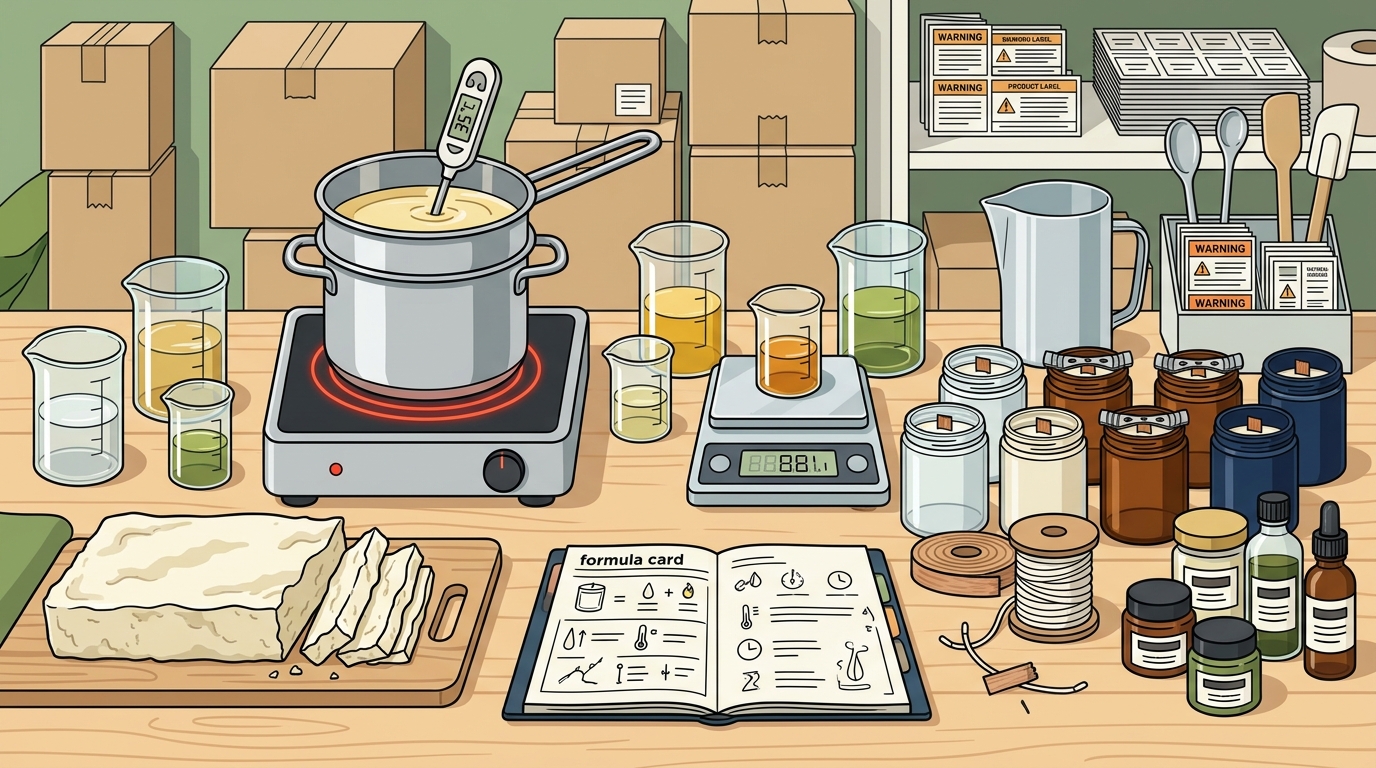
The core equipment includes a double boiler or a dedicated wax melter, a high-precision digital scale, and a thermometer. Safety guidelines recommend using a thermometer to monitor the wax temperature precisely. Adding fragrance at the wrong temperature can cause it to evaporate or not bind properly with the wax. A pouring pitcher with a spout is essential for clean, controlled pouring.
Organization and Storage
Organization is key to maintaining quality. Fragrance oils should be stored in a cool, dark place to prevent oxidation. Wicks should be kept in airtight containers to avoid moisture absorption. Packaging materials such as lids and boxes should be stored off the floor to protect them from dust and pests. Many makers use shelving units to keep their workspace tidy and their materials easily accessible.
Ventilation and Safety
Proper ventilation is critical when melting wax and mixing fragrances. Fumes can be irritating and potentially harmful in enclosed spaces. A window with a fan or an exhaust system is highly recommended. Fire safety equipment, including a fire extinguisher and a first aid kit, should be readily available. National fire safety organizations advise keeping flammable materials away from the melting station at all times.
Safety Protocols and Best Practices
Safety is the most important aspect of candle making. Accidents can happen quickly, and being prepared is essential. Here are the critical safety protocols that every home maker should follow.
First, always wear protective gear. Heat-resistant gloves and safety glasses protect against splashes and spills. Long sleeves and closed-toe shoes are also recommended to protect against accidental burns. Second, never leave melting wax unattended. Wax can overheat and ignite if left alone. Third, keep a lid or a fire blanket nearby to smother any potential flames. Never use water to extinguish a wax fire, as it can cause the fire to spread.
Additionally, proper labeling is a legal and safety requirement. Labels should include the candle name, net weight, burn time, warning instructions, and the maker's contact information. Consumer product safety reports highlight the importance of clear warning labels to prevent accidents, especially for children and pets. Makers should also ensure that their candles meet local fire safety standards for burn time and flame height.
Scaling from Hobby to Business
As demand grows, home makers often face the challenge of scaling production. This transition requires a shift in mindset from crafting to manufacturing. Efficiency becomes paramount, and consistency is key.
One of the first steps in scaling is investing in bulk purchasing. Buying wax, wicks, and fragrance in larger quantities reduces the cost per unit and improves profit margins. MakerPro programs offered by some suppliers provide discounts and exclusive access to new products for serious makers. This can be a significant advantage for those looking to grow their business.
Another critical aspect of scaling is streamlining the production process. Many makers invest in multi-wick melting pots and pouring stations to increase output. They also develop standard operating procedures (SOPs) to ensure that every candle meets the same quality standards. Documentation is essential. Keeping detailed records of recipes, batch numbers, and supplier information helps in troubleshooting issues and maintaining consistency.
Marketing and sales also require a strategic approach. Home makers often start by selling at local markets and online platforms like Etsy. As the brand grows, they may develop their own e-commerce website and wholesale relationships with local boutiques. Loyalty programs and discounts can help retain customers and encourage repeat purchases. Building a strong brand identity and storytelling around the handmade nature of the product can also differentiate the brand in a crowded market.
Key Takeaways
- Supply Chain Reliability: Consistent wax and fragrance quality is critical for product success. Suppliers like Makesy offer reliable shipping and bulk options.
- Wick Matching: Proper wick selection prevents tunneling and soot. Always conduct burn tests for new jar and wax combinations.
- Workspace Safety: Ventilation and fire safety equipment are non-negotiable. Never leave melting wax unattended.
- Eco-Conscious Materials: Using soy, coconut, and beeswax appeals to modern consumers who prioritize sustainability.
- Scaling Strategies: Bulk purchasing and standardized procedures are essential for growing from a hobby to a business.
- Shipping Efficiency: Utilizing expedited shipping options can prevent production delays and improve customer satisfaction.
- Brand Storytelling: Highlighting the handmade and sustainable aspects of your candles can differentiate your brand in the market.
Frequently Asked Questions
What is the best wax for beginners?
Soy wax is generally considered the best wax for beginners because it is easy to work with, has a low melting point, and offers a clean burn. It is also widely available and affordable.
How do I choose the right wick size?
Wick size depends on the jar diameter and the type of wax used. Makers should use wick charts provided by suppliers and conduct burn tests to find the optimal wick for their specific combination.
Can I use essential oils instead of fragrance oils?
Yes, you can use essential oils, but they have a lighter scent throw and may require a higher fragrance load. They are also more expensive than synthetic fragrance oils.
How do I prevent wax from frosting?
Frosting is a natural occurrence in soy wax. To minimize it, melt the wax slowly and avoid overheating. Adding a small amount of coconut wax to the blend can also help reduce frosting.
What safety equipment do I need?
Essential safety equipment includes heat-resistant gloves, safety glasses, a fire extinguisher, and a first aid kit. Proper ventilation is also crucial to avoid inhaling fumes.
How can I scale my candle business?
Scaling involves investing in bulk purchasing, streamlining production processes, and developing a strong marketing strategy. Utilizing supplier programs like MakerPro can also provide advantages.
Where can I find reliable candle supplies?
Reputable suppliers like Makesy offer a wide range of high-quality candle supplies, including wax, wicks, fragrance oils, and vessels. They also provide resources and support for makers.
Start Your Candle Making Journey Today
Whether you are just starting out or looking to scale your existing business, having access to reliable supplies and a well-organized workspace is essential. Makesy offers a comprehensive range of candle making supplies, from premium waxes and fragrances to durable vessels and packaging. Explore our full collection to find everything you need to create high-quality, professional-grade candles. Join our community of makers and discover the tools that will help you bring your creative vision to life.