

The global candle market is projected to reach significant valuation milestones in the coming years, driven by a surge in DIY home decor projects. According to recent industry reports, the home fragrance sector has seen a 20% growth in consumer engagement since 2020. This surge means that beginners are no longer just buying wax; they are investing in a craft that demands precision, safety, and aesthetic consistency. Understanding the technical specifications of your materials is the difference between a frustrating hobby and a profitable side business. (Collections 124 makesy)
Wax Selection and Melting Points
Choosing the right wax is the foundational step in candle making. The quality of the wax determines the throw (scent dispersion), the finish, and the burn time. Beginners often gravitate toward paraffin due to its low cost, but soy wax has become the industry standard for eco-conscious consumers.
Soy Wax is a refined, natural wax derived from soybean oil. It burns cleaner than paraffin and produces less soot. However, not all soy waxes are created equal. High-quality soy wax, such as the premium blends available at Makesy, is formulated to have a consistent melting point. This consistency is critical for achieving a smooth finish without sinkholes or wet spots.
When evaluating wax quality, look for the melting point specification. A higher melting point wax allows for a longer burn time and better fragrance retention. For container candles, a melting point between 120 and 145 degrees Fahrenheit is ideal. For pillar candles, which must stand upright, you need a harder wax with a higher melting point to prevent structural failure.
Common Wax Types Compared
| Wax Type | Burn Quality | Scent Throw | Best For |
|---|---|---|---|
| Paraffin | High soot potential | Excellent hot throw | Mass production, pillars |
| Soy Wax | Clean burn, low soot | Moderate to strong | Container candles, eco-brands |
| Coconut Wax | Very clean burn | Superior scent throw | Premium luxury candles |
| Beeswax | Natural, honey scent | Subtle natural scent | Natural air purification |
Wick Technology and Burn Dynamics
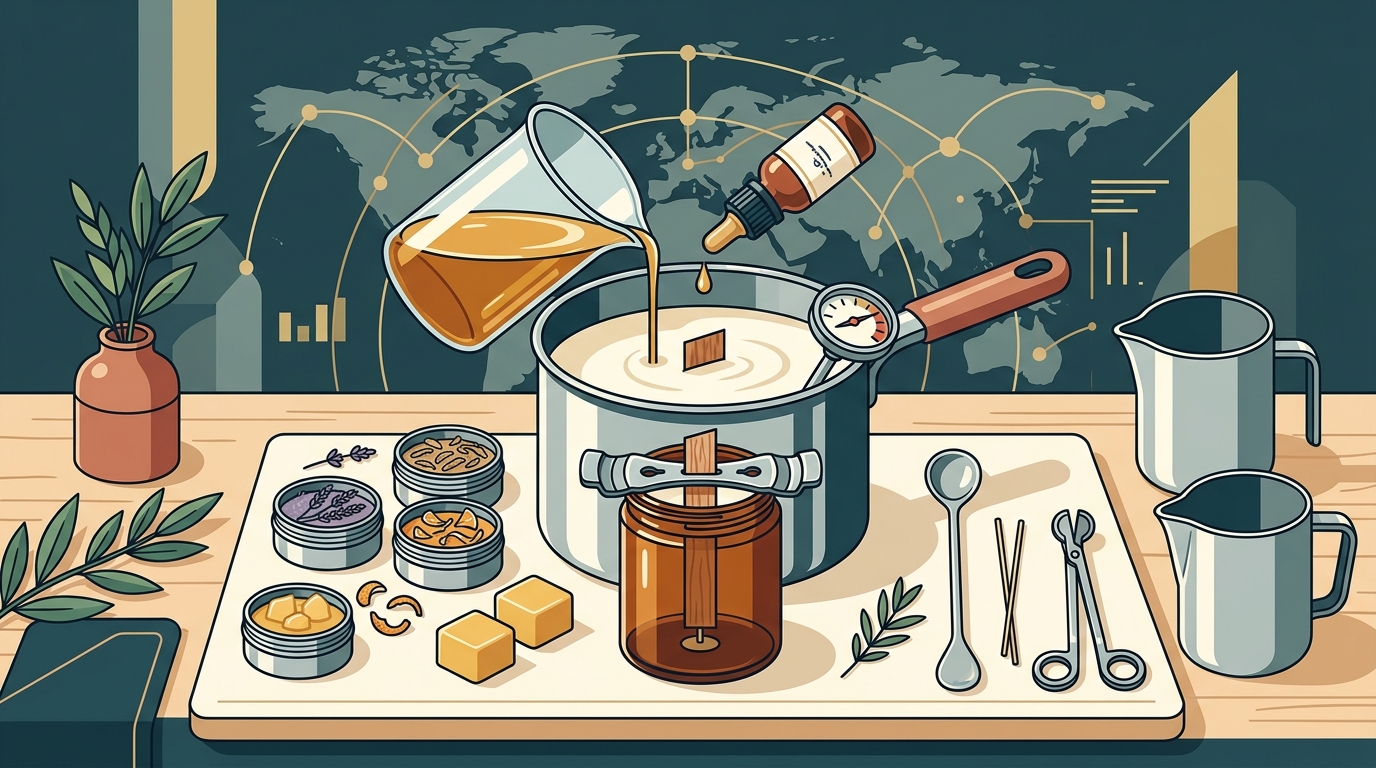
A wick is not just a string; it is a fuel delivery system. The quality of the wick determines whether your candle burns evenly or tunnels down the center. A tunneling candle wastes wax and creates a poor user experience.
Wick sizing is the process of matching the wick diameter to the candle jar diameter. This calculation is based on the wax type and the fragrance load. A wick that is too small will drown in its own wax pool, causing the flame to flicker and die. A wick that is too large will create a flame that is too hot, potentially cracking the glass container and producing excessive soot.
At Makesy, we emphasize the importance of testing wicks. Even with precise calculations, environmental factors like humidity and draft can affect the burn. Always perform a burn test on your first batch. This involves lighting the candle and observing the melt pool for the first four hours. The melt pool should reach the edges of the container.
Wick Materials Explained
- Cotton Wicks: The most common choice for beginners. They are rigid, easy to center, and burn consistently. Learn more about cotton wick standards.
- Wooden Wicks: Provide a crackling sound and a wide flame. They require a larger jar diameter to prevent sooting.
- Paper-Core Wicks: Often used in pillar candles. They are stiff and hold their shape well in free-standing applications.
Fragrance Integration Standards
Fragrance is the primary driver of repeat purchases in the candle industry. However, adding scent is a chemical process that requires precision. Using low-quality fragrance oils can result in a candle that smells like burnt plastic or fails to release scent at all.
Fragrance Load is the percentage of fragrance oil added to the total weight of the wax. Most waxes have a maximum fragrance load capacity. For example, soy wax typically holds between 6% and 10% fragrance. Exceeding this limit can cause the wax to weep, leaving oily stains on the container exterior.
Quality fragrance oils must be specifically formulated for candle making. They are not the same as essential oils, which often have low flash points and can evaporate before the candle burns. High-quality fragrance oils, such as those found in the Makesy fragrance collection, are tested for thermal stability. This ensures that the scent profile remains consistent from the first light to the last.
Fragrance Oil Categories
- Synthetic Oils: Offer a vast array of scents that do not exist in nature, such as "rain on pavement" or "ocean breeze." They are generally more stable and cost-effective.
- Essential Oils: Natural extracts from plants. They offer therapeutic benefits but often have a weaker scent throw and a higher cost per ounce.
- Hybrid Oils: A blend of synthetic and natural oils. These provide a balance of scent complexity and throw performance.
Safety Protocols and Compliance
Candle making involves handling hot liquids and flammable materials. Adhering to safety standards is non-negotiable. The National Candle Association (NCA) provides comprehensive guidelines for safe candle production.
Flash Point is the temperature at which a liquid gives off enough vapor to ignite. Knowing the flash point of your fragrance oil is crucial. You must add the fragrance oil to the wax only after the wax has cooled below the fragrance oil's flash point. Adding it too early can cause the scent to evaporate instantly and create a fire hazard.
Additionally, always use a dedicated thermometer and a melting pitcher made of heat-resistant glass or stainless steel. Never leave melting wax unattended. According to fire safety data, candle fires account for a significant portion of home fires annually. Proper wick trimming and using a stable candle holder are simple steps that drastically reduce risk.
Essential Safety Gear
- Thermometer: Instant-read digital thermometers provide accurate temperature monitoring.
- Heat-Resistant Gloves: Protect your hands from hot wax spills.
- Fire Extinguisher: Keep a Class B fire extinguisher nearby when working with flammable materials.
Supplier Reliability and Logistics
The quality of your supplies is only as good as the reliability of your supplier. In the candle making industry, consistency is key. You need a supplier that provides batch-to-batch consistency in wax and fragrance oils.
Shipping Lead Times are critical for business continuity. If you are running a small business, a delay in receiving wax can halt your production line. Makesy offers fast and reliable shipping options to ensure you never run out of stock. Their partnership with Ocean provides expedited shipping for active customers, ensuring your supplies arrive when you need them.
When evaluating a supplier, look for transparency in their sourcing. Do they disclose the origin of their soy wax? Do they provide Safety Data Sheets (SDS) for their fragrance oils? These documents are essential for compliance and safety. A reputable supplier will have these resources readily available on their help center.
Supplier Evaluation Checklist
- Does the supplier offer bulk discounts for larger orders?
- Are their fragrance oils IFRA compliant?
- Do they provide detailed technical data for each product?
- Is their customer support responsive and knowledgeable?
Key Takeaways
- Wax Quality Matters: Choose high-quality soy or coconut wax for a clean, consistent burn.
- Wick Sizing is Critical: Match the wick to the jar diameter to prevent tunneling and sooting.
- Fragrance Load Limits: Do not exceed the maximum fragrance load for your specific wax type.
- Safety First: Always monitor temperatures and keep fire safety equipment nearby.
- Supplier Reliability: Partner with suppliers like Makesy for consistent, high-quality materials.
- Test Your Candles: Always perform a burn test before selling or gifting your candles.
- Know Your Flash Points: Add fragrance oils below their flash point to preserve scent and ensure safety.
Frequently Asked Questions
What is the best wax for beginners?
Soy wax is widely considered the best wax for beginners because it is easy to work with, burns cleanly, and is widely available. It offers a forgiving melting point that allows for adjustments during the pouring process.
How do I choose the right wick size?
Wick size is determined by the diameter of your container and the type of wax you are using. A general rule is to use a larger wick for wider jars. However, testing is essential to find the perfect match for your specific setup.
Can I use essential oils instead of fragrance oils?
While you can use essential oils, they often have a weaker scent throw and may not bind well with all waxes. Fragrance oils are specifically formulated for candle making and provide a stronger, more consistent scent.
What is fragrance load?
Fragrance load is the percentage of fragrance oil added to the wax. It is calculated by dividing the weight of the fragrance oil by the total weight of the wax and fragrance combined.
How do I prevent sinkholes in my candles?
Sinkholes are caused by uneven cooling. To prevent them, pour the wax at the correct temperature and allow the candle to cool slowly at room temperature. You can also re-pour a small amount of melted wax into the sinkhole once the first layer has set.
Where can I buy high-quality candle supplies?
Makesy is a leading supplier of high-quality candle making supplies, including wax, wicks, fragrance oils, and vessels. They offer a wide range of products tailored for both beginners and professionals.
Is candle making safe?
Candle making is safe when proper precautions are taken. Always use heat-resistant equipment, monitor temperatures carefully, and keep flammable materials away from your workspace.
Start Your Candle Journey
Building a successful candle brand starts with the right materials. By adhering to these essential quality standards, you ensure that your candles burn safely, smell incredible, and look professional. Whether you are making candles for personal enjoyment or for sale, the foundation of your success lies in the quality of your supplies.
Explore the comprehensive range of candle making supplies at Makesy. From premium soy wax to expert-curated fragrance oils, we provide everything you need to create beautiful, high-quality candles. Visit our collections page to start shopping today and elevate your candle making craft.